Invited Presentation by M. Selin at SPIE-OTOM, San Diego, 18 August 2024

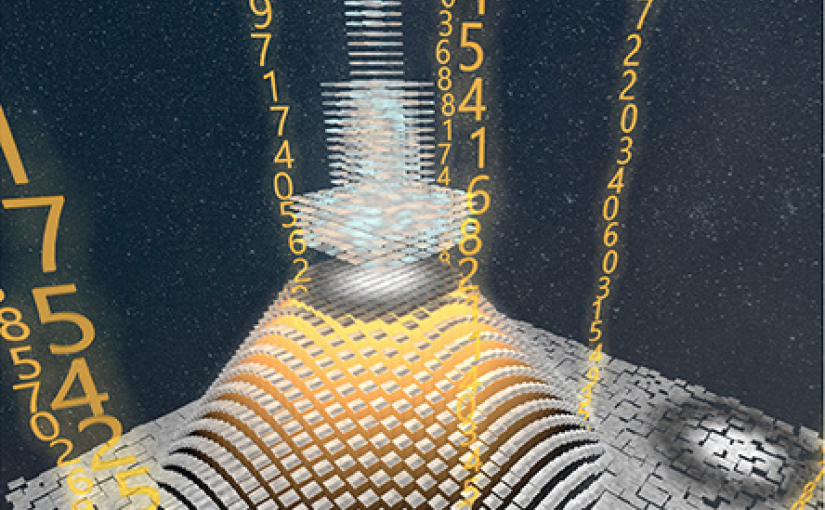
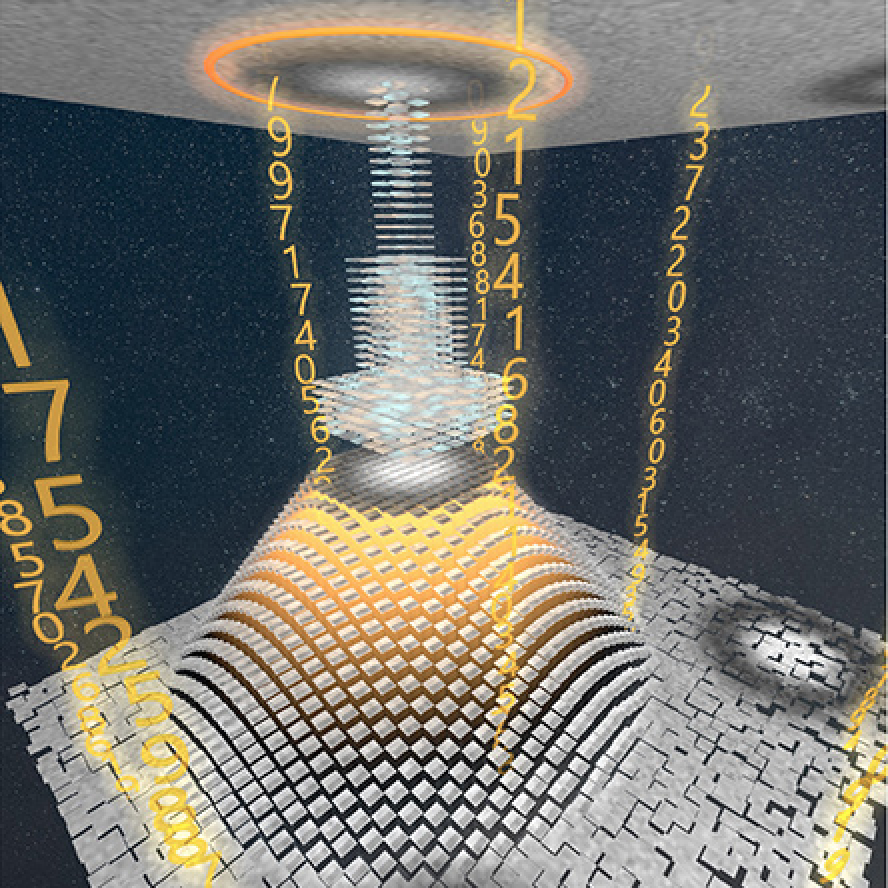
3d Visualization of the full Minitweezers 2.0 system. (Illustration by M. Selin.)
From stretching DNA to probing polymer stiffness: expanding experimental reach with automated optical tweezers
Martin Selin
SPIE-OTOM, San Diego, CA, USA, 18 – 22 August 2024
Date: 18 August 2024
Time: 12:15 PM – 12:45 PM
Place: Conv. Ctr. Room 6D

Optical tweezers have become ubiquitous tools in science with use in disciplines ranging from biology to physics, chemistry, and material sciences with thousands of users around the world and a continuously growing number of applications. Here we show how a specially designed instrument, called miniTweezers2.0, can be made both highly versatile and user friendly. We demonstrate the system on three different experiments, which thanks to the close integration of the various parts of the tweezers into a single software are performed fully autonomously. The first experiment involves DNA stretching, a fundamental single molecule force spectroscopy experiment. The second experiment involved the stretching of red blood cells, which can be used to gauge the membrane stiffness of the cells. Lastly, we investigate the interaction between core-shell particles in various environments. Showing how the soft polymer layer extends, or contracts depending on pH and salinity. Our work show potential of automated and versatile optical tweezers systems in advancing our understanding of nano and micro-scale systems.

Keynote Presentation by G. Volpe at SPIE-MNM, San Diego, 18 August 2024

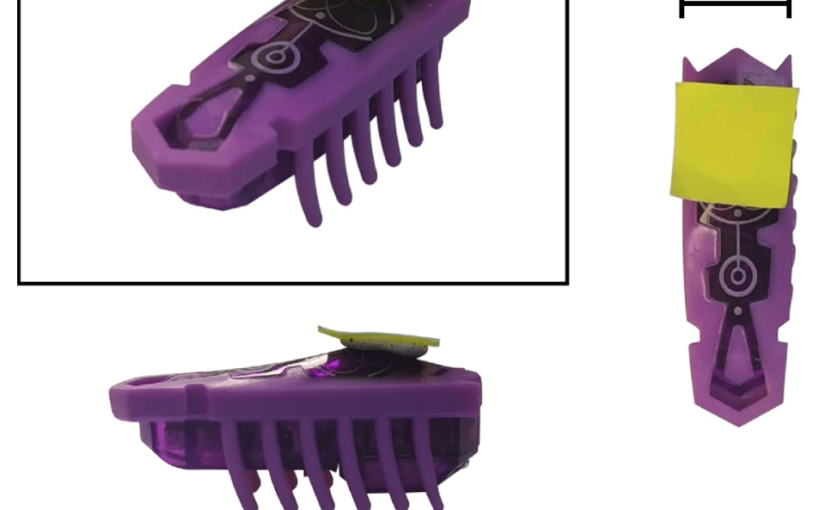
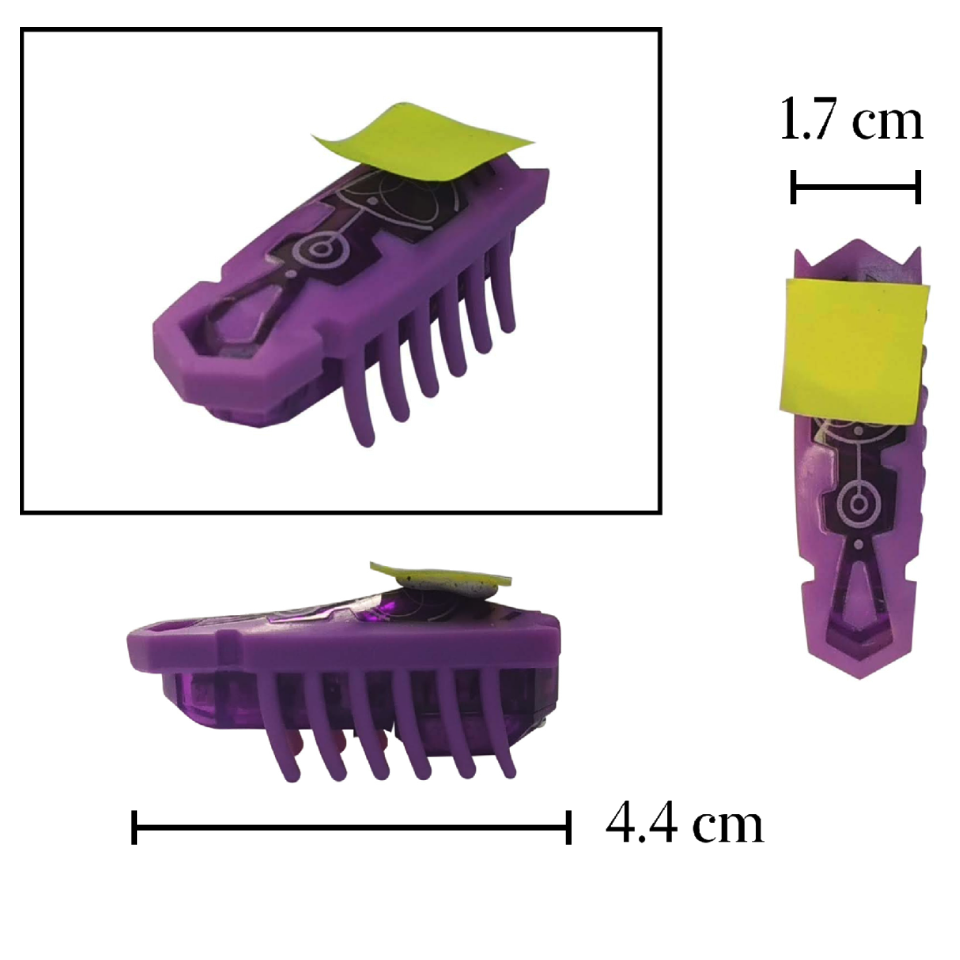
(Image by A. Argun)
Deep Learning for Imaging and Microscopy
Giovanni Volpe
SPIE-MNM, San Diego, CA, USA, 18 – 22 August 2024
Date: 18 August 2024
Time: 10:25 AM – 11:00 AM
Place: Conv. Ctr. Room 6F

Video microscopy has a long history of providing insights and breakthroughs for a broad range of disciplines, from physics to biology. Image analysis to extract quantitative information from video microscopy data has traditionally relied on algorithmic approaches, which are often difficult to implement, time consuming, and computationally expensive. Recently, alternative data-driven approaches using deep learning have greatly improved quantitative digital microscopy, potentially offering automatized, accurate, and fast image analysis. However, the combination of deep learning and video microscopy remains underutilized primarily due to the steep learning curve involved in developing custom deep-learning solutions. To overcome this issue, we have introduced a software, DeepTrack 2.1, to design, train and validate deep-learning solutions for digital microscopy.

Soft Matter Lab members present at SPIE Optics+Photonics conference in San Diego, 18-22 August 2024

The Soft Matter Lab participates to the SPIE Optics+Photonics conference in San Diego, CA, USA, 18-22 August 2024, with the presentations listed below.

Giovanni Volpe is also panelist in the panel discussion:

  • Towards the Utilization of AI
    21 August 2024 • 3:45 PM – 4:45 PM PDT | Conv. Ctr. Room 2

Crystallization and topology-induced dynamical heterogeneities in soft granular clusters published in Physical Review of Research

Scheme of the microfluidic system for the production of clusters of a soft granular medium, and Snapshots of the cluster at different times corresponding to different sections of the channel. (Image by the Authors of the manuscript.)
Crystallization and topology-induced dynamical heterogeneities in soft granular clusters
Michal Bogdan, Jesus Pineda, Mihir Durve, Leon Jurkiewicz, Sauro Succi, Giovanni Volpe, Jan Guzowski
Physical Review of Research, 6, L032031 (2024)
DOI: 10.1103/PhysRevResearch.6.L032031
arXiv: 2302.05363

Soft-granular media, such as dense emulsions, foams or tissues, exhibit either fluid- or solidlike properties depending on the applied external stresses. Whereas bulk rheology of such materials has been thoroughly investigated, the internal structural mechanics of finite soft-granular structures with free interfaces is still poorly understood. Here, we report the spontaneous crystallization and melting inside a model soft granular cluster—a densely packed aggregate of N~30-40 droplets engulfed by a fluid film—subject to a varying external flow. We develop machine learning tools to track the internal rearrangements in the quasi-two-dimensional cluster as it transits a sequence of constrictions. As the cluster relaxes from a state of strong mechanical deformations, we find differences in the dynamics of the grains within the interior of the cluster and those at its rim, with the latter experiencing larger deformations and less frequent rearrangements, effectively acting as an elastic membrane around a fluidlike core. We conclude that the observed structural-dynamical heterogeneity results from an interplay of the topological constrains, due to the presence of a closed interface, and the internal solid-fluid transitions. We discuss the universality of such behavior in various types of finite soft granular structures, including biological tissues.

Book “Deep Learning Crash Course” published at No Starch Press

The book Deep Learning Crash Course, authored by Giovanni Volpe, Benjamin Midtvedt, Jesús Pineda, Henrik Klein Moberg, Harshith Bachimanchi, Joana B. Pereira, and Carlo Manzo, has been published online by No Starch Press in July 2024.

Preorder Discount
A preorder discount is available: preorders with coupon code PREORDER will receive 25% off. Link: Preorder @ No Starch Press | Deep Learning Crash Course

Links
@ No Starch Press

Citation 
Giovanni Volpe, Benjamin Midtvedt, Jesús Pineda, Henrik Klein Moberg, Harshith Bachimanchi, Joana B. Pereira, and Carlo Manzo. Deep Learning Crash Course. No Starch Press.
ISBN-13: 9781718503922

Nanoalignment by Critical Casimir Torques published in Nature Communications

Artist rendition of a disk-shaped microparticle trapped above a circular uncoated pattern within a thin gold layer coated on a glass surface. (Image by the Authors of the manuscript.)
Nanoalignment by Critical Casimir Torques
Gan Wang, Piotr Nowakowski, Nima Farahmand Bafi, Benjamin Midtvedt, Falko Schmidt, Agnese Callegari, Ruggero Verre, Mikael Käll, S. Dietrich, Svyatoslav Kondrat, Giovanni Volpe
Nature Communications, 15, 5086 (2024)
DOI: 10.1038/s41467-024-49220-1
arXiv: 2401.06260

The manipulation of microscopic objects requires precise and controllable forces and torques. Recent advances have led to the use of critical Casimir forces as a powerful tool, which can be finely tuned through the temperature of the environment and the chemical properties of the involved objects. For example, these forces have been used to self-organize ensembles of particles and to counteract stiction caused by Casimir-Liftshitz forces. However, until now, the potential of critical Casimir torques has been largely unexplored. Here, we demonstrate that critical Casimir torques can efficiently control the alignment of microscopic objects on nanopatterned substrates. We show experimentally and corroborate with theoretical calculations and Monte Carlo simulations that circular patterns on a substrate can stabilize the position and orientation of microscopic disks. By making the patterns elliptical, such microdisks can be subject to a torque which flips them upright while simultaneously allowing for more accurate control of the microdisk position. More complex patterns can selectively trap 2D-chiral particles and generate particle motion similar to non-equilibrium Brownian ratchets. These findings provide new opportunities for nanotechnological applications requiring precise positioning and orientation of microscopic objects.

Plenary Talk by G. Volpe at ENO-CANCOA, Cartagena, Colombia, 13 June 2024

DeepTrack 2.1 Logo. (Image from DeepTrack 2.1 Project)
Deep learning for microscopy
Giovanni Volpe
Encuentro Nacional de Óptica y la Conferencia Andina y del Caribe en Óptica y sus Aplicaciones(ENO-CANCOA)
Cartagena, Colombia, 13 June 2024

Video microscopy has a long history of providing insights and breakthroughs for a broad range of disciplines, from physics to biology. Image analysis to extract quantitative information from video microscopy data has traditionally relied on algorithmic approaches, which are often difficult to implement, time consuming, and computationally expensive. Recently, alternative data-driven approaches using deep learning have greatly improved quantitative digital microscopy, potentially offering automatized, accurate, and fast image analysis. However, the combination of deep learning and video microscopy remains underutilized primarily due to the steep learning curve involved in developing custom deep-learning solutions.

To overcome this issue, we have introduced a software, currently at version DeepTrack 2.1, to design, train and validate deep-learning solutions for digital microscopy. We use it to exemplify how deep learning can be employed for a broad range of applications, from particle localization, tracking and characterization to cell counting and classification. Thanks to its user-friendly graphical interface, DeepTrack 2.1 can be easily customized for user-specific applications, and, thanks to its open-source object-oriented programming, it can be easily expanded to add features and functionalities, potentially introducing deep-learning-enhanced video microscopy to a far wider audience.

Jason Lewis joins the Soft Matter Lab

(Photo by A. Ciarlo.)
Jason Lewis started to work as a researcher at the Physics Department of the University of Gothenburg on 1st June 2024.

Jason received his Ph.D. degree in Complexity Science from the University of Warwick, UK, with a thesis titled “Topological models of swarming”, which studied the dynamics of bird flocks, specifically under topological constraints, via theory and numerical simulation.

After his PhD, he undertook a postdoc in the group of Joakim Stenhammar at Lund University, Sweden, where he investigated chemotaxis and the collective behaviour of microswimmers, known as active turbulence, in addition to other projects at the interface of machine learning and active matter.

His research focuses on the theory and simulation of active matter systems at all scales, specifically on modelling the structure and dynamics of self-organising groups of motile robots.

Deep learning for optical tweezers published in Nanophotonics

Real-time control of optical tweezers with deep learning. (Image by the Authors of the manuscript.)
Deep learning for optical tweezers
Antonio Ciarlo, David Bronte Ciriza, Martin Selin, Onofrio M. Maragò, Antonio Sasso, Giuseppe Pesce, Giovanni Volpe and Mattias Goksör
Nanophotonics, 13(17), 3017-3035 (2024)
doi: 10.1515/nanoph-2024-0013
arXiv: 2401.02321

Optical tweezers exploit light–matter interactions to trap particles ranging from single atoms to micrometer-sized eukaryotic cells. For this reason, optical tweezers are a ubiquitous tool in physics, biology, and nanotechnology. Recently, the use of deep learning has started to enhance optical tweezers by improving their design, calibration, and real-time control as well as the tracking and analysis of the trapped objects, often outperforming classical methods thanks to the higher computational speed and versatility of deep learning. In this perspective, we show how cutting-edge deep learning approaches can remarkably improve optical tweezers, and explore the exciting, new future possibilities enabled by this dynamic synergy. Furthermore, we offer guidelines on integrating deep learning with optical trapping and optical manipulation in a reliable and trustworthy way.