Poster presentation by M. Granfors at Optics and Photonics in Sweden, Norrköping, 7 October, 2026

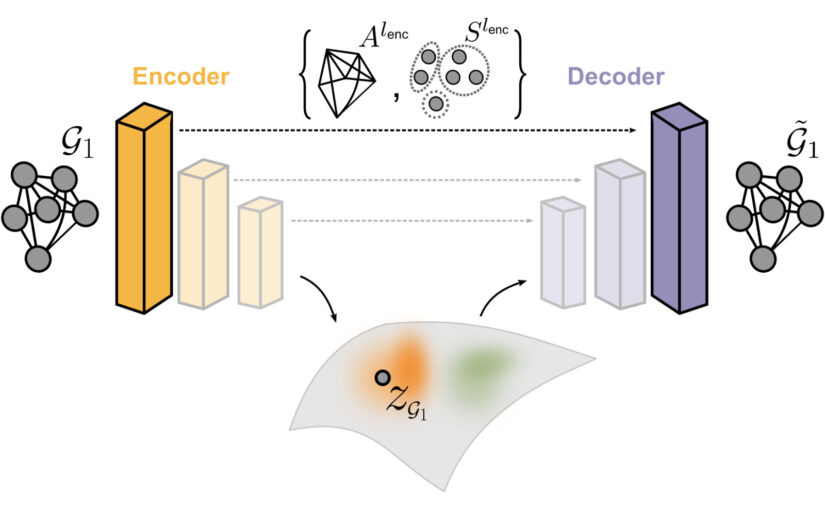
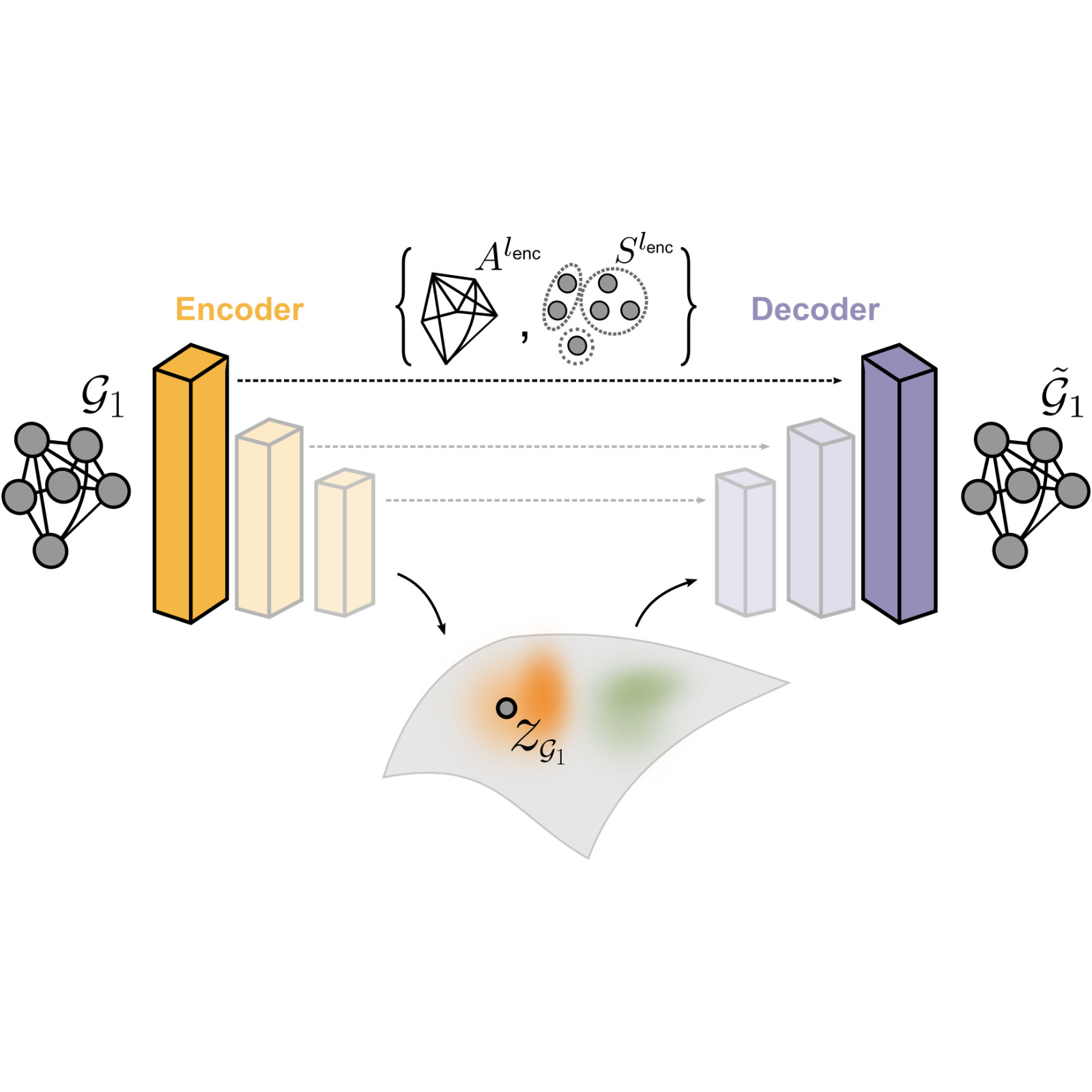
GAUDI leverages a hierarchical graph-convolutional variational autoencoder architecture, where an encoder progressively compresses the graph into a low-dimensional latent space, and a decoder reconstructs the graph from the latent embedding. (Image by M. Granfors and J. Pineda.)
Unsupervised Graph Deep Learning Uncovers Protein Organization in Super-Resolution Microscopy
Mirja Granfors, Jesús Pineda, Blanca Zufiria Gerbolés, Joana B. Pereira, Carlo Manzo, and Giovanni Volpe
Date: 7 October 2026
Time: 11:45 – 13:00 and 17:20 – 19:00
Place: Biblioteket, Arbetets museum, Norrköping

Modern optical techniques such as super-resolution microscopy generate rich, spatially resolved data that can be naturally represented as graphs. However, the structural variability of these graphs poses significant challenges for their analysis and classification, particularly when similar underlying processes can produce substantially different graph realizations.

To address this challenge, we introduce Graph Autoencoder Uncovering Descriptive Information (GAUDI), an unsupervised graph deep learning framework designed to capture both local details and global structure. GAUDI employs a hierarchical graph-convolutional variational autoencoder architecture with pooling and upsampling layers connected through skip connections, preserving essential connectivity information throughout the encoding–decoding process.

Despite substantial variability between graph realizations generated from identical or highly similar underlying parameters, GAUDI consistently maps them to nearby regions of a structured, continuous latent space. This enables the identification of invariant process-level features while separating them from stochastic variability.

We demonstrate this capability using super-resolution microscopy, where GAUDI characterizes protein assemblies and organizes structurally variable graphs according to their underlying state. The framework is further demonstrated on small-world network models, collective motion in the Vicsek model, and age-related changes in brain connectivity. These results highlight GAUDI as a broadly applicable approach for extracting meaningful information from complex graph-structured data across microscopy and other fields.

Poster presentation by M. Granfors at Optics and Photonics in Sweden, Norrköping, 7 October, 2026

DeepTrack2 Logo. (Image by J. Pineda.)
DeepTrack2: Physics-Based Microscopy Simulations for Deep Learning
Mirja Granfors, Alex Lech, Jiacheng Huang, Eduard Duta, Guillem Guigo i Corominas, Harshith Bachimanchi, Benjamin Midtvedt, Jesús Pineda, Carlo Manzo, and Giovanni Volpe
Date: 7 October 2026
Time: 11:45 – 13:00 and 17:20 – 19:00
Place: Biblioteket, Arbetets museum, Norrköping

Deep learning has become an increasingly powerful tool for microscopy image analysis, but training robust models often requires large and diverse datasets that are difficult and time-consuming to acquire experimentally. Physics-based simulations provide a way to generate synthetic microscopy data while retaining control over the optical and physical properties of the imaging process.

DeepTrack2 is a flexible and scalable Python library designed to generate physics-based synthetic microscopy datasets for training deep learning models. It supports a wide range of imaging modalities, including brightfield, fluorescence, darkfield, and holography, and allows users to customize optical systems, incorporate optical aberrations and noise, simulate diverse objects and imaging conditions, and apply image augmentations.

Its modular architecture also enables simulations to be executed using a PyTorch backend, providing GPU acceleration and allowing backpropagation through the optical system. This makes it possible to optimize the optical setup and the deep learning model jointly. The DeepTrack2 repository further provides tutorials covering the complete workflow, from physics-based simulation to deep-learning-based analysis using its companion library, deeplay.

Together, these capabilities provide a flexible framework for developing and benchmarking deep learning methods for microscopy while reducing the need for large experimentally acquired training datasets.

International conference “Protein Folding in Real Time: From Molecules to Disease”, Aula Medica, KI, Stockholm, 11-13 March 2026

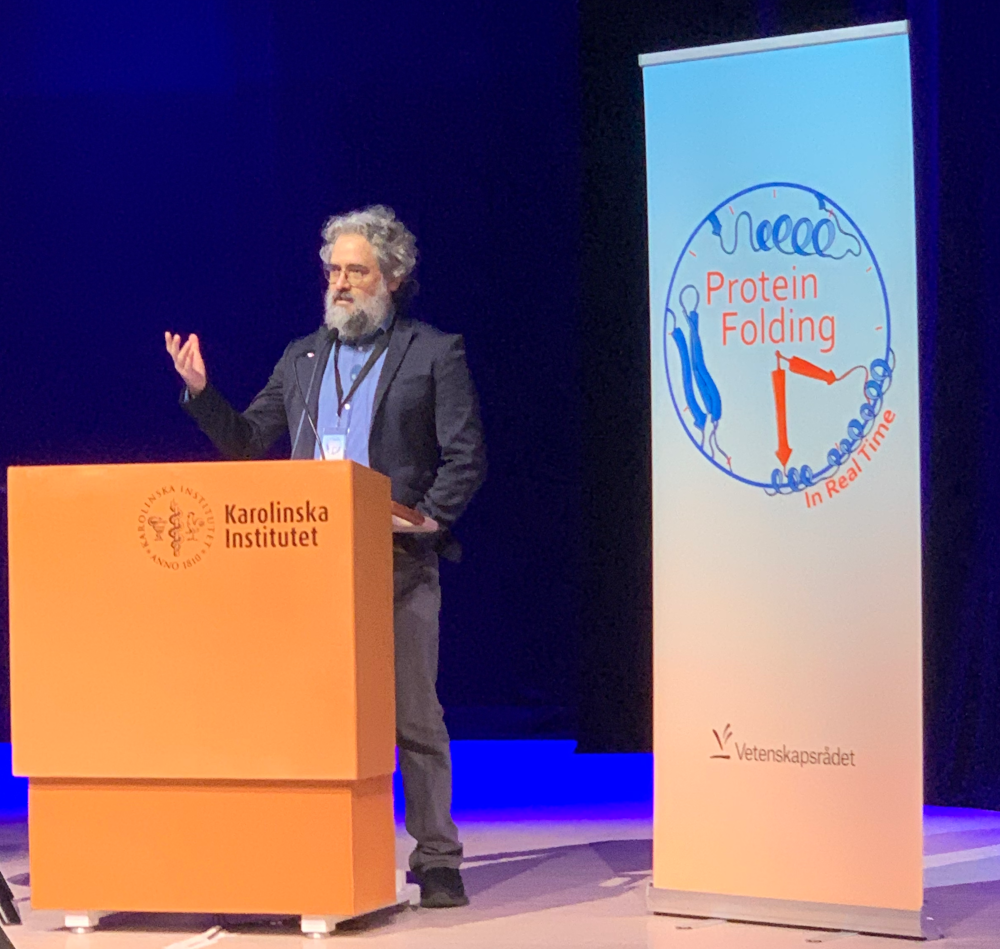
Giovanni Volpe opens the Protein Folding in Real Time conference. (Photo by A. Ciarlo)
The international conference Protein Folding in Real Time: From Molecules to Disease opened today, 11 March 2026, at Aula Medica, KI, Stockholm.

The conference brings together researchers from multiple disciplines, including biophysics, molecular biology, computational science, and medicine, to discuss recent advances in the study of protein folding. Proteins must fold into precise three-dimensional structures to perform their biological functions, and failures in this process are associated with several diseases, including neurodegenerative disorders and cancer.

During the three-day meeting, participants attend a series of lectures and discussions covering topics such as single-molecule biophysics, high-resolution experimental techniques for observing folding dynamics, advanced molecular simulations, and artificial intelligence approaches for predicting folding pathways. Particular attention is given to the challenge of observing protein folding in real time, capturing transient intermediate states that determine whether proteins reach their functional structure or misfold.

The event also highlights the interdisciplinary and international nature of the initiative. Representatives from the Embassies of Italy, Japan, and Spain, together with UNESCO, take part in the meeting, emphasizing the global interest in advancing research on protein folding and its biomedical implications. The initiative aims to integrate experimental measurements, computational modeling, and data-driven approaches to build a predictive framework for protein folding dynamics. By combining advanced imaging, force spectroscopy, and machine learning methods, the initiative seeks to better understand how folding processes occur inside living systems and how their disruption can lead to disease.

Overall, the conference provides an opportunity for scientists from different institutions to exchange ideas, establish collaborations, and shape future research directions in the field of protein folding and misfolding. The launch of this initiative represents an important step toward bridging molecular-level observations with biomedical applications, ultimately contributing to improved strategies for diagnosing and treating diseases related to protein misfolding.

MSCA-DN GREENS training event in Göteborg, 10-14 November 2025

GREENS Logo. (Image from MSCA-DN GREENS)
The Soft Matter Lab hosted the first training event of the MSCA-DN GREENS from the 10th to the 14th of November 2025.
Both Andrea Schiano di Colella and Eduard Andrei Duta Costache, the two doctoral candidates based at the University of Gothenburg, participated to the event along with the other doctoral candidates of the network.

The training event consisted of a series of lectures on different topics such as small scale robots and their actuation mechanisms, theoretical aspects of the simulation of the dynamics of bodies immersed in fluids at low Reynolds numbers, working principles and applications of swarm robotics, and finally artificial intelligence and its applications to data analysis in experiments.

The event included a visit to the Swedish Algae Factory (SAFAB) and Smogenlax on the topic of circular economy, and concluded with a series of meetings between the representatives of the participating institutions, from both accademia and industry, to exchange research questions and plan secondments.

Giovanni Volpe is committee member at OSA-OMA 2021

Giovanni Volpe is part of the committee of the conference Optical Manipulation and its Applications (OMA), which is part of the OSA Biophotonics Congress: Optics in the Life Sciences.

Optical Manipulation encompasses all areas of manipulation and measurement using light, from optical manipulation of microparticles to photoactivated materials and optogenetics, emphasizing new and developing application areas in biophysics and biomedicine.

The categories of topics in the conference are Optical Manipulation in Biophysics and Biomedicine, Optical Manipulation Fundamentals, Optical Manipulation Applications, and Alternative Manipulation Techniques.

The conference will be held online 12-16 April 2021.

CECAM Workshop “Active Matter and Artificial Intelligence Location”, Lausanne, Switzerland 30 September – 2 October 2019

Active Matter and Artificial Intelligence
Location : CECAM-HQ-EPFL, Lausanne, Switzerland
September 30, 2019 – October 2, 2019

Organizers:
Frank Cichos (Universität Leipzig, Germany)
Klaus Kroy (Universität Leipzig, Germany)
Fernando Peruani (Université Nice Sophia Antipolis, France)
Giovanni Volpe (University of Gothenburg, Sweden)

Website:
https://www.cecam.org/workshp1750/

Description:
Biological active matter is composed of self-propelling agents, such as molecular motors, cells, bacteria and animals [1,2], which can perform tasks and feature emergent collective behaviors thanks to their capability of sensing their environment, processing this information and exploiting it through feedback cycles [3]. These processes are intrinsically noisy [4] both at the microscale (e.g. thermal noise [5]) and at the macroscale (e.g. turbulence [6]). Therefore, through millions of years, biological systems have evolved powerful strategies to accomplish specific tasks and thrive in their environment – strategies that are encoded in their shape, biophysical properties, and signal processing networks [13].

Artificial active matter is now being explored as a powerful means to address the big challenges that our society is facing [7]: from new strategies for targeted drug delivery, to the decontamination of polluted soils, to the extraction of energy from naturally occurring out-of-equilibrium conditions. In this context, biological active matter provides an ideal source of tested ideas and approaches [8,9], which we are now trying to exploit to develop artificial systems [10,11].

However, in biological systems, there is only a limited possibility to reduce complexity and introduce controllable perturbations. Therefore, the development of computational models and of proof-of-principle experiments provides an ideal test bench to explore the origin of complexity in biological systems and to harness it for the development of new applications. For example, tuning of sensorial delays yield different behaviors in gradient fields relevant for cellular systems [12], and, inspired by neuronal networks, relevant past experience is harnessed to predict the evolution of complex systems.

In this process, we have been led to the application of machine learning to active matter. Machine learning is an abstraction of the adaption processes found in biological active matter and researchers have recently started to explore these algorithms in active matter in some pioneering works. For example, reinforcement learning [14], which reflects a type of learning based on rewards, has been used to steer the motion of microscopic particles [15,16], to understand how birds can exploit turbulent thermal air flows to soar [6], to control the motion of artificial microswimmers in complex flow patterns [17] as well as in collective field taxis [18].

We are now at a critical crossroad in the development of active matter research where biological and artificial active matter are meeting with machine learning. The specific aim of this workshop is to bring together researchers from the fields of physics, biology, mathematics and machine learning to lay the groundwork of a scientific network to address the pressing questions:

1. What can machine learning do for biological active matter? Can we gain new insight into how powerful strategies have evolved? Can we understand the role of information processing, feedback cycles and sensorial delay in these strategies?

2. What can machine learning do for artificial active matter? Can we learn new approaches towards high-impact applications? For example, how can signaling and feedback be introduced into artificial active matter?

3. What insights can active matter provide for machine learning? Can we get some insight from the natural strategies optimized by evolution?

References

[1] Ramaswamy, S., The mechanics and statistics of active matter. Annu. Rev. Condens. Matter Phys. 1, 323–345 (2010).

[2] Marchetti, M. C. et al., Hydrodynamics of soft active matter. Rev. Mod. Phys. 85, 1143–1189 (2013).

[3] Katz, Y., Tunstrøm, K., Ioannou, C. C., Huepe, C., Couzin, I. D., Inferring the structure and dynamics of interactions in schooling fish. Proc. Natl. Acad. Sci. USA 108, 18720–18725 (2011).

[4] Yates, C. A. et al., Inherent noise can facilitate coherence in collective swarm motion. Proc. Natl. Acad. Sci. USA 106, 5464–5469 (2009).

[5] Kromer, J. A., Märcker, S., Lange, S., Baier, C., Friedrich, B. M., Decision making improves sperm chemotaxis in the presence of noise. PLoS Comput. Biol. 14, e1006109–15 (2018).

[6] Reddy, G., Celani, A., Sejnowski, T. J., Vergassola, M., Learning to soar in turbulent environments. Proc. Natl. Acad. Sci. USA 113, E4877–84 (2016).

[7] Bechinger, C. et al., Active particles in complex and crowded environments. Rev. Mod. Phys. 88, 045006 (2016).

[8] Pearce, D. J. G., Miller, A. M., Rowlands, G., Turner, M. S., Role of projection in the control of bird flocks. Proc. Natl. Acad. Sci. USA 111, 10422–10426 (2014).

[9] Bierbach, D. et al., Insights into the social behavior of surface and cave-dwelling fish (Poecilia mexicana) in light and darkness through the use of a biomimetic robot. Front. Robot. AI 5, 15 (2018).

[10] Buttinoni, I. et al., Dynamical clustering and phase separation in suspensions of self-propelled colloidal particles (2017).

[11] Qian, B., Montiel, D., Bregulla, A., Cichos, F., Yang, H., Harnessing thermal fluctuations for purposeful activities: the manipulation of single micro-swimmers by adaptive photon nudging. Chem. Sci. 4, 1420–1429 (2013).

[12] Mijalkov, M., McDaniel, A., Wehr, J., Volpe, G., Engineering sensorial delay to control phototaxis and emergent collective behaviors. Phys. Rev. X 6, 011008 (2016).

[13] Palmer, S. E., Marre, O., Berry, M. J., Bialek, W., Predictive information in a sensory population. Proc. Natl. Acad. Sci. USA 112, 6908–6913 (2015).

[14] Sutton, R. S., Barto, A. G., Reinforcement learning: an introduction. MIT Press, Cambridge (1998).

[15] Colabrese, S., Gustavsson, K., Celani, A., Biferale, L., Flow navigation by smart microswimmers via reinforcement learning. Phys. Rev. Lett. 118, 158004 (2017).

[16] Muiños-Landin, S., Ghazi-Zahedi, K., Cichos, F., Reinforcement learning of artificial microswimmers. arXiv 1803.06425v2 (2018).

[17] Gustavsson, K., Biferale, L., Celani, A., Colabrese, S., Finding efficient swimming strategies in a three-dimensional chaotic flow by reinforcement learning. Eur. Phys. J. E Soft Matter 40, 313–7 (2017).

[18] Palmer, G., Yaida, S., Optimizing collective fieldtaxis of swarming agents through reinforcement learning. arXiv 1709.02379 (2017).