Seminar by H. Rubinsztein-Dunlop, Gothenburg, 30 September 2026

Halina Rubinsztein-Dunlop. (Photo by A. Ciarlo.)
Quantum sensing and mechanobiology with optically trapped nanodiamonds
Professor Halina Rubinsztein-Dunlop
Date: 30 September 2026
Time: 12:30-13:30
Place: PJ Salen

Mechanobiology can be studied using optical micromanipulation enabling determination of forces, displacements and torques acting in complex out of equilibrium biological systems. Optical tweezers have been used for such studies very successfully. Transfer of optical angular momentum, (OAM), to matter broadens these applications to the rotational domain. The OAM is used for introducing rotation and torque to the system enabling application such as nano- and microviscoelasticity and production of all optically driven nano and micromachines.
Nanodiamonds (NDs) containing nitrogen- vacancy (NV) centres have raised interest as multifunctional probes for their unique possibility of being fluorescent scanning probes, combining spin optical read-out that makes them unique quantum sensors. Combining optical micromanipulation and NV centres in nanodiamonds (NDs) focuses on the advantages and achievements in controlling the NDs positioning that enables precise magnetic sensing and measurements of other highly relevant parameters of the environment that they are in such as minute temperature changes and PH. The measurements combine force, position and torque with fluorescence detection and optically detected magnetic resonance, ODMR. For high precision measurements of this type it is essential to be able to control precisely the position of the nanodiamonds. We are developing methods that combine rotational optical tweezers and quantum sensing with FNDs to achieve this goal.

Short bio:
Prof. Halina Rubinsztein-Dunlop, is Deputy Director of the ARC CoE in Quantum Biotechnology and runs Translational Research Portfolio there. She is Professor of Quantum Physics, at University of Queensland. At UQ, she leads groups in experimental quantum atom optics, laser micromanipulation and biophotonics. Halina is the recipient of many national and international awards, including Officer in the General Division of the Order of Australia. She is a Fellow of Australian Academy of Science, a Fellow of SPIE, Optica and AIP. In 2024 Halina was awarded 2024 SPIE Directors’ Medal. In the same year she was also awarded an Honorary Doctor of Science honoris causa by the University of Glasgow. In January 2025 Halina was named as a recipient of SPIE Gold Medal 2025. Halina is actively pursuing work in the Equity, Diversity and Inclusion area and is involved in popularisation and promotion of science.
Professor Halina Rubinsztein-Dunlop visits the Soft Matter Lab

Halina Rubinsztein-Dunlop. (Photo by A. Ciarlo.)
Fundamentals and Applications of Single Molecule Force Spectroscopy – Waernska Professorship lectures
We are delighted to welcome Professor Halina Rubinsztein-Dunlop to the Soft Matter Lab.

Professor Rubinsztein-Dunlop is a world-renowned expert in optical trapping, laser micromanipulation and quantum science, and a Professor in the School of Mathematics and Physics at The University of Queensland, Australia. She is also affiliated with the ARC Centre of Excellence in Quantum Biotechnology.

Her pioneering research has made important contributions to our understanding and control of light–matter interactions at the microscopic scale. Her work spans optical tweezers, atom optics, biophotonics, nano-optics and quantum technologies, with applications ranging from the manipulation of microscopic particles and biological systems to fundamental studies of quantum phenomena.

We are honoured to host Professor Rubinsztein-Dunlop at the Soft Matter Lab and look forward to stimulating scientific discussions, exchanges and collaborations during her visit.

Her visit is currently planned between 7 September 2026 to the 5 October 2026.

Roadmap on Deep Learning for Microscopy published in Journal of Physics: Photonics

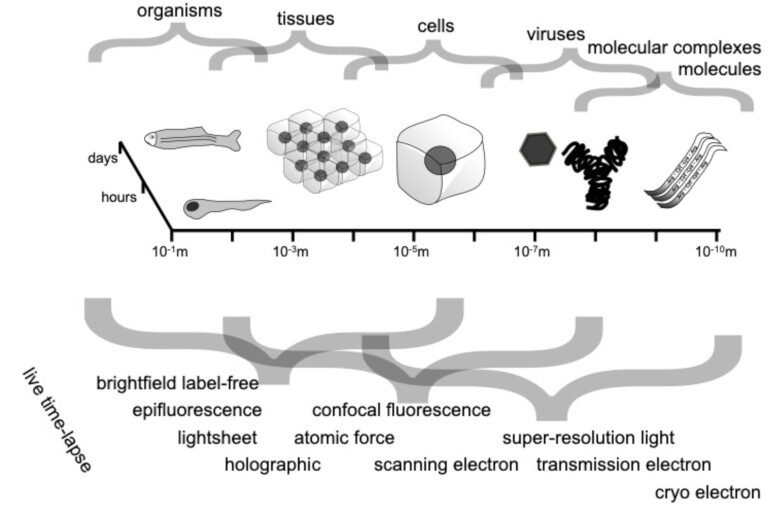
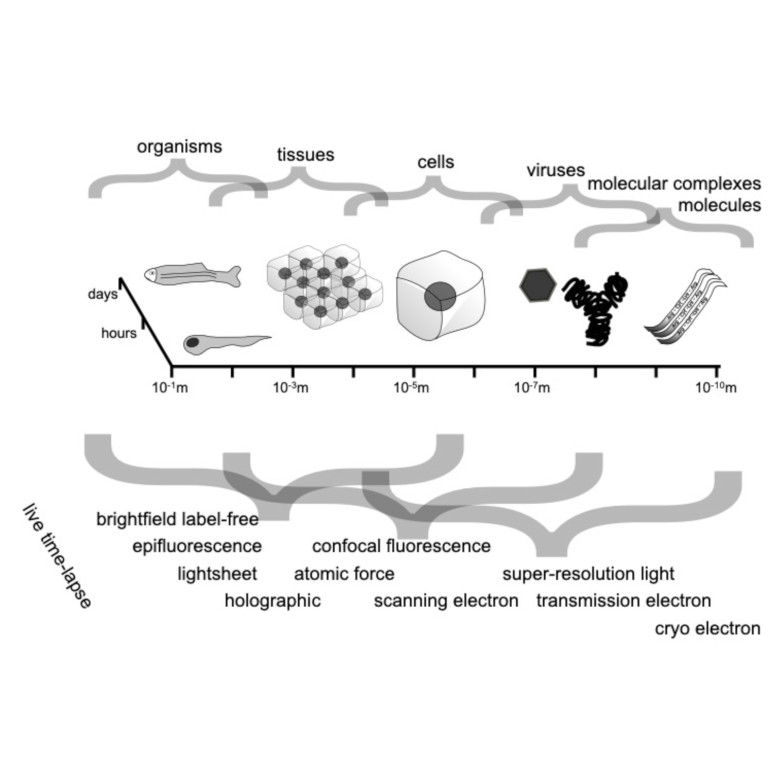
Spatio-temporal spectrum diagram of microscopy techniques and their applications. (Image by the Authors of the manuscript.)
Roadmap on Deep Learning for Microscopy
Giovanni Volpe, Carolina Wählby, Lei Tian, Michael Hecht, Artur Yakimovich, Kristina Monakhova, Laura Waller, Ivo F. Sbalzarini, Christopher A. Metzler, Mingyang Xie, Kevin Zhang, Isaac C.D. Lenton, Halina Rubinsztein-Dunlop, Daniel Brunner, Bijie Bai, Aydogan Ozcan, Daniel Midtvedt, Hao Wang, Nataša Sladoje, Joakim Lindblad, Jason T. Smith, Marien Ochoa, Margarida Barroso, Xavier Intes, Tong Qiu, Li-Yu Yu, Sixian You, Yongtao Liu, Maxim A. Ziatdinov, Sergei V. Kalinin, Arlo Sheridan, Uri Manor, Elias Nehme, Ofri Goldenberg, Yoav Shechtman, Henrik K. Moberg, Christoph Langhammer, Barbora Špačková, Saga Helgadottir, Benjamin Midtvedt, Aykut Argun, Tobias Thalheim, Frank Cichos, Stefano Bo, Lars Hubatsch, Jesus Pineda, Carlo Manzo, Harshith Bachimanchi, Erik Selander, Antoni Homs-Corbera, Martin Fränzl, Kevin de Haan, Yair Rivenson, Zofia Korczak, Caroline Beck Adiels, Mite Mijalkov, Dániel Veréb, Yu-Wei Chang, Joana B. Pereira, Damian Matuszewski, Gustaf Kylberg, Ida-Maria Sintorn, Juan C. Caicedo, Beth A Cimini, Muyinatu A. Lediju Bell, Bruno M. Saraiva, Guillaume Jacquemet, Ricardo Henriques, Wei Ouyang, Trang Le, Estibaliz Gómez-de-Mariscal, Daniel Sage, Arrate Muñoz-Barrutia, Ebba Josefson Lindqvist, Johanna Bergman
Journal of Physics: Photonics 8, 012501 (2026)
arXiv: 2303.03793
doi: 10.1088/2515-7647/ae0fd1

Through digital imaging, microscopy has evolved from primarily being a means for visual observation of life at the micro- and nano-scale, to a quantitative tool with ever-increasing resolution and throughput. Artificial intelligence, deep neural networks, and machine learning (ML) are all niche terms describing computational methods that have gained a pivotal role in microscopy-based research over the past decade. This Roadmap encompasses key aspects of how ML is applied to microscopy image data, with the aim of gaining scientific knowledge by improved image quality, automated detection, segmentation, classification and tracking of objects, and efficient merging of information from multiple imaging modalities. We aim to give the reader an overview of the key developments and an understanding of possibilities and limitations of ML for microscopy. It will be of interest to a wide cross-disciplinary audience in the physical sciences and life sciences.

Roadmap for Optical Tweezers published in Journal of Physics: Photonics

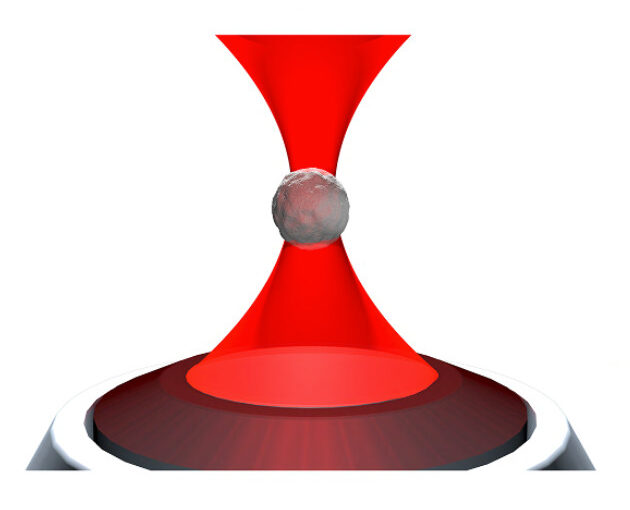
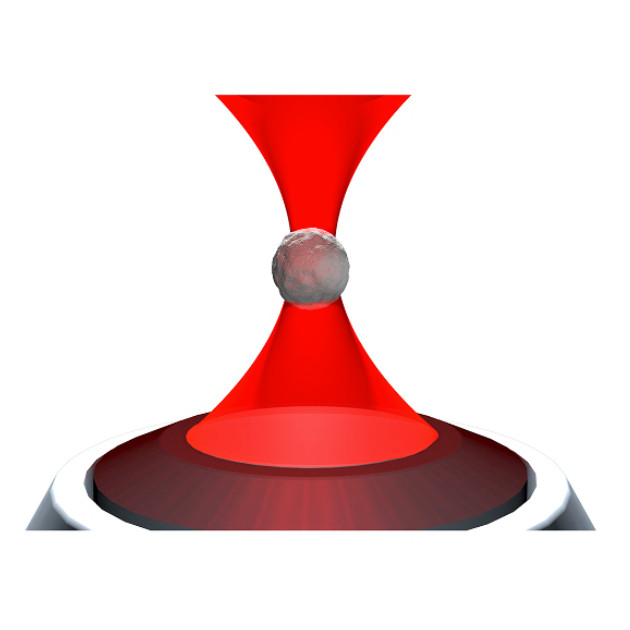
Illustration of an optical tweezers holding a particle. (Image by A. Magazzù.)
Roadmap for optical tweezers
Giovanni Volpe, Onofrio M Maragò, Halina Rubinsztein-Dunlop, Giuseppe Pesce, Alexander B Stilgoe, Giorgio Volpe, Georgiy Tkachenko, Viet Giang Truong, Síle Nic Chormaic, Fatemeh Kalantarifard, Parviz Elahi, Mikael Käll, Agnese Callegari, Manuel I Marqués, Antonio A R Neves, Wendel L Moreira, Adriana Fontes, Carlos L Cesar, Rosalba Saija, Abir Saidi, Paul Beck, Jörg S Eismann, Peter Banzer, Thales F D Fernandes, Francesco Pedaci, Warwick P Bowen, Rahul Vaippully, Muruga Lokesh, Basudev Roy, Gregor Thalhammer-Thurner, Monika Ritsch-Marte, Laura Pérez García, Alejandro V Arzola, Isaac Pérez Castillo, Aykut Argun, Till M Muenker, Bart E Vos, Timo Betz, Ilaria Cristiani, Paolo Minzioni, Peter J Reece, Fan Wang, David McGloin, Justus C Ndukaife, Romain Quidant, Reece P Roberts, Cyril Laplane, Thomas Volz, Reuven Gordon, Dag Hanstorp, Javier Tello Marmolejo, Graham D Bruce, Kishan Dholakia, Tongcang Li, Oto Brzobohatý, Stephen H Simpson, Pavel Zemánek, Felix Ritort, Yael Roichman, Valeriia Bobkova, Raphael Wittkowski, Cornelia Denz, G V Pavan Kumar, Antonino Foti, Maria Grazia Donato, Pietro G Gucciardi, Lucia Gardini, Giulio Bianchi, Anatolii V Kashchuk, Marco Capitanio, Lynn Paterson, Philip H Jones, Kirstine Berg-Sørensen, Younes F Barooji, Lene B Oddershede, Pegah Pouladian, Daryl Preece, Caroline Beck Adiels, Anna Chiara De Luca, Alessandro Magazzù, David Bronte Ciriza, Maria Antonia Iatì, Grover A Swartzlander Jr
Journal of Physics: Photonics 2(2), 022501 (2023)
arXiv: 2206.13789
doi: 110.1088/2515-7647/acb57b

Optical tweezers are tools made of light that enable contactless pushing, trapping, and manipulation of objects, ranging from atoms to space light sails. Since the pioneering work by Arthur Ashkin in the 1970s, optical tweezers have evolved into sophisticated instruments and have been employed in a broad range of applications in the life sciences, physics, and engineering. These include accurate force and torque measurement at the femtonewton level, microrheology of complex fluids, single micro- and nano-particle spectroscopy, single-cell analysis, and statistical-physics experiments. This roadmap provides insights into current investigations involving optical forces and optical tweezers from their theoretical foundations to designs and setups. It also offers perspectives for applications to a wide range of research fields, from biophysics to space exploration.

Deep learning in light–matter interactions published in Nanophotonics

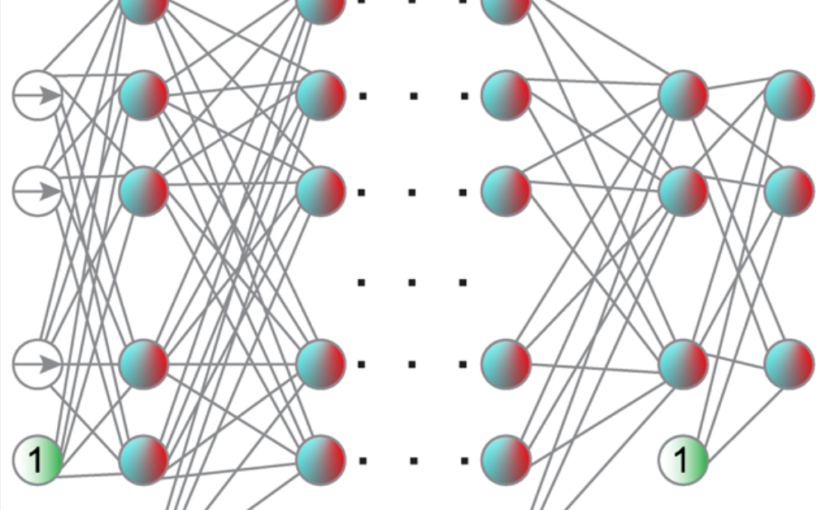
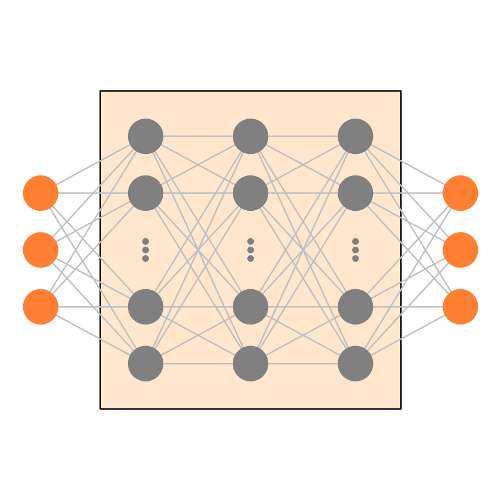
Artificial neurons can be combined in a dense neural network (DNN), where the input layer is connected to the output layer via a set of hidden layers. (Image by the Authors.)
Deep learning in light–matter interactions
Daniel Midtvedt, Vasilii Mylnikov, Alexander Stilgoe, Mikael Käll, Halina Rubinsztein-Dunlop and Giovanni Volpe
Nanophotonics, 11(14), 3189-3214 (2022)
doi: 10.1515/nanoph-2022-0197

The deep-learning revolution is providing enticing new opportunities to manipulate and harness light at all scales. By building models of light–matter interactions from large experimental or simulated datasets, deep learning has already improved the design of nanophotonic devices and the acquisition and analysis of experimental data, even in situations where the underlying theory is not sufficiently established or too complex to be of practical use. Beyond these early success stories, deep learning also poses several challenges. Most importantly, deep learning works as a black box, making it difficult to understand and interpret its results and reliability, especially when training on incomplete datasets or dealing with data generated by adversarial approaches. Here, after an overview of how deep learning is currently employed in photonics, we discuss the emerging opportunities and challenges, shining light on how deep learning advances photonics.

Machine learning reveals complex behaviours in optically trapped particles published in Machine Learning: Science and Technology

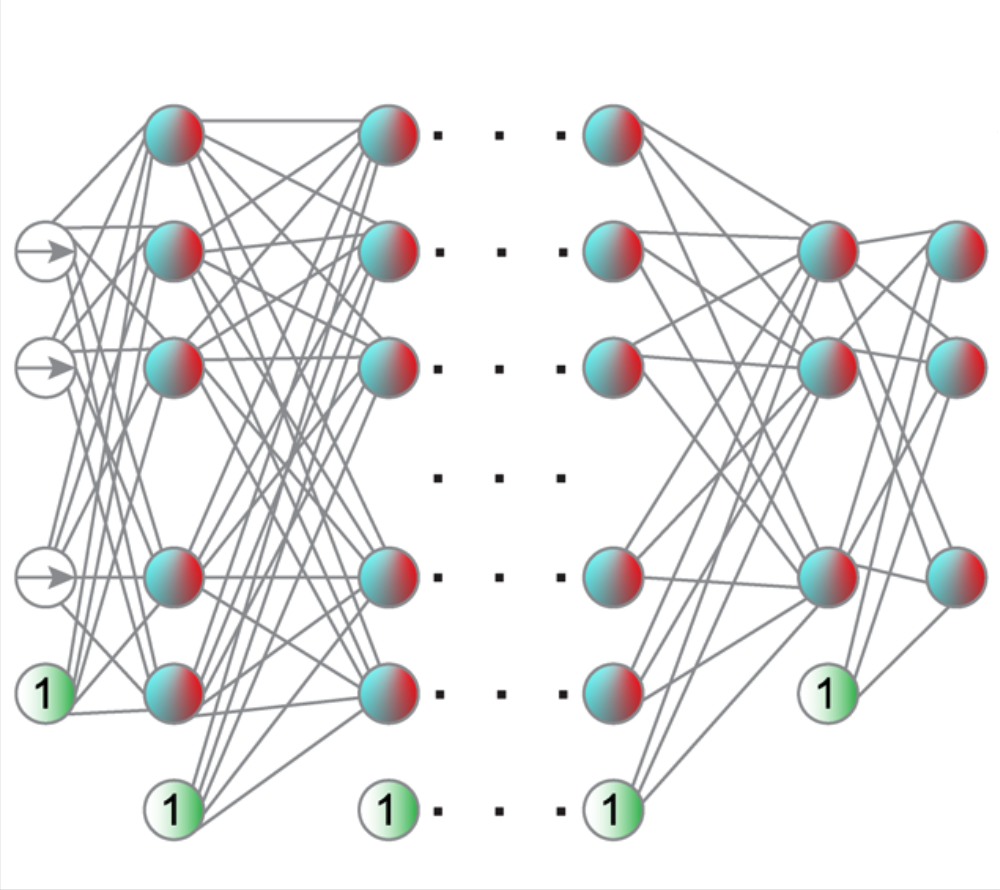
Illustration of a fully connected neural network with three inputs, three outputs, and three hidden layers.

Machine learning reveals complex behaviours in optically trapped particles
Isaac C. D. Lenton, Giovanni Volpe, Alexander B. Stilgoe, Timo A. Nieminen & Halina Rubinsztein-Dunlop
Machine Learning: Science and Technology, 1 045009 (2020)
doi: 10.1088/2632-2153/abae76
arXiv: 2004.08264

Since their invention in the 1980s, optical tweezers have found a wide range of applications, from biophotonics and mechanobiology to microscopy and optomechanics. Simulations of the motion of microscopic particles held by optical tweezers are often required to explore complex phenomena and to interpret experimental data. For the sake of computational efficiency, these simulations usually model the optical tweezers as an harmonic potential. However, more physically-accurate optical-scattering models are required to accurately model more onerous systems; this is especially true for optical traps generated with complex fields. Although accurate, these models tend to be prohibitively slow for problems with more than one or two degrees of freedom (DoF), which has limited their broad adoption. Here, we demonstrate that machine learning permits one to combine the speed of the harmonic model with the accuracy of optical-scattering models. Specifically, we show that a neural network can be trained to rapidly and accurately predict the optical forces acting on a microscopic particle. We demonstrate the utility of this approach on two phenomena that are prohibitively slow to accurately simulate otherwise: the escape dynamics of swelling microparticles in an optical trap, and the rotation rates of particles in a superposition of beams with opposite orbital angular momenta. Thanks to its high speed and accuracy, this method can greatly enhance the range of phenomena that can be efficiently simulated and studied.