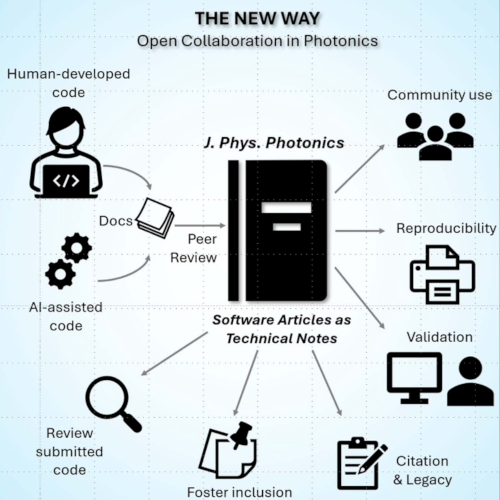
A centralized, peer-reviewed ecosystem in J. Phys. Photonics where human agents and/or AI agents co-develop validated, documented software. (Image from the manuscript.)Beyond the black box: towards an open and citable software ecosystem in photonics
Anoop C Patil, Maciej Trusiak, Fei Xia, Liangcai Cao, Carlo Manzo and Giovanni Volpe
Journal of Physics: Photonics 8, 020201 (2026)
doi: 10.1088/2515-7647/ae68cd
This editorial draws attention to a major issue in photonics: important research software is often hidden, undocumented, and lost over time, making results hard to reproduce. The rise of AI-generated code increases this problem by adding more ‘black box’ systems. To address this, J. Phys. Photonics is introducing Software Articles, a new article type allowing researchers to publish, validate, and share their code as formal scientific outputs. This initiative aims to promote transparency, reproducibility, and proper credit for developers. Open and peer-reviewed software helps the community verify results, reduce duplication of effort, and build lasting tools, ensuring that computational methods become reliable, accessible, and integral to scientific progress.
(Image created by G. Volpe with the assistance of DALL·E 2)What remain for physicists to do in the age of AI?
Giovanni Volpe
QT (Quantum Technology Division of MC2, Chalmers University of Technology) community building activity 2026 Date: 11 May 2026 Place: Stenungsbaden Yacht club
In recent years, the rapid growth of artificial intelligence, particularly deep learning, has transformed fields from natural sciences to technology. While deep learning is often viewed as a glorified form of curve fitting, its advancement to multi-layered, deep neural networks has resulted in unprecedented performance improvements, often surprising experts. As AI models grow larger and more complex, many wonder whether AI will eventually take over the world and what role remains for physicists and, more broadly, humans.
A critical, yet underappreciated fact is that these AI systems rely heavily on vast amounts of training data, most of which are generated and annotated by humans. This dependency raises an intriguing issue: what happens when human-generated data is no longer available, or when AI begins to train on AI-generated data? The phenomenon of AI poisoning, where the quality of AI outputs declines due to self-referencing, demonstrates the limitations of current AI models. For example, in image recognition tasks, such as those involving the MNIST dataset, AI tends to gravitate towards ‘safe’ or average outputs, diminishing originality and accuracy.
In this context, the unique role of humans becomes clear. Physicists, with their capacity for originality, deep understanding of physical phenomena, and the ability to exploit fundamental symmetries in nature, bring invaluable perspectives to the development of AI. By incorporating physics-informed training architectures and embracing the human drive for meaning and discovery, we can guide the future of AI in truly innovative directions. The message is clear: physicists must remain original, pursue their passions, and continue searching for the hidden laws that govern the world and society.
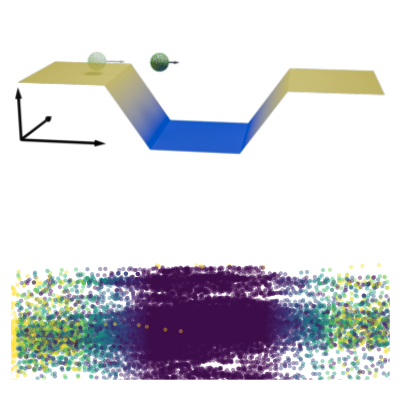
Experimental setup. (Top) Thermophoretic microswimmer undergoes active Brownian motion in a spatially-varying laser intensity profile that controls the self-thermophoretic propulsion of the swimmer using a feedback loop. (Bottom) Sample trajectory of the microswimmer over 15 minutes in a chamber. Colors indicate instantaneous velocity. (Image from the manuscript.)Delayed Active Swimmer in a Velocity Landscape
Viktor Holubec, Alexander Fischer, Giovanni Volpe, Frank Cichos
Physical Review Research 8, L022017 (2026)
arXiv: 2505.11042
doi: 10.1103/xn9x-ppjx
Active systems in nature and synthetic environments commonly exhibit spatially heterogeneous activity patterns and time-delayed responses from internal feedback mechanisms, exemplified by bacterial chemotaxis. We study an idealized active gas where particles modulate their self-propulsion based on local environmental conditions with such delays. Through integrated theoretical, computational, and experimental approaches, we demonstrate that steady-state density distributions and collective polarization exhibit characteristic peaks and valleys as functions of response delay time. We find that delays can amplify polarization by nearly an order of magnitude and trigger complete polarization reversal when particle displacement during the delay period surpasses the persistence length. Multiparticle simulations incorporating interparticle interactions validate that these phenomena remain robust in sufficiently dilute collective systems. Since density and polarization determine the current in active matter, our findings show that temporally programming the delay time allows control over both static and dynamic states in active systems, with implications for biological microswimmers and engineered microrobots.
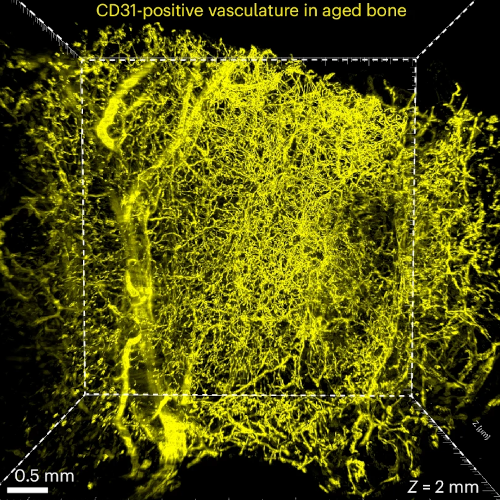
Visualization of the vasculature within human bone from a 75-year-old patient by immunostaining with antibodies against CD31. (Image from the manuscript.)Three-dimensional quantitative tissue clearing reveals differences in osteovascular niche of aged and young human mesenchymal stromal cells
Nelson Tsz Long Chu, Ostap Dregval, Yu-Wei Chang, Emil Kriukov, Xin Tian, Xin Liu, Dana Trompet, Misty Shuo Zhang, Lei Li, Zhong Li, Emiliano Gomez Ruiz, Joana B. Pereira, Mats Brittberg, Björn Barenius, Lars Sävendahl, Ralf H. Adams, Inger Gjertsson, Claes Ohlsson, Giovanni Volpe & Andrei S. Chagin
Nature Biomedical Engineering (2026)
bioRxiv: 10.1101/2025.10.07.680053
doi: 10.1038/s41551-026-01645-3
Human bone marrow mesenchymal stromal/stem cells (BM-MSCs) are widely used in clinical trials and tissue engineering, yet their native microenvironment remains poorly understood. Here we introduce a tissue-clearing protocol, DeepBone, for human bones and integrate it with simultaneous mRNA and protein detection. Using this protocol, we spatially map BM-MSCs relative to key bone microenvironment components, including human blood capillaries, adipocytes, sinusoids and bony trabeculae. Quantitative analysis reveals that the native microenvironment of human BM-MSCs in young bone is enriched in vasculature, sinusoids, bone matrix and adipocytes. In contrast, in aged bone, BM-MSCs show no preferential association with bone or adipocytes. Proliferative BM-MSCs are predominantly found along blood vessels. Moreover, we identify a specialized microenvironment for BM-MSCs in young bone, characterized by sinusoids coiled around trabeculae and enriched by R-type vessels. These findings provide insights into the native niches of BM-MSCs, offering a foundation for the development of tissue engineering strategies that mimic their physiological context.
DeepTrack 2 Logo. (Image from DeepTrack 2 Project)Artificial Intelligence for Microscopy: From Pixels to Physical Insight
Giovanni Volpe DINAMO 2026
Franschhoek, South Africa
7 April 2026
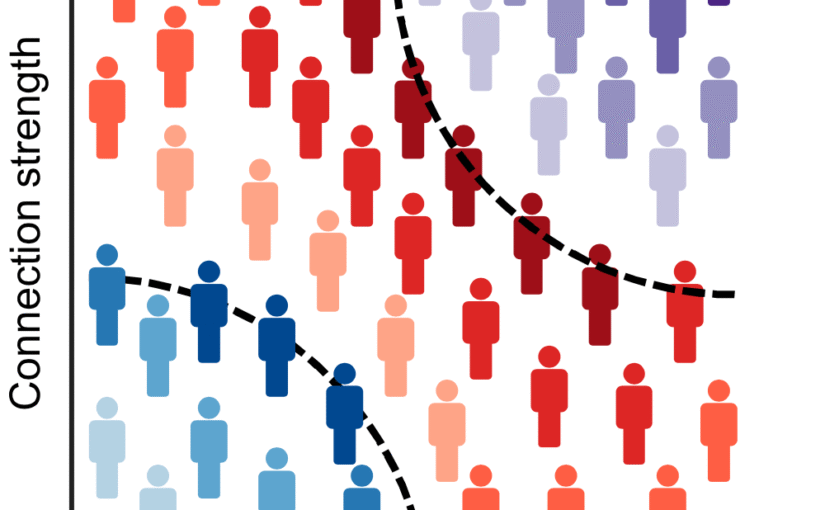
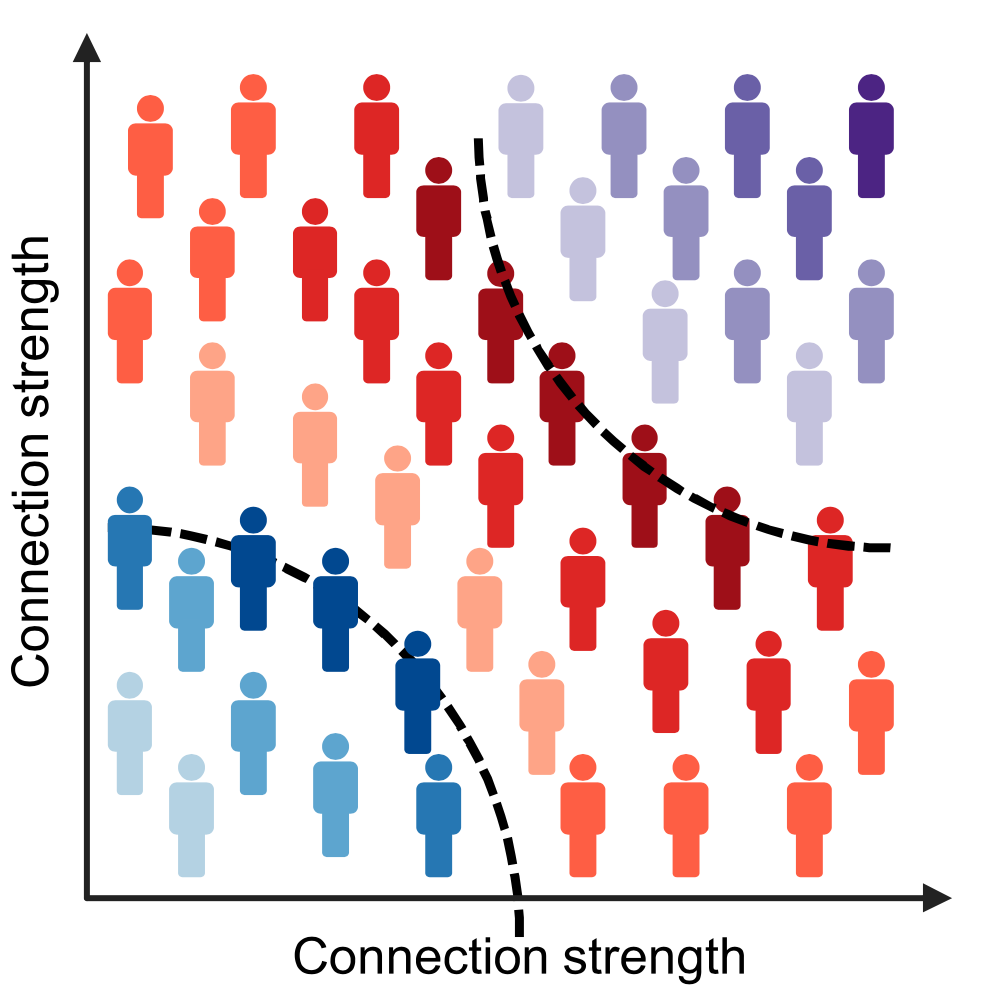
Diagnostic classification. (Image from the article.)Mapping individual molecular connectomes in Alzheimer’s disease
Zhilei Xu, Mite Mijalkov, Jiawei Sun, Yu-Wei Chang, Arianna Sala, Giovanni Volpe, Mario Severino, Mattia Veronese, Sara Garcia-Ptacek, Joana B. Pereira, for the Alzheimer’s Disease Neuroimaging Initiative
Alzheimer’s & Dementia 22, e71310 (2026)
DOI: 10.1002/alz.71310
INTRODUCTION
Mapping individual differences is crucial to improve personalized medicine approaches in Alzheimer’s disease (AD), which is characterized by strong inter-individual variability in the accumulation patterns of tau and amyloid beta pathology.
METHODS
We assess the progression of AD across the disease continuum by building individual molecular connectomes using longitudinal positron emission tomography (PET) data.
RESULTS
We demonstrate that these connectomes constitute a unique fingerprint, capable of identifying a single individual from a large group of subjects. Alterations in the connectomes discriminate different diagnostic groups and predict cognitive decline to a higher extent than conventional PET measures. We introduce a novel gene-specific transcription network analysis that linked individual tau and amyloid connectomes to a common transcriptomic profile of apoptosis, with the tau connectome being specifically related to pyrimidine metabolism, and the amyloid connectome to histone acetylation.
DISCUSSION
Individual molecular connectome mapping provides a novel and sensitive framework to monitor AD progression.
Highlights
Individual molecular connectomes constitute a unique fingerprint, capable of identifying a single individual from a large group of subjects.
Alterations in individual molecular connectomes significantly increase both across the Alzheimer’s disease (AD) continuum and over time.
Alterations in individual molecular connectomes discriminate different diagnostic groups and predict cognitive decline to a higher extent than conventional positron emission tomography measures.
Susceptibilities of individual tau and amyloid connectomes to AD are linked to a common transcriptomic profile of apoptosis, with the tau connectome being specifically related to pyrimidine metabolism, and the amyloid connectome to histone acetylation.
Optical Fiber Micro/Nano Axicon Tip: An Optical Imaging Platform
Samir K. Mondal
CSIR-CSIO, Chandigarh, India Date: 22 April 2026 Time: 12:30 Place: Online on zoom
Optical fiber tip under structural modifications enhances light-matter interaction by focusing, collecting or modulating light in microscopic scale and combined with waveguide property, it emerges as a potential optical tool, especially for spectroscopic, endoscopic and imaging application. A chemical etching technique has been introduced to permanently modify the tip as Micro/Nano axicon, capable in generating structured beams. The optics of the axicons have been studied in detail and further used in optical imaging experiments, namely phase microscopy, photonic nanojet and nanoscopy. The seminar will highlight first-hand information about the probe and experiments addressing the above-mentioned application.
Short Bio
Dr. Mondal is Chief Scientist at CSIR-CSIO, Chandigarh. He earned his Ph.D. in Electronic Science and M.Sc. in Physics from the University of Calcutta. After postdoctoral research at the University of California, Irvine and the University of Minnesota, he joined Tyndall Research Institute, Ireland.
With over 25 years in optics and photonics, his work spans optical interconnects, photonic crystals, lasers, and fiber instrumentation. He leads research in optical fiber antennas, near-field optics, imaging, and plasmonics, aiming for sustainable photonics platforms.
He collaborates internationally and is known for pioneering micro/nano axicons on fiber tips. He has over 50 publications and serves as an editor and reviewer.
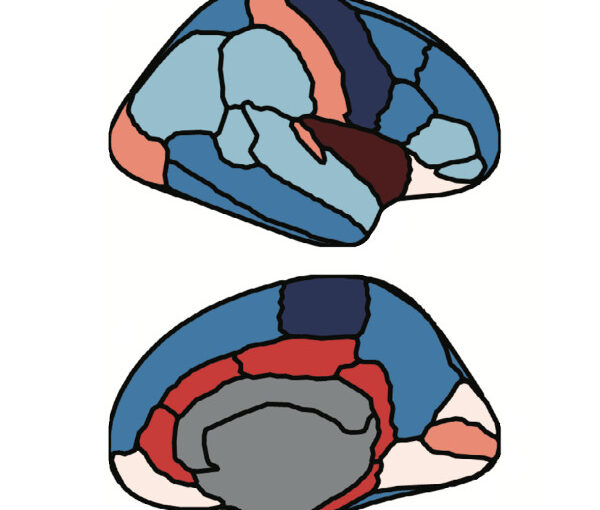
Parcellation of the brain cortex. (Image from the article.)Tracking early cognitive decline in preclinical AD with brain MRI similarity
Jiawei Sun, Blanca Zufiria-Gerbolés, Massimiliano Passaretti, Giovanni Volpe, Mite Mijalkov, Joana B. Pereira, for the Alzheimer’s Disease Neuroimaging Initiative
Alzheimer’s & Dementia 22, e71170 (2026)
DOI: 10.1002/alz.71170
INTRODUCTION
Early detection of neuroanatomical changes in preclinical Alzheimer’s disease (AD) is critical for timely intervention. However, conventional magnetic resonance imaging (MRI) and fluid biomarkers often lack sensitivity to subtle structural alterations in early disease stages.
METHODS
To identify early brain alterations, we applied a perturbation-based brain similarity approach to cognitively normal participants from Alzheimer’s Disease Neuroimaging Initiative (ADNI) and Open Access Series of Imaging Studies (OASIS), stratified by amyloid status. We evaluated its predictive performance for cognition and diagnostic conversion against cortical thickness, volumetric MRI, and fluid biomarkers.
RESULTS
In both cohorts, brain similarity consistently outperformed other biomarkers across cognitive domains and amyloid groups. It also achieved superior accuracy in predicting clinical conversion and exhibited associations with cytoarchitectural organization.
DISCUSSION
These findings highlight brain similarity as a sensitive marker of early neuroanatomical disruption in AD. Its ability to detect subtle structural changes before overt atrophy underscores its potential for early disease monitoring and treatment assessment in preclinical AD trials.
Highlights
Brain similarity captures early brain changes in preclinical Alzheimer’s disease (AD).
Brain similarity outperforms conventional biomarkers such as cortical thickness, volume measures, and fluid biomarkers in predicting cognitive decline.
Brain similarity predicts conversion to mild cognitive impairment and AD more accurately than traditional imaging markers, and its predictive performance is further improved when combined with fluid biomarkers.
Brain similarity captures structural disruptions associated with cortical layer II of the cytoarchitectonic lamina of human neocortex.
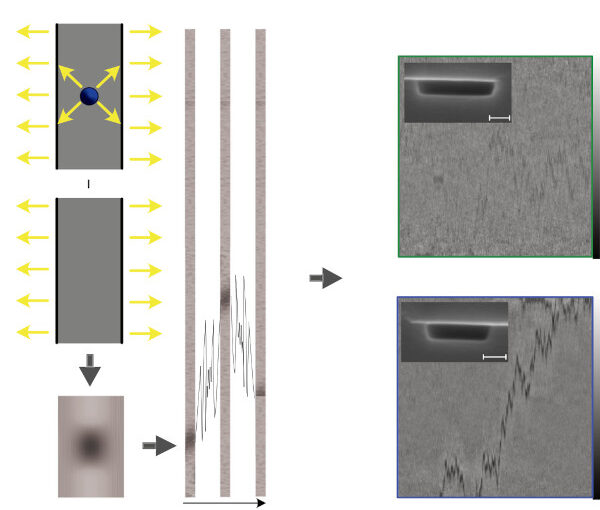
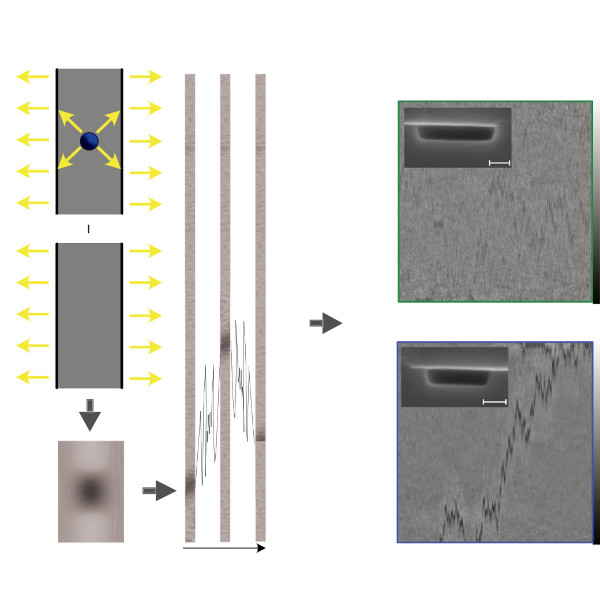
The principle of differential imaging in NSM, in which we subtract the light scattered (yellow arrows indicate the scattered-light direction) by an empty nanochannel from the light scattered by the same channel with a molecule inside. A sequence of differential images of a nanochannel containing a diffusing single molecule obtained in this way is combined into a kymograph, which then contains the full molecular trajectory. (Image from the article.)Label-free mass and size characterization of few-kDa biomolecules by hierarchical vision transformer augmented nanofluidic scattering microscopy
Henrik K. Moberg, Bohdan Yeroshenko, Joachim Fritzsche, David Albinsson, Barbora Spackova, Daniel Midtvedt, Giovanni Volpe, Christoph Langhammer
Nature Communications 17, 2533 (2026)
DOI: 10.1038/s41467-026-70514-z
Nanofluidic scattering microscopy characterizes single molecules in subwavelength nanofluidic channels label-free, using the interference of visible light scattered by the molecule and nanochannel. It determines a molecule’s hydrodynamic radius by tracking its diffusion trajectory and its molecular weight by analyzing its scattering intensity along that trajectory. However, using standard analysis algorithms, it is limited to characterization of proteins larger than ≈ 60 kDa. Here, we push this limit by one order of magnitude to below ≈ 6 kDa molecular weight and ≈ 1.5 nm hydrodynamic radius — as we exemplify on the peptide hormone insulin — by using ultrasmall nanofluidic channels and by analyzing the data with a hierarchical vision transformer. When we benchmark this approach against the theoretical limit set by the Cramér–Rao Lower Bound, we find that it can be approached with sufficiently long molecular trajectories. This enables quantitative label-free single-molecule microscopy for biologically relevant families of sub-10-kDa molecules, such as cytokines, chemokines and peptide hormones.
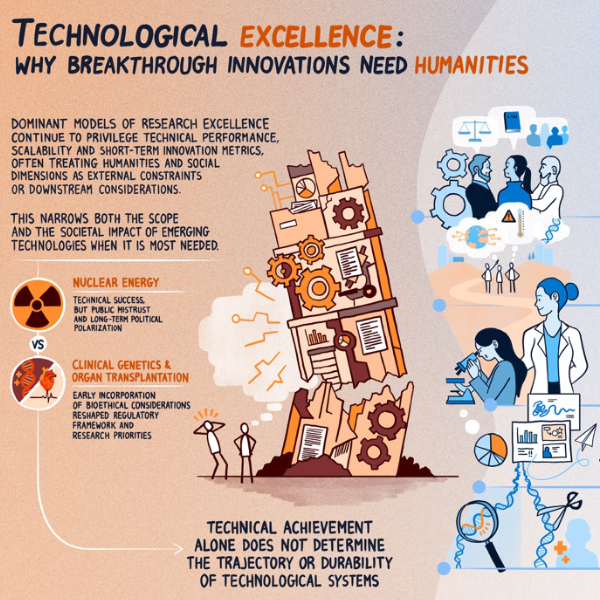
Why breakthrough research needs humanities and social sciences. (From an artwork by Jacopo Sacquegno.)Technological Excellence Requires Human and Social Context
Karl Palmås, Mats Benner, Monica Billger, Ben Clarke, Raimund Feifel, Julia Fernandez-Rodriguez, Anna Foka, Juliette Griffié, Claes Gustafsson, Kerstin Hamilton, Johan Holmén, Kristina Lindström, Tobias Olofsson, Joana B. Pereira, Marisa Ponti, Julia Ravanis, Sviatlana Shashkova, Emma Sparr, Pontus Strimling, Fredrik Höök, Giovanni Volpe
arXiv: 2603.10653
Breakthrough technologies increasingly shape social institutions, economic systems, and political futures. Yet models of research excellence associated with such technologies often prioritize technical performance, scalability, and short-term innovation metrics while treating ethical, social, and cultural dimensions as secondary considerations. This perspective article argues that such separation is no longer tenable. We propose a broader understanding of excellence that combines technical rigor with ethical robustness, social intelligibility, and long-term relevance. The rapid emergence of generative and agentic artificial intelligence further underscores this argument. As technological systems increasingly operate through language, interpretation, and normative alignment, expertise traditionally cultivated in the humanities and social sciences becomes integral to the design, governance, and responsible deployment of such systems. Drawing on historical examples and contemporary research practices, this article examines five interconnected domains where the humanities and social sciences, treated as integrated dimensions of research practice, can strengthen technological development: (1) ethical, legal, and social integration in agenda-setting and research design; (2) plural and reflexive foresight practices that shape technological futures; (3) graduate education as a leverage point for cross-disciplinary literacy; (4) visualization and communication as epistemic and civic practices; and (5) institutional frameworks that move beyond rigid distinctions between basic and applied research. Across these dimensions, we propose practical strategies for embedding interdisciplinary collaboration structurally rather than symbolically.