Illustration of three different experiments autonomously performed by the SmartTrap system: DNA pulling experiments (top), red blood cell stretching (bottom left), and particle-particle interaction measurements (bottom right). (Image by M. Selin.)SmartTrap: high-throughput optical tweezers via real-time adaptive control
Antonio Ciarlo, Martin Selin, Giuseppe Pesce, Lars Bengtsson, Joan Camunas-Soler, Vinoth Sundar Rajan, Fredrik Westerlund, L. Marcus Wilhelmsson, Isabel Pastor, Felix Ritort, Steven B. Smith, Carlos Bustamante, Giovanni Volpe Date: 23 August 2026 Time: 4:55 PM – 5:10 PM PDT Place: Conv. Ctr. Room 5B
We present SmartTrap, a fully autonomous optical tweezers platform that automates optical trapping experiments. SmartTrap uses deep learning–based 3D particle tracking, adaptive feedback control, and automated microfluidics to perform complete force spectroscopy and manipulation protocols without human intervention. Once initialized, the system operates continuously, autonomously handling trapping, molecular attachment, force application, data acquisition, and bead replacement. We demonstrate its capabilities using automated λ-DNA pulling experiments, which enable high-throughput force-extension and kinetic measurements. These capabilities are implemented using fully open-source control and analysis software with user-friendly interfaces, facilitating adaptation to existing optical tweezers setups and experimental workflows. SmartTrap is a flexible, general-purpose platform for automated optical trapping experiments in biomolecular, colloidal, and cellular systems.
DeepTrack2 Logo. (Image by J. Pineda)deeplay: enhancing pytorch with customizable and reusable neural networks
Alex Lech, Mirja Granfors, Jiacheng Huang, Benjamin Midtvedt, Jesús Pineda, Harshith Bachimanchi, Carlo Manzo, Giovanni Volpe Date: 23 August 2026 Time: 2:15 PM – 2:30 PM PDT Place: Conv. Ctr. Room 2
Deeplay is a Python-based deep learning library that extends PyTorch, addressing limitations in modularity and reusability commonly encountered in neural network development. Built with a core philosophy of modularity and adaptability. Unlike traditional PyTorch modules, Deeplay allows the properties of submodules to be modified after creation. Layers, blocks, or activation functions can be replaced or reconfigured without rewriting the surrounding architecture, which reduces boilerplate code, improves reuse, and simplifies ablation studies.
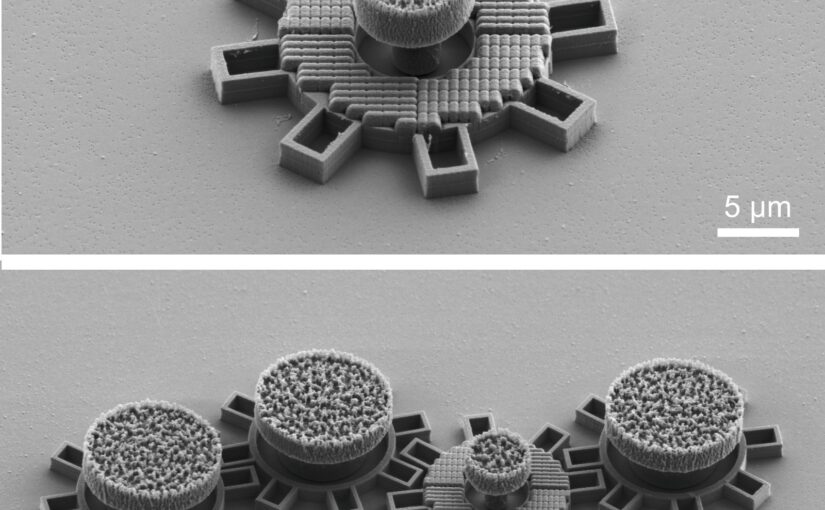
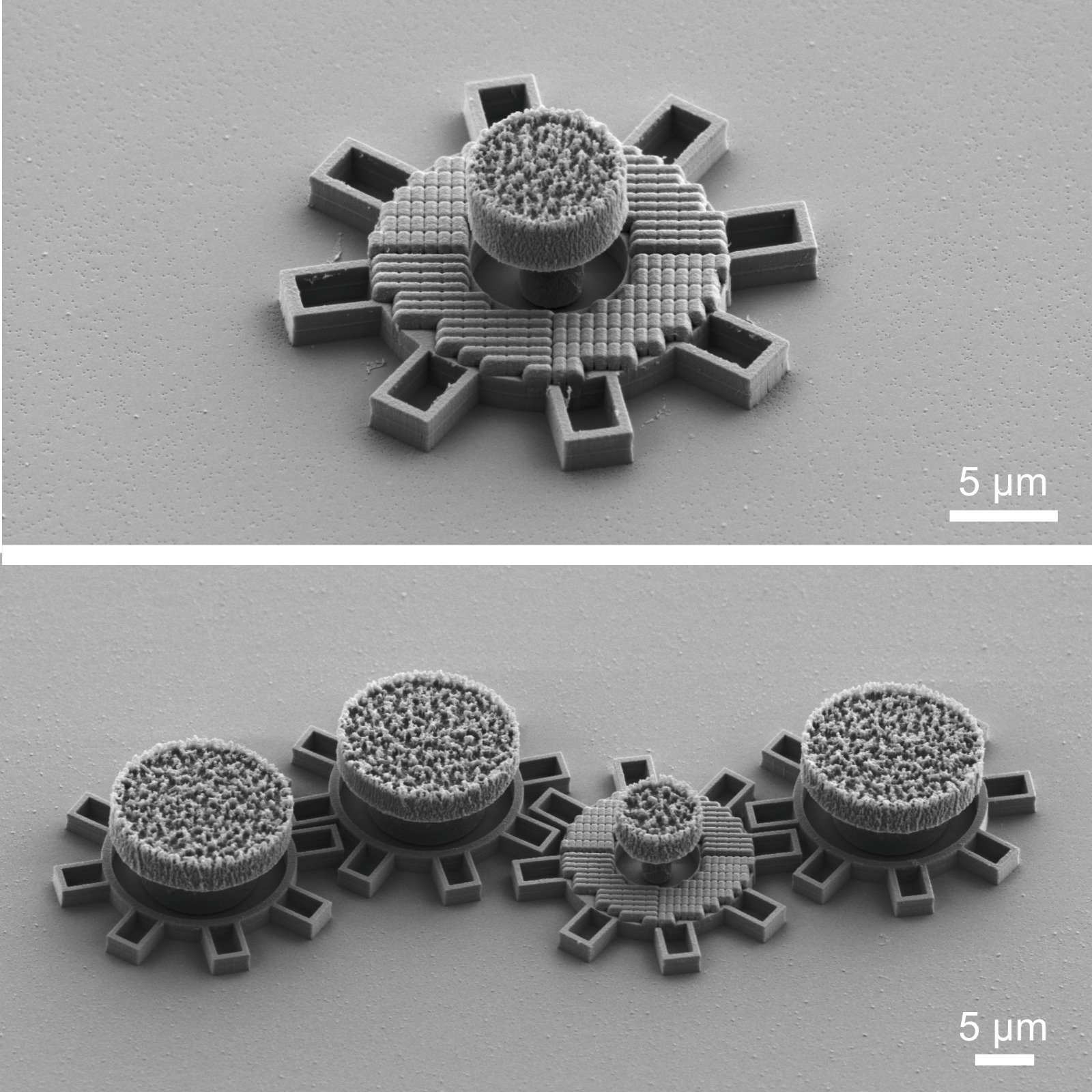
Top: single gear; Bottom: the second gear from the right has an optical metamaterial that react to laserlight and makes the gear move. All gears are made in silica directly on a chip. Each gear is about 0.016 mm in diameter. (Image by G. Wang)Light-driven micromechanical gear systems
Antonio Ciarlo, Gan Wang, Marcel Rey, Mohanmmad Mahdi Shanei, Kunli Xiong, Giuseppe Pesce, Mikael Käll and Giovanni Volpe Date: 23 August 2026 Time: 9:30 AM – 9:45 AM PDT Place: Conv. Ctr. Room 11A
We present microscopic geared metamachines driven by optical metasurfaces and fabricated using standard lithography techniques. Metasurface elements convert incident plane-wave illumination into localized optical forces and torques, enabling direct on-chip actuation of micromechanical components without external drives. We demonstrate microscopic gear trains powered by a single optically activated gear and a pinion-and-rack micromachine capable of rotational-to-linear motion conversion and controlled mirror actuation. The platform is compatible with planar fabrication and scalable to parallel integration, providing a compact approach to chip-integrated optical actuation and micromechanical functionality.
Top: single gear; Bottom: the second gear from the right has an optical metamaterial that react to laserlight and makes the gear move. All gears are made in silica directly on a chip. Each gear is about 0.016 mm in diameter. (Image by G. Wang)Light-driven metamachines: From metarotors to integrated microscopic gear trains
(Keynote Presentation)
Giovanni Volpe Date: 23 August 2026 Time: 8:30 AM – 9:05 AM PDT Place: Conv. Ctr. Room 11A
Microscopic geared metamachines provide a powerful platform to control motion and mechanical work at the microscale. While the miniaturization of mechanical systems has been pursued for decades, integrating drives and gear trains at micrometer scales has remained a major challenge. Recent advances in optical metasurfaces and on-chip fabrication enable light-driven metarotors that transfer torque to passive gears under uniform illumination. These systems have been explored under various conditions by varying light polarization, intensity, and structural symmetry to achieve directional control, tunable rotation rates, and efficient torque transmission. Integrated designs such as rack-and-pinion configurations further demonstrate conversion of rotational motion into linear actuation within compact microsystems. More broadly, geared metamachines extend the landscape of light-powered micro- and nanomachines. In this presentation, I’ll give an overview of this field with a focus on metarotor design, torque transfer across microscopic gear trains, and integrated light-programmable micromechanical systems.
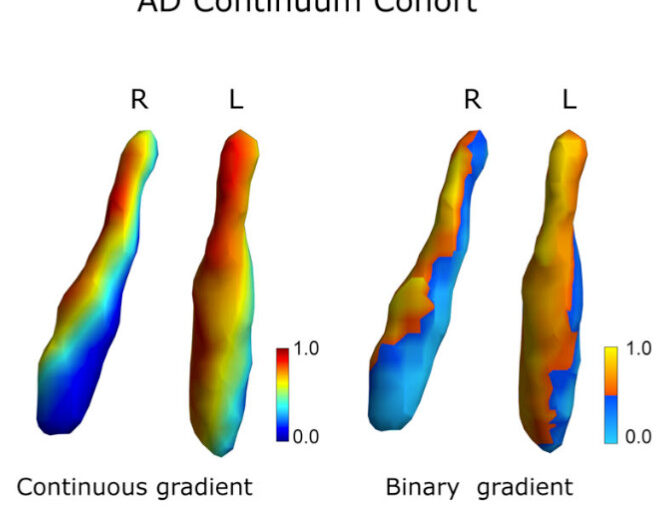
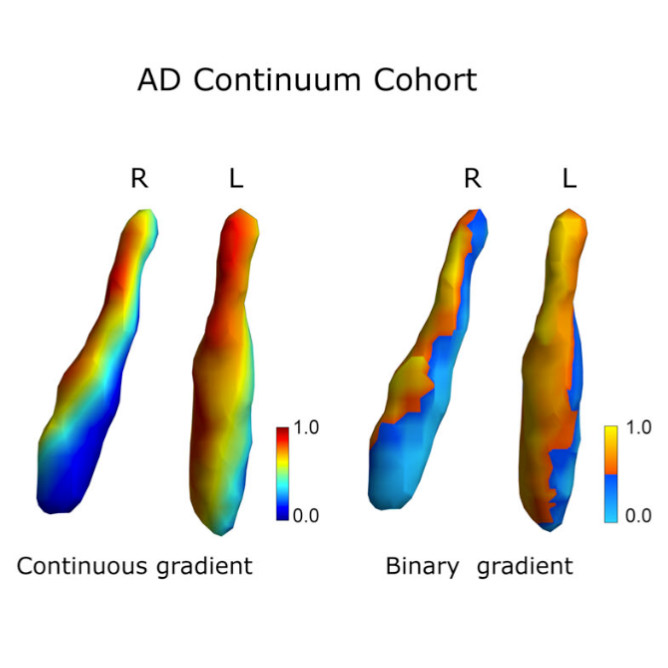
Anatomical gradients of the right (R) and left (L) LC in the AD continuum cohort (ADNI). (Image from the article.)Vulnerability of locus coeruleus connections to aging and Alzheimer’s disease
Blanca Zufiria-Gerbolés, Daniel Vereb, Mite Mijalkov, Massimiliano Passaretti, Giovanni Volpe, Zhilei Xu, Thomas Hinault, Sara Garcia-Ptacek, Joana B. Pereira, for the Alzheimer’s Disease Neuroimaging Initiative
Alzheimer’s & Dementia 22, e71737 (2026)
doi: 10.1002/alz.71737
INTRODUCTION
The locus coeruleus (LC) is important in coordinating communication between brain regions through its widespread connections. However, the organization of its connections, and its changes with aging and Alzheimer’s disease (AD), remains unclear.
METHODS
We mapped whole-brain white matter connections from the LC in two independent cohorts: one spanning the adult lifespan and another covering the AD continuum.
RESULTS
We identified a novel dorsal–ventral organization of LC connectivity that showed changes common to aging and AD or specific to AD, was linked to gene expression patterns, and was associated with cognitive performance and tau pathology in the entorhinal cortex. We also developed an imaging marker, LC gap, capturing LC connectivity deviations associated with slower tau accumulation in cognitively normal individuals at high risk for AD.
DISCUSSION
These findings provide new insights into LC connectivity in aging and AD, highlighting its potential role as a resilience marker against AD neurodegeneration.
Highlights
For the first time, we mapped the whole-brain white matter connections from the Locus Coeruleus (LC) to the rest of the brain across aging and Alzheimer’s disease (AD) continuum.
Revealed a novel dorsal–ventral organization LC connectivity that presents changes common to aging and AD or specific to AD.
LC connectivity patterns are associated with cognitive performance and tau pathology in the entorhinal cortex.
We introduced a novel marker capturing LC connectivity deviations and that is associated with tau accumulation in cognitively normal individuals at high risk for AD.
Illustration of three different experiments autonomously performed by the SmartTrap system: DNA pulling experiments (top), red blood cell stretching (bottom left), and particle-particle interaction measurements (bottom right). (Image by M. Selin.)Smart Machines and Optical Manipulation at the Microscale
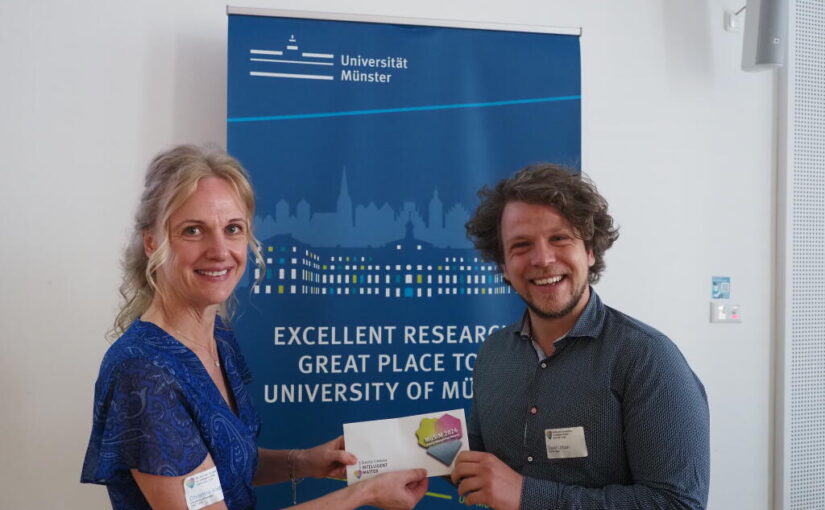
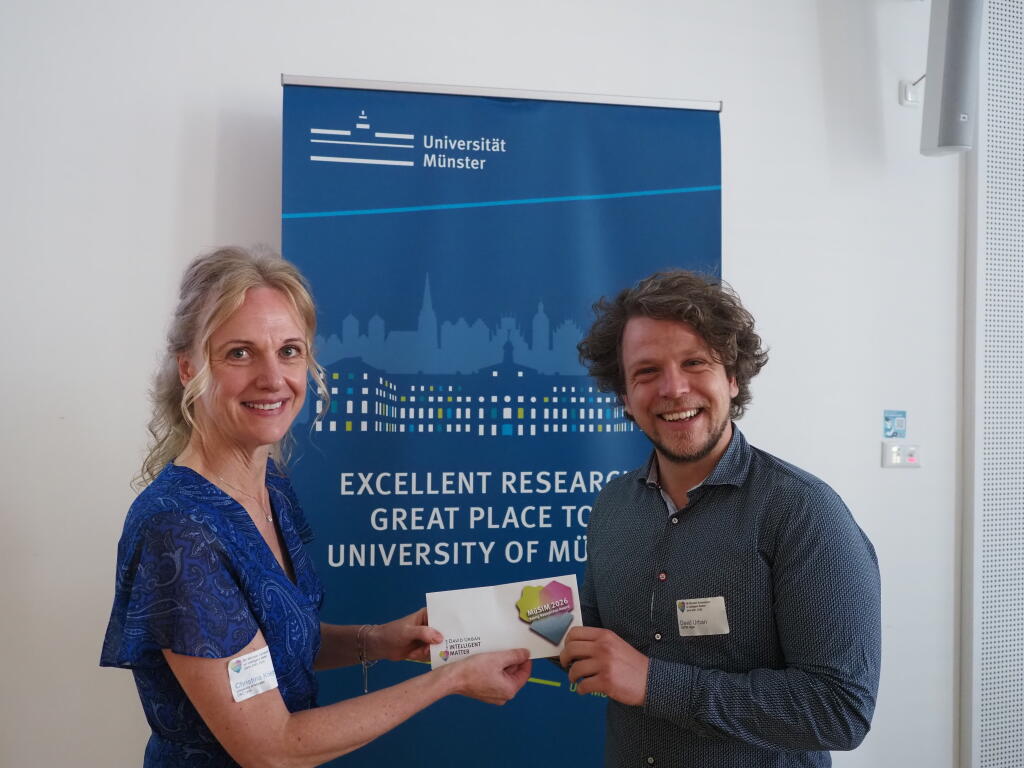
Giovanni Volpe 5th Münster Symposium on Intelligent Matter (MüSIM) (Flyer) Date: 24 June 2026 Time: 15:00 Place: Center for Soft Nanoscience (SoN), Münster, Germany
Microscale systems offer a unique opportunity to engineer machines whose function emerges from the interplay of geometry, interactions, and fluctuations. In this talk, I will present our work on smart machines at the microscale, combining nanofabrication, programmable interactions, and advanced optical methods to design and control colloidal micromechanisms and metamaterials.
I will first introduce how nanotechnology enables the realization of colloidal metamachines and microscopic mechanisms, where shape and mechanical constraints are engineered to produce targeted motion and response in fluid environments. I will then show how smart microscopy and optical manipulation—including high-resolution imaging, automated tracking, and light-based control—allow us to probe these machines in real time and quantify their dynamics. This approach enables precision measurements of effective interaction landscapes, including critical Casimir forces and their relation to fluctuation-induced forces known from QED Casimir physics.
The award-winning research was carried out during David’s research stay at the Soft Matter Lab, University of Gothenburg, highlighting the value of international collaboration in advancing frontier research.
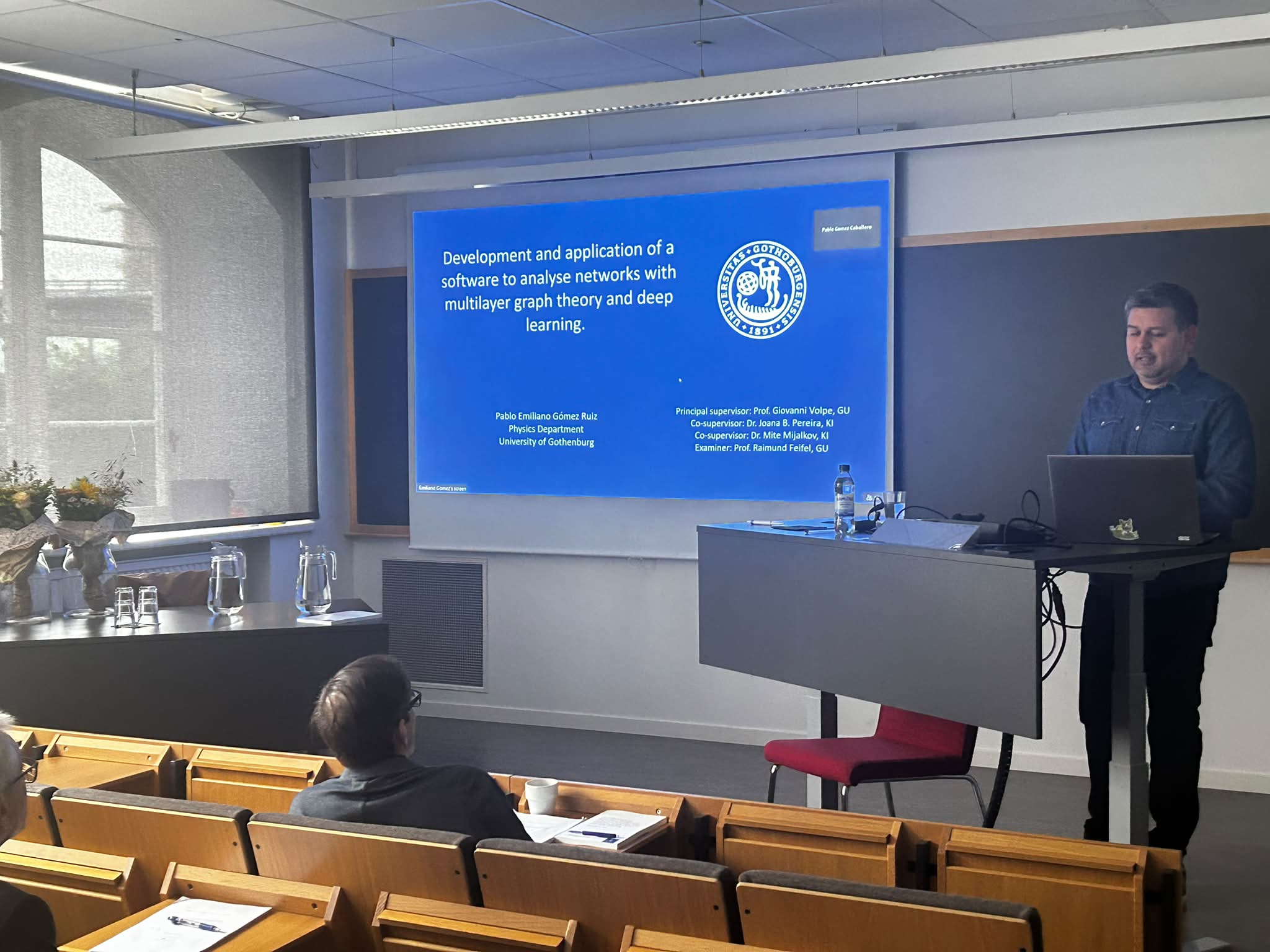
PhD defense of Emiliano Gomez-Ruiz. (Photo by H. Zhao.)Pablo Emiliano Gomez Ruiz defended his PhD thesis on June 15, 2026. Congrats!
The defense took place in PJ Salen lecture hall, Institutionen för fysik, Johanneberg Campus, Göteborg, at 14:00.
Title: Development and application of software to analyze networks with multilayer graph theory and deep learning.
Abstract:
Understanding how the brain is wired is essential, it gives us a new level of insight of its functionality. By modeling the brain as a complex intercon- nected network, the connectome, researchers can abstract biological com- plexity into a mathematical framework suitable for analysis. The connec- tome can be understood by it’s structural links such as neuron’s synapses or by the functional links such as a statistical relationships between neu- ral activity between the brain’s regions. The mapping of these networks is achieved with neuroimaging, while their analysis is driven by the integration of graph theory and deep learning architectures.
In this work, we present a software “Brain Analysis using Graph Theory 2” (BRAPH 2.0), which is a direct solution of the need for a toolbox de- signed for both complex graph theory and deep learning analyses. Central to the software’s architecture is the “Genesis” pseudo-language, which allows researchers to bridge human-readable properties with computer code, facilitating the modular expansion of multilayer graph theory and deep learning pipelines of the software.
The capabilities of this framework are demonstrated through large-scale clinical applications. We analyze sex-related differences in the aging brain using a cohort of 37,543 participants from the UK Biobank. Our results reveal that multilayer metrics, which capture the dynamic interplay between positive and negative functional connections, are significantly more sensitive to sex-related topological changes than traditional unilayer measures.
Furthermore, we implement a Reservoir Computing (RC) pipeline to define computational “Memory Capacity” (MC) as a physical indicator of biological aging. Using the Cam-CAN and LEMON cohorts, we demonstrate that MC reliably predicts age-related decline, particularly within the frontal and parietal regions, and reflects the underlying integrity of white matter tracts and the locus coeruleus.
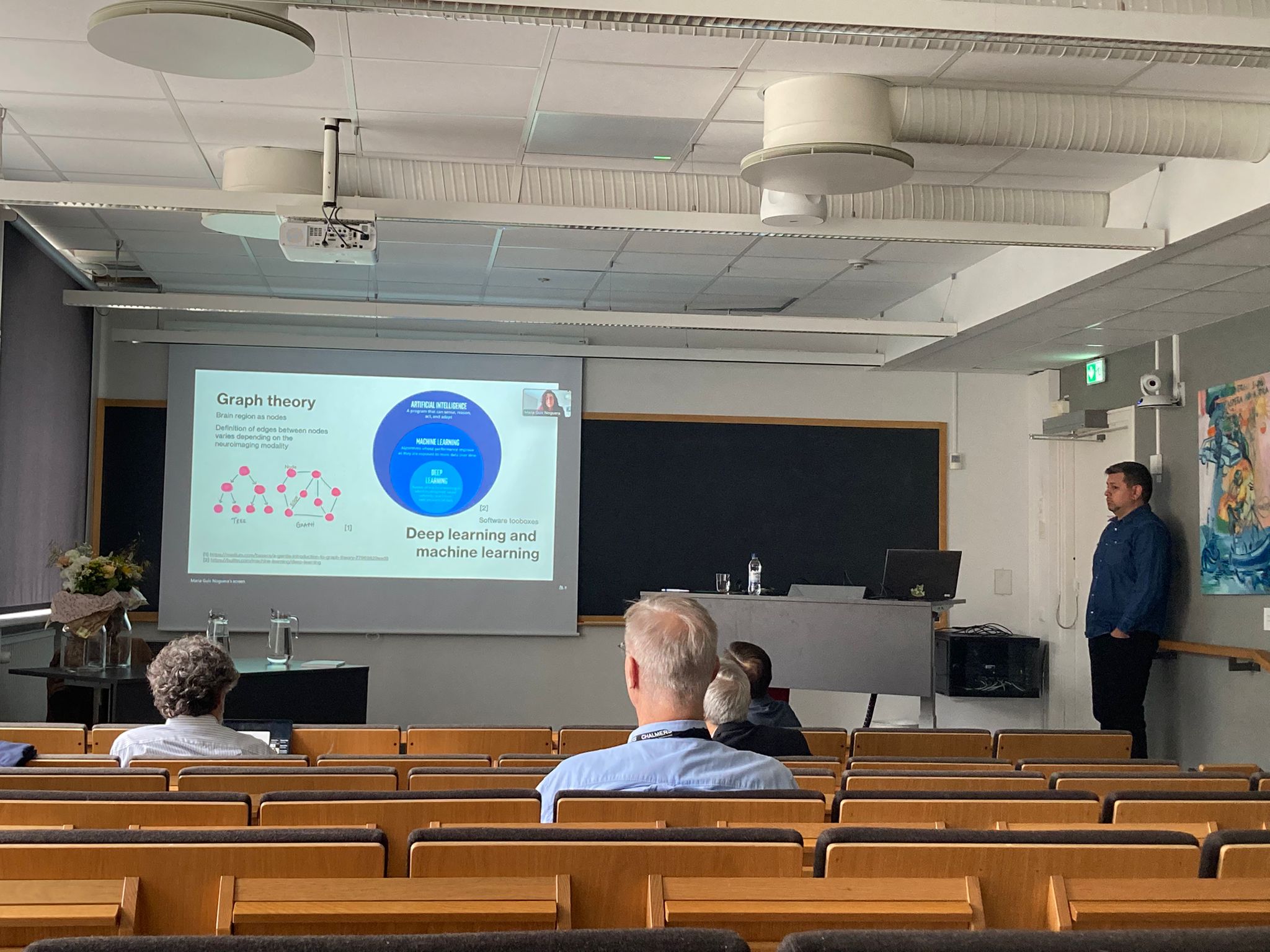
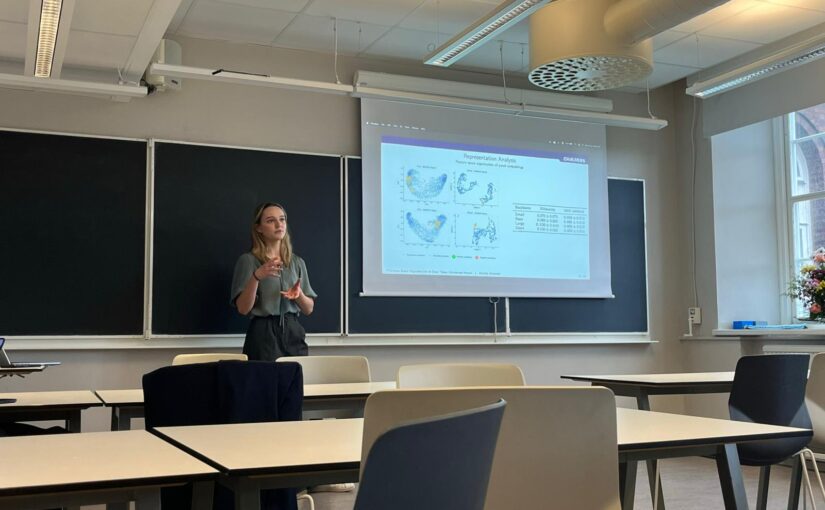
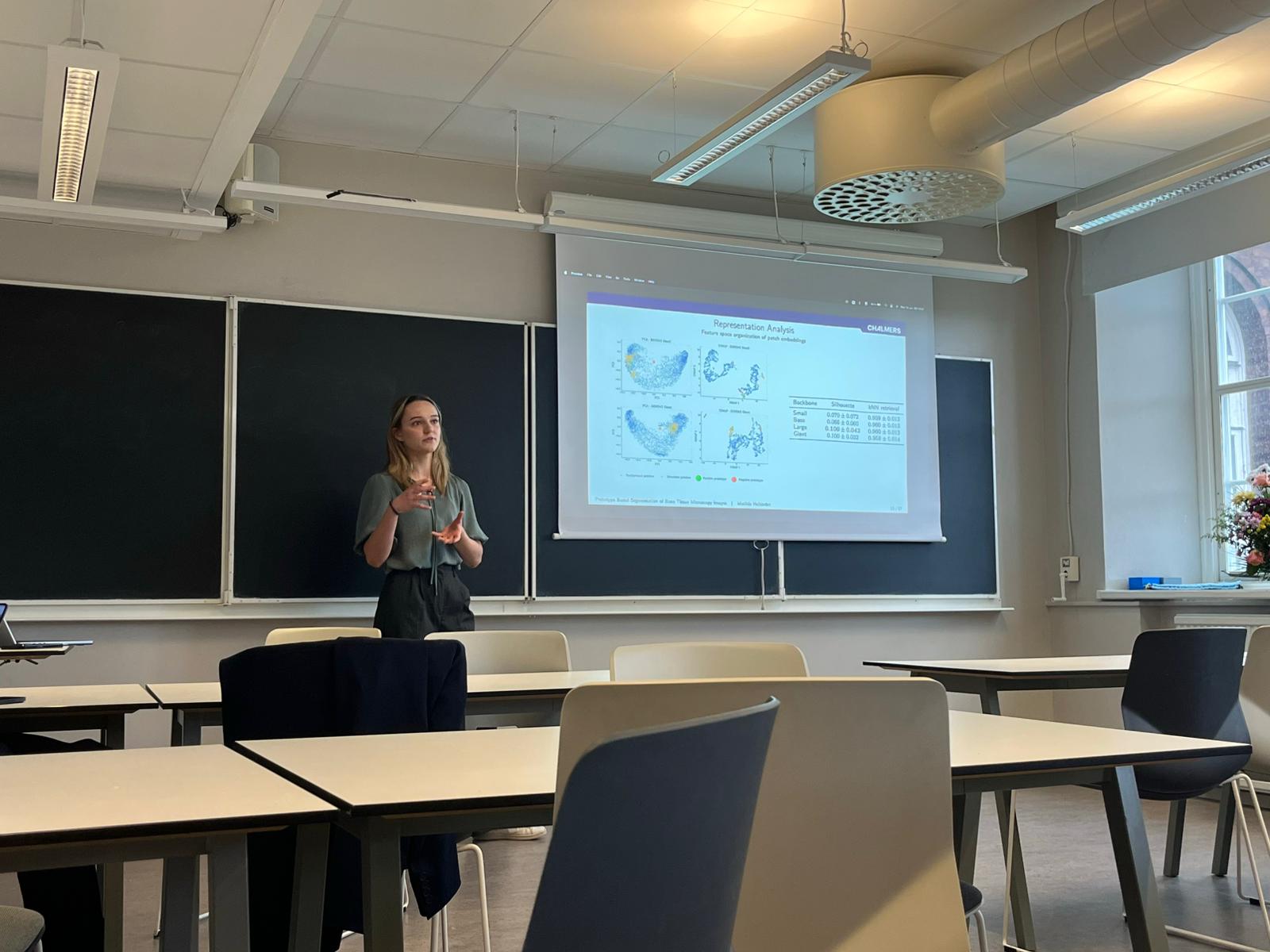
Matilda presenting her thesis. (Photo by M. Granfors.)Matilda Hellström, master student in the program of Complex Adaptive Systems at Chalmers University of Technology, defended her Master thesis on June 15 2026. Congrats!
Title: Prototype Based Segmentation of Bone Tissue Microscopy Images Using Self-Supervised Vision Transformers and Feature Space Similarity
Abstract:
Segmentation of microscopy images constitutes a fundamental task in biomedical research and clinical analysis. However, many segmentation methods rely on large annotated datasets. As the creation of labeled datasets tend to be highly time consuming and difficult to scale, there exists a need for finding alternative segmentation methods that can use unlabeled data directly.
This thesis investigates whether pretrained self-supervised Vision Transformers can be used for prototype based segmentation of bone tissue microscopy images. A segmentation framework based on pretrained DINOv2 backbones was developed, in which positive and negative reference points are used to construct prototype embeddings that guide similarity based segmentation in the learned feature space. The framework was evaluated using multiple DINOv2 backbone variants, feature space analysis and prototype transfer experiments.
The results demonstrated the potential of using pretrained self-supervised Vision Transformers for microscopy image segmentation by showing that the models produce feature representations in which tissue and background regions become partially separable. Despite being trained on natural RGB images rather than microscopy data, the pretrained backbones enabled segmentation of bone structures using the proposed similarity based segmentation framework.
Supervisor: Mirja Granfors Pineda Examiner: Giovanni Volpe Opponent: Patrik Dennis
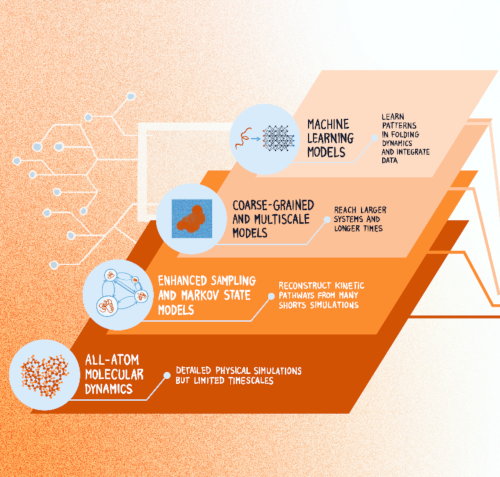
Computational advances in protein folding studies. Current approaches address multiple levels of resolution and methodological frameworks, however, none of the existing methods provides quantitative and dynamic information of the relationship between protein sequence and folding mechanism at all-atom resolution and at scale. (Graphics by J. Sacquegno.)Protein Dynamics Beyond Structure Prediction
Juliette Griffié, Sviatlana Shashkova, Antonio Ciarlo, Sreekanth K. Manikandan, Claes Andréasson, Malin Bäckström, Tristan Bereau, Hjalmar Brismar, Carlos Bustamante, Marta Carroni, Roberto Covino, Andreas Dahlin, Sebastian Deindl, Lucie Delemotte, Arne Elofsson, John Eriksson, Giovanna Fragneto, Anders Gunnarsson, Per Hammarström, Caroline Ingre, Christian Kaiser, Petronella Kettunen, Mark C. Leake, Benjamin Loos, Anna Månberg, Antonia S. J. S. Mey, Richard Neutze, Thomas Nyström, Karl Palmås, Charley Schaefer, Markus J. Tamás, Nicola Ticozzi, Tomás S. Pilvelic, Jacopo Sacquegno, B.M. (Betty)Tijms, Gunnar von Heijne, Björn Wallner, Vitali Zhaunerchyk, Simon Olsson, Joana B. Pereira, Julia Fernandez-Rodriguez, Fredrik Westerlund, Giovanni Volpe
arXiv: 2606.08647
How microorganisms respond to and interact with their environment can vary significantly from individual to individual, which can have important microbiological and ecological implications. However, most microscopy techniques can only observe motile microorganisms for short times because of their limited fields of view. Using Lagrangian tracking, a single microorganism can be followed in 3D, potentially indefinitely, allowing to decipher individual phenotypical traits. Current Lagrangian tracking methods use the fluorescence signal emitted by the microorganism as feedback to keep it in focus. However, over long times, epifluorescent imaging can induce photobleaching and photodamage, and importantly, not all microorganisms can easily be made fluorescent. Additionally, traditional algorithms used in feedback loops to determine microorganism position are prone to errors, especially in optically complex media. Here, we present a faster, more reliable, and versatile Lagrangian tracking method that uses deep learning to determine the 3D position of the microorganism. This new method demonstrates enhanced accuracy and speed in tracking fluorescent bacteria with fluorescence microscopy also in optically complex media. Furthermore, we track bacteria with other microscopy modalities, such as brightfield microscopy — for example, this enables us to track magnetotactic bacteria, which cannot be made fluorescent without degrading their magnetotactic properties. These novel capabilities allow to extract previously inaccessible quantitative information, significantly advancing the study of microorganism behavior — and thus opening new avenues for research in complex biological and ecological systems.