
Pablo Emiliano Gomez Ruiz defended his PhD thesis on June 15, 2026. Congrats!

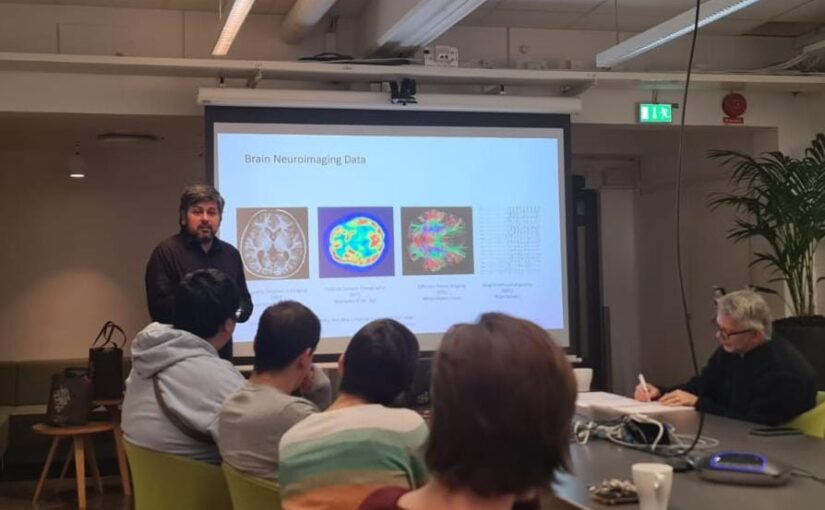
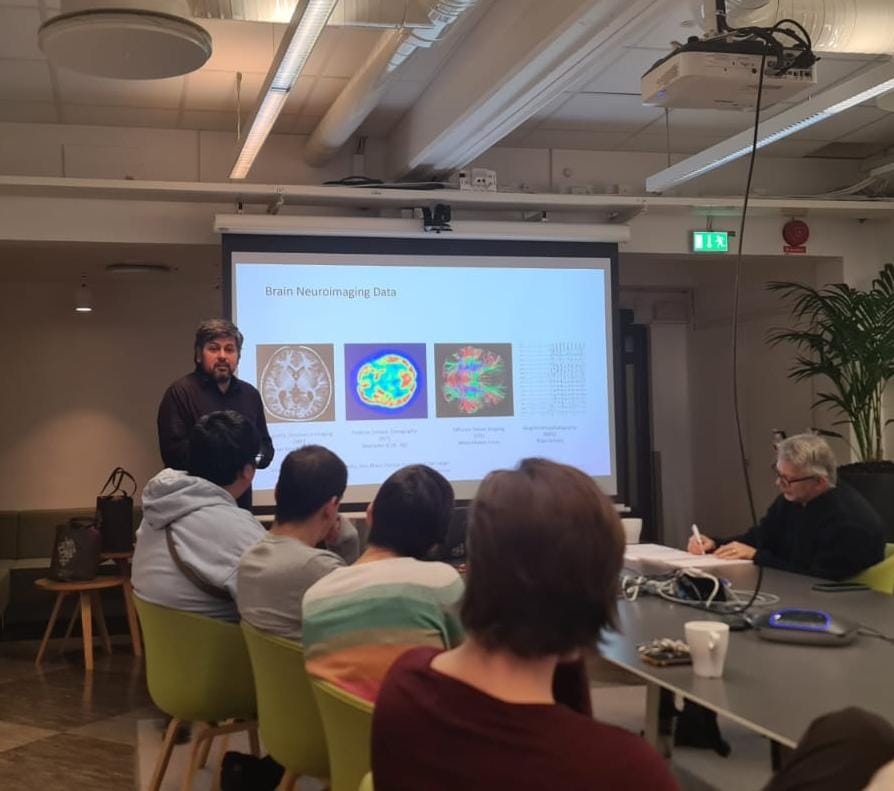
PhD defense of Emiliano Gomez-Ruiz. (Photo by H. Zhao.)
Pablo Emiliano Gomez Ruiz defended his PhD thesis on June 15, 2026. Congrats!
The defense took place in PJ Salen lecture hall, Institutionen för fysik, Johanneberg Campus, Göteborg, at 14:00.

Title: Development and application of software to analyze networks with multilayer graph theory and deep learning.

Abstract:
Understanding how the brain is wired is essential, it gives us a new level of insight of its functionality. By modeling the brain as a complex intercon- nected network, the connectome, researchers can abstract biological com- plexity into a mathematical framework suitable for analysis. The connec- tome can be understood by it’s structural links such as neuron’s synapses or by the functional links such as a statistical relationships between neu- ral activity between the brain’s regions. The mapping of these networks is achieved with neuroimaging, while their analysis is driven by the integration of graph theory and deep learning architectures.

In this work, we present a software “Brain Analysis using Graph Theory 2” (BRAPH 2.0), which is a direct solution of the need for a toolbox de- signed for both complex graph theory and deep learning analyses. Central to the software’s architecture is the “Genesis” pseudo-language, which allows researchers to bridge human-readable properties with computer code, facilitating the modular expansion of multilayer graph theory and deep learning pipelines of the software.

The capabilities of this framework are demonstrated through large-scale clinical applications. We analyze sex-related differences in the aging brain using a cohort of 37,543 participants from the UK Biobank. Our results reveal that multilayer metrics, which capture the dynamic interplay between positive and negative functional connections, are significantly more sensitive to sex-related topological changes than traditional unilayer measures.

Furthermore, we implement a Reservoir Computing (RC) pipeline to define computational “Memory Capacity” (MC) as a physical indicator of biological aging. Using the Cam-CAN and LEMON cohorts, we demonstrate that MC reliably predicts age-related decline, particularly within the frontal and parietal regions, and reflects the underlying integrity of white matter tracts and the locus coeruleus.

Thesis: https://hdl.handle.net/2077/91352

Supervisor: Giovanni Volpe
Examiner: Raimund Feifel
Opponent: Maria Guix Noguera
Committee: Remigio Cabrera-Trujillo, Paolo Vinai, Vitali Zhaunerchyk
Alternate board member: Witlef Wieczorek
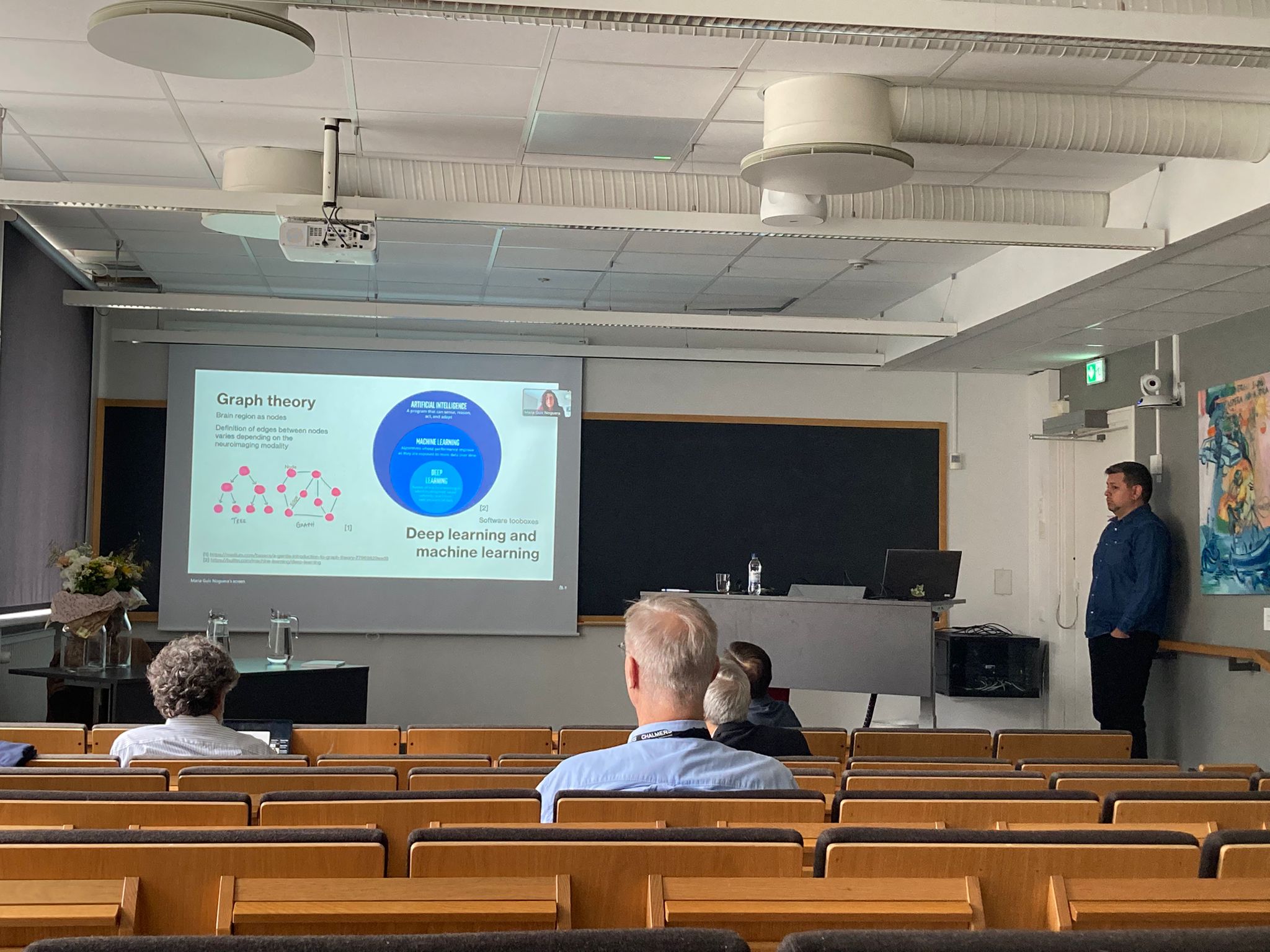
 

PhD defense of Emiliano Gomez-Ruiz; introduction by the opponent Maria Guix. (Photo by S. Manikandan.)

Three-dimensional quantitative tissue clearing reveals differences in osteovascular niche of aged and young human mesenchymal stromal cells published in Nature Biomedical Engineering

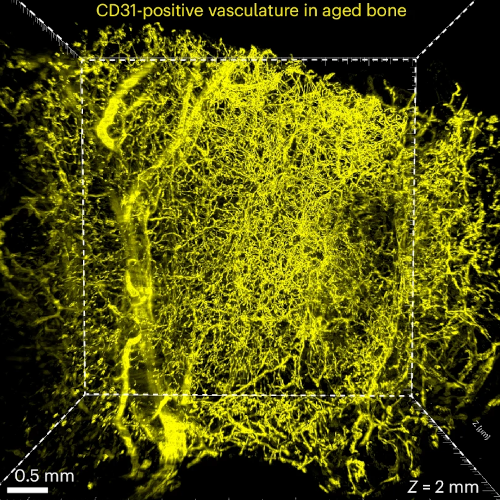
Visualization of the vasculature within human bone from a 75-year-old patient by immunostaining with antibodies against CD31. (Image from the manuscript.)
Three-dimensional quantitative tissue clearing reveals differences in osteovascular niche of aged and young human mesenchymal stromal cells
Nelson Tsz Long Chu, Ostap Dregval, Yu-Wei Chang, Emil Kriukov, Xin Tian, Xin Liu, Dana Trompet, Misty Shuo Zhang, Lei Li, Zhong Li, Emiliano Gomez Ruiz, Joana B. Pereira, Mats Brittberg, Björn Barenius, Lars Sävendahl, Ralf H. Adams, Inger Gjertsson, Claes Ohlsson, Giovanni Volpe & Andrei S. Chagin
Nature Biomedical Engineering (2026)
bioRxiv: 10.1101/2025.10.07.680053
doi: 10.1038/s41551-026-01645-3

Human bone marrow mesenchymal stromal/stem cells (BM-MSCs) are widely used in clinical trials and tissue engineering, yet their native microenvironment remains poorly understood. Here we introduce a tissue-clearing protocol, DeepBone, for human bones and integrate it with simultaneous mRNA and protein detection. Using this protocol, we spatially map BM-MSCs relative to key bone microenvironment components, including human blood capillaries, adipocytes, sinusoids and bony trabeculae. Quantitative analysis reveals that the native microenvironment of human BM-MSCs in young bone is enriched in vasculature, sinusoids, bone matrix and adipocytes. In contrast, in aged bone, BM-MSCs show no preferential association with bone or adipocytes. Proliferative BM-MSCs are predominantly found along blood vessels. Moreover, we identify a specialized microenvironment for BM-MSCs in young bone, characterized by sinusoids coiled around trabeculae and enriched by R-type vessels. These findings provide insights into the native niches of BM-MSCs, offering a foundation for the development of tissue engineering strategies that mimic their physiological context.

BRAPH 2: a flexible, open-source, reproducible, community-oriented, easy-to-use framework for network analyses in neurosciences on bioRxiv

BRAPH 2 Genesis enables swift creation of custom, reproducible software distributions—tackling the growing complexity of neuroscience by streamlining analysis across diverse data types and workflows. (Image by B. Zufiria-Gerbolés and Y.-W. Chang.)
BRAPH 2: a flexible, open-source, reproducible, community-oriented, easy-to-use framework for network analyses in neurosciences
Yu-Wei Chang, Blanca Zufiria-Gerbolés, Pablo Emiliano Gómez-Ruiz, Anna Canal-Garcia, Hang Zhao, Mite Mijalkov, Joana Braga Pereira, Giovanni Volpe
bioRxiv: 10.1101/2025.04.11.648455

As network analyses in neuroscience continue to grow in both complexity and size, flexible methods are urgently needed to provide unbiased, reproducible insights into brain function. BRAPH 2 is a versatile, open-source framework that meets this challenge by offering streamlined workflows for advanced statistical models and deep learning in a community-oriented environment. Through its Genesis compiler, users can build specialized distributions with custom pipelines, ensuring flexibility and scalability across diverse research domains. These powerful capabilities will ensure reproducibility and accelerate discoveries in neuroscience.

Computational memory capacity predicts aging and cognitive decline published in Nature Communications

Memory capacity in aging. A Brain reservoir computing architecture with uniform random signals applied to all nodes. (Image from the article.)
Computational memory capacity predicts aging and cognitive decline
Mite Mijalkov, Ludvig Storm, Blanca Zufiria-Gerbolés, Dániel Veréb, Zhilei Xu, Anna Canal-Garcia, Jiawei Sun, Yu-Wei Chang, Hang Zhao, Emiliano Gómez-Ruiz, Massimiliano Passaretti, Sara Garcia-Ptacek, Miia Kivipelto, Per Svenningsson, Henrik Zetterberg, Heidi Jacobs, Kathy Lüdge, Daniel Brunner, Bernhard Mehlig, Giovanni Volpe, Joana B. Pereira
Nature Communications 16, 2748 (2025)
doi: 10.1038/s41467-025-57995-0

Memory is a crucial cognitive function that deteriorates with age. However, this ability is normally assessed using cognitive tests instead of the architecture of brain networks. Here, we use reservoir computing, a recurrent neural network computing paradigm, to assess the linear memory capacities of neural-network reservoirs extracted from brain anatomical connectivity data in a lifespan cohort of 636 individuals. The computational memory capacity emerges as a robust marker of aging, being associated with resting-state functional activity, white matter integrity, locus coeruleus signal intensity, and cognitive performance. We replicate our findings in an independent cohort of 154 young and 72 old individuals. By linking the computational memory capacity of the brain network with cognition, brain function and integrity, our findings open new pathways to employ reservoir computing to investigate aging and age-related disorders.

Emiliano Gómez presented his half-time seminar on 29 November 2023

Emiliano Gomez Ruiz during his half-time seminar. (Photo by L. Pérez García.)
Emiliano Gómez completed the first half of his doctoral studies and he defended his half-time on the 29th of November 2023.

The presentation was conducted in a hybrid format, with part of the audience present in the Nexus room and the remainder connected through Zoom. The seminar comprised a presentation covering both his completed and planned projects, followed by a discussion and questions posed by his opponent, Prof. Martin Adiels.

The presentation commenced with an overview of his concluded projects. The first project with title “Brain Analysis using Graph Theory 2” is a software that uses Deep Learning and Graph Theory to analyse brain networks, this software is an open-source MATLAB with github “github.com/braph-software/BRAPH-2” and two projects in which this software was applied, first one on haematopoietic cell structural pattern taken from bone marrow and the second one is of memory capacity of aging brain networks using reservoir computing.


Age-related differences in the functional topography of the locus coeruleus and their implications for cognitive and affective functions published on eLife

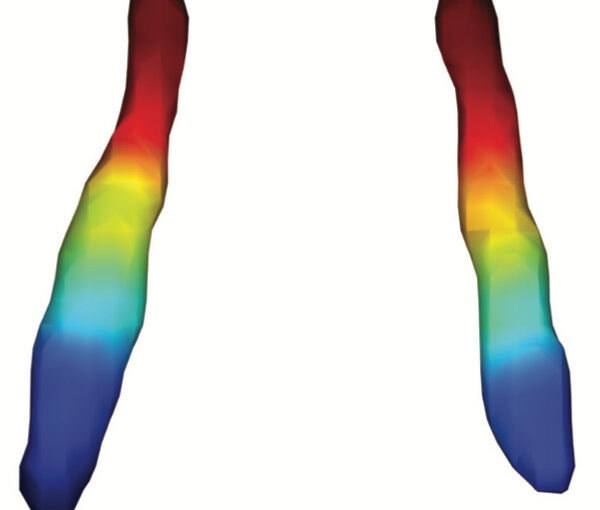
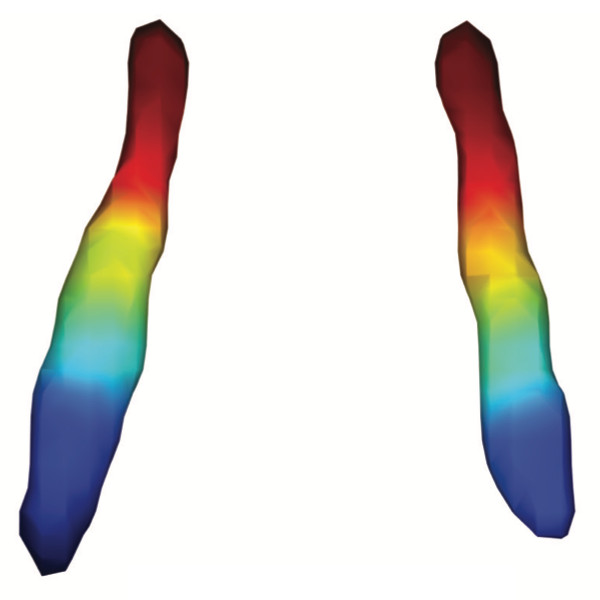
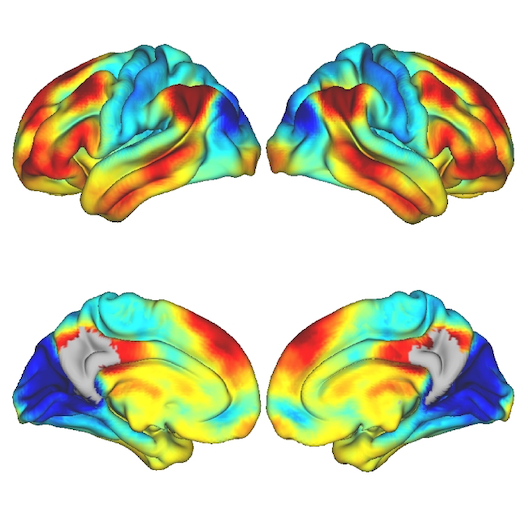
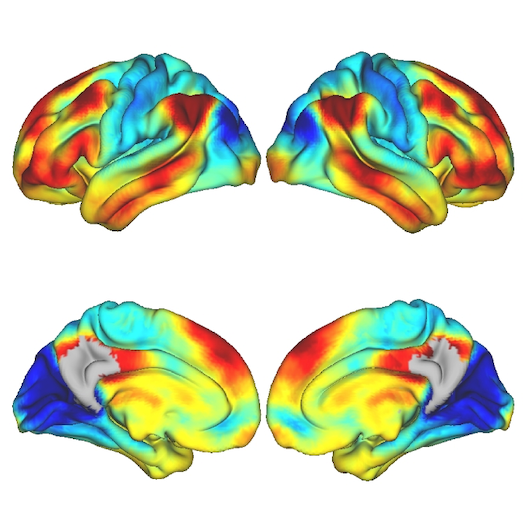
Average functional gradients of the locus coeruleus in the CamCAN 3T dataset. (Image from the publication.)
Age-related differences in the functional topography of the locus coeruleus and their implications for cognitive and affective functions
Dániel Veréb, Mite Mijalkov, Anna Canal-Garcia, Yu-Wei Chang, Emiliano Gomez-Ruiz, Blanca Zufiria Gerboles, Miia Kivipelto, Per Svenningsson, Henrik Zetterberg, Giovanni Volpe, Matthew Betts, Heidi IL Jacobs, Joana B Pereira
eLife 12, RP87188 (2023)
doi: 10.7554/eLife.87188.3

The locus coeruleus (LC) is an important noradrenergic nucleus that has recently attracted a lot of attention because of its emerging role in cognitive and psychiatric disorders. Although previous histological studies have shown that the LC has heterogeneous connections and cellular features, no studies have yet assessed its functional topography in vivo, how this heterogeneity changes over aging, and whether it is associated with cognition and mood. Here, we employ a gradient-based approach to characterize the functional heterogeneity in the organization of the LC over aging using 3T resting-state fMRI in a population-based cohort aged from 18 to 88 years of age (Cambridge Centre for Ageing and Neuroscience cohort, n=618). We show that the LC exhibits a rostro-caudal functional gradient along its longitudinal axis, which was replicated in an independent dataset (Human Connectome Project [HCP] 7T dataset, n=184). Although the main rostro-caudal direction of this gradient was consistent across age groups, its spatial features varied with increasing age, emotional memory, and emotion regulation. More specifically, a loss of rostral-like connectivity, more clustered functional topography, and greater asymmetry between right and left LC gradients was associated with higher age and worse behavioral performance. Furthermore, participants with higher-than-normal Hospital Anxiety and Depression Scale (HADS) ratings exhibited alterations in the gradient as well, which manifested in greater asymmetry. These results provide an in vivo account of how the functional topography of the LC changes over aging, and imply that spatial features of this organization are relevant markers of LC-related behavioral measures and psychopathology.

Functional gradients of the medial parietal cortex in a healthy cohort with family history of sporadic Alzheimer’s disease published in Alzheimer’s Research & Therapy

Spatial maps depicting the strongest connections from the medial parietal cortex to other cortical and subcortical areas in the PREVENT-AD cohort. (Reproduced from the publication.)
Functional gradients of the medial parietal cortex in a healthy cohort with family history of sporadic Alzheimer’s disease
Dániel Veréb, Mite Mijalkov, Yu-Wei Chang, Anna Canal-Garcia, Emiliano Gomez-Ruis, Anne Maass, Sylvia Villeneuve, Giovanni Volpe Joana B. Pereira
Alzheimer’s Research & Therapy 15, 82 (2023)
doi: 10.1186/s13195-023-01228-3

Background
The medial parietal cortex is an early site of pathological protein deposition in Alzheimer’s disease (AD). Previous studies have identified different subregions within this area; however, these subregions are often heterogeneous and disregard individual differences or subtle pathological alterations in the underlying functional architecture. To address this limitation, here we measured the continuous connectivity gradients of the medial parietal cortex and assessed their relationship with cerebrospinal fluid (CSF) biomarkers, ApoE ε4 carriership and memory in asymptomatic individuals at risk to develop AD.

Methods
Two hundred sixty-three cognitively normal participants with a family history of sporadic AD who underwent resting-state and task-based functional MRI using encoding and retrieval tasks were included from the PREVENT-AD cohort. A novel method for characterizing spatially continuous patterns of functional connectivity was applied to estimate functional gradients in the medial parietal cortex during the resting-state and task-based conditions. This resulted in a set of nine parameters that described the appearance of the gradient across different spatial directions. We performed correlation analyses to assess whether these parameters were associated with CSF biomarkers of phosphorylated tau181 (p-tau), total tau (t-tau), and amyloid-ß1-42 (Aß). Then, we compared the spatial parameters between ApoE ε4 carriers and noncarriers, and evaluated the relationship between these parameters and memory.

Results
Alterations involving the superior part of the medial parietal cortex, which was connected to regions of the default mode network, were associated with higher p-tau, t-tau levels as well as lower Aß/p-tau levels during the resting-state condition (p < 0.01). Similar alterations were found in ApoE ε4 carriers compared to non-carriers (p < 0.003). In contrast, lower immediate memory scores were associated with changes in the middle part of the medial parietal cortex, which was connected to inferior temporal and posterior parietal regions, during the encoding task (p = 0.001). No results were found when using conventional connectivity measures.

Conclusions
Functional alterations in the medial parietal gradients are associated with CSF AD biomarkers, ApoE e4 carriership, and lower memory in an asymptomatic cohort with a family history of sporadic AD, suggesting that functional gradients are sensitive to subtle changes associated with early AD stages.

Sex differences in multilayer functional network topology over the course of aging in 37543 UK Biobank participants accepted on Network Neuroscience

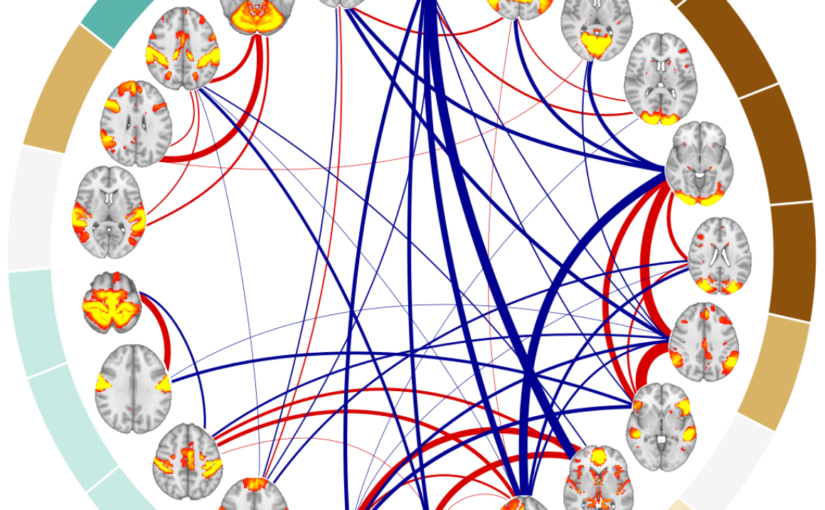
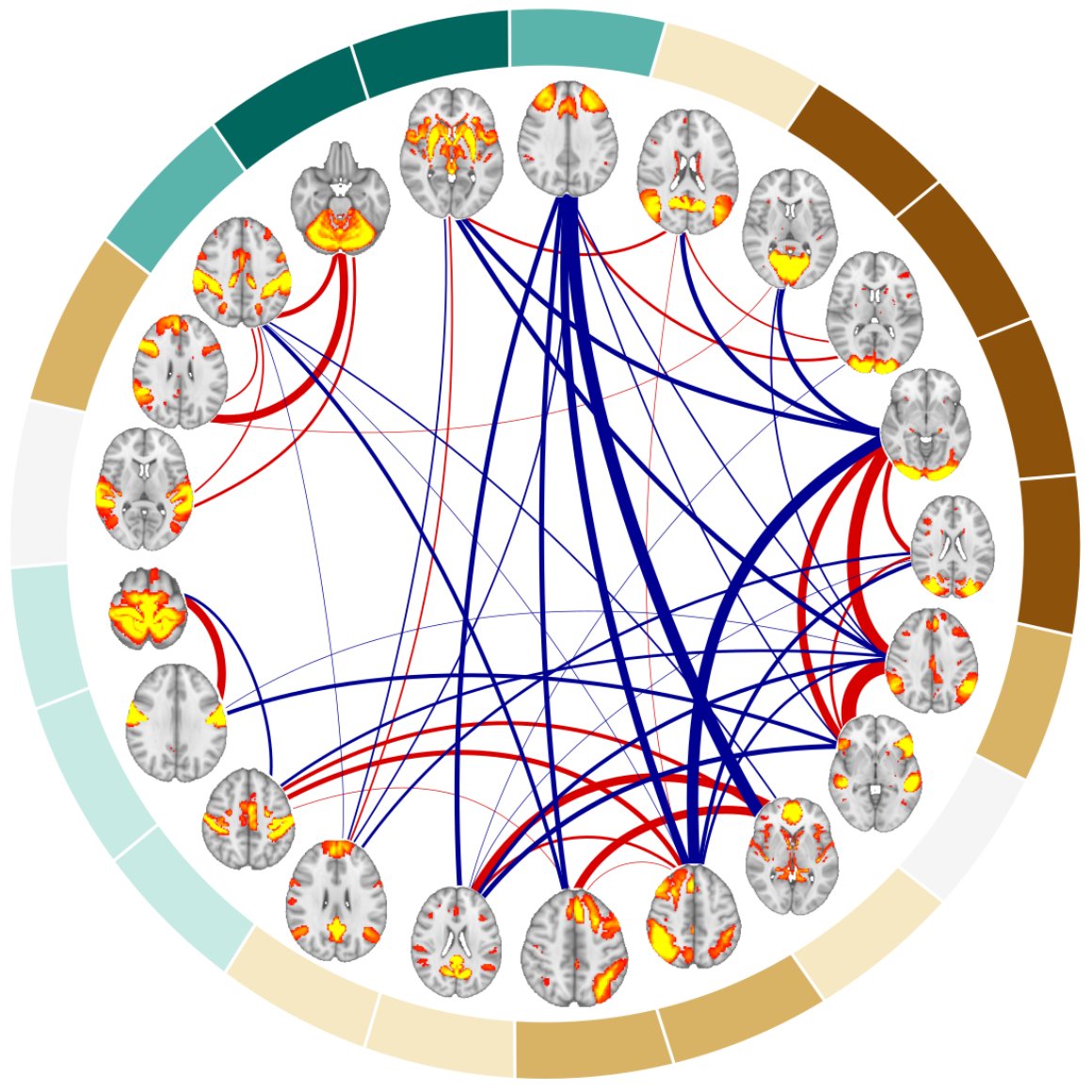
Example of the 21 resting-state networks used as nodes and their positive (red) and negative connections (blue) for one of 140 the subjects included in the analyses. (Image by the Authors of the manuscript.)
Sex differences in multilayer functional network topology over the course of aging in 37543 UK Biobank participants
Mite Mijalkov, Dániel Veréb, Oveis Jamialahmadi, Anna Canal-Garcia, Emiliano Gómez-Ruiz, Didac Vidal-Piñeiro, Stefano Romeo, Giovanni Volpe, Joana B. Pereira
Network Neuroscience 1-40 (2022)
doi: 10.1162/netn_a_00286
medRxiv: 10.1101/2022.03.08.22272089

Aging is a major risk factor for cardiovascular and neurodegenerative disorders, with considerable societal and economic implications. Healthy aging is accompanied by changes in functional connectivity between and within resting-state functional networks, which have been associated with cognitive decline. However, there is no consensus on the impact of sex on these age-related functional trajectories. Here, we show that multilayer measures provide crucial information on the interaction between sex and age on network topology, allowing for better assessment of cognitive, structural, and cardiovascular risk factors that have been shown to differ between men and women, as well as providing additional insights into the genetic influences on changes in functional connectivity that occur during aging. In a large cross-sectional sample of 37543 individuals from the UK Biobank cohort, we demonstrate that such multilayer measures that capture the relationship between positive and negative connections are more sensitive to sex-related changes in the whole-brain connectivity patterns and their topological architecture throughout aging, when compared to standard connectivity and topological measures. Our findings indicate that multilayer measures contain previously unknown information on the relationship between sex and age, which opens up new avenues for research into functional brain connectivity in aging.

Soft Matter Lab members present at SPIE Optics+Photonics conference in San Diego, 21-25 August 2022

The Soft Matter Lab participates to the SPIE Optics+Photonics conference in San Diego, CA, USA, 21-25 August 2022, with the presentations listed below.

Giovanni Volpe is also co-author of the presentations:

Multiplex Connectome Changes across the Alzheimer’s Disease Spectrum Using Gray Matter and Amyloid Data published in Cerebral Cortex

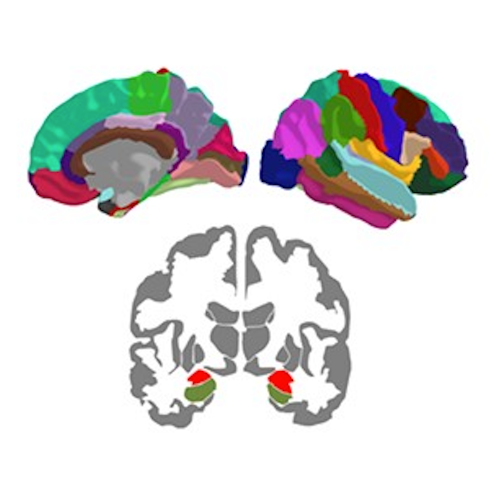
Brain nodes. (Image taken from the article.)
Multiplex Connectome Changes across the Alzheimer’s Disease Spectrum Using Gray Matter and Amyloid Data
Mite Mijalkov, Giovanni Volpe, Joana B Pereira
Anna Canal-Garcia, Emiliano Gómez-Ruiz, Mite Mijalkov, Yu-Wei Chang, Giovanni Volpe, Joana B Pereira, Alzheimer’s Disease Neuroimaging Initiative
Cerebral Cortex, bhab429 (2022)
doi: 10.1093/cercor/bhab429

The organization of the Alzheimer’s disease (AD) connectome has been studied using graph theory using single neuroimaging modalities such as positron emission tomography (PET) or structural magnetic resonance imaging (MRI). Although these modalities measure distinct pathological processes that occur in different stages in AD, there is evidence that they are not independent from each other. Therefore, to capture their interaction, in this study we integrated amyloid PET and gray matter MRI data into a multiplex connectome and assessed the changes across different AD stages. We included 135 cognitively normal (CN) individuals without amyloid-β pathology (Aβ−) in addition to 67 CN, 179 patients with mild cognitive impairment (MCI) and 132 patients with AD dementia who all had Aβ pathology (Aβ+) from the Alzheimer’s Disease Neuroimaging Initiative. We found widespread changes in the overlapping connectivity strength and the overlapping connections across Aβ-positive groups. Moreover, there was a reorganization of the multiplex communities in MCI Aβ + patients and changes in multiplex brain hubs in both MCI Aβ + and AD Aβ + groups. These findings offer a new insight into the interplay between amyloid-β pathology and brain atrophy over the course of AD that moves beyond traditional graph theory analyses based on single brain networks.