Seminar by G. Volpe and C. Manzo at CIG, Makerere University, Kampala, Uganda, 3 July 2025 (Online)

GAUDI leverages a hierarchical graph-convolutional variational autoencoder architecture, where an encoder progressively compresses the graph into a low-dimensional latent space, and a decoder reconstructs the graph from the latent embedding. (Image by M. Granfors and J. Pineda.)
Cutting Training Data Needs through Inductive Bias & Unsupervised Learning
Giovanni Volpe and Carlo Manzo
Computational Intelligence Group (CIG), Weekly Reading Session
Date: 3 July 2025
Time: 17:00
Place: Makerere University, Kampala, Uganda (Online)

Graphs provide a powerful framework for modeling complex systems, but their structural variability makes analysis and classification challenging. To address this, we introduce GAUDI (Graph Autoencoder Uncovering Descriptive Information), a novel unsupervised geometric deep learning framework that captures both local details and global structure. GAUDI employs an innovative hourglass architecture with hierarchical pooling and upsampling layers, linked through skip connections to preserve essential connectivity information throughout the encoding–decoding process. By mapping different realizations of a system — generated from the same underlying parameters — into a continuous, structured latent space, GAUDI disentangles invariant process-level features from stochastic noise. We demonstrate its power across multiple applications, including modeling small-world networks, characterizing protein assemblies from super-resolution microscopy, analyzing collective motion in the Vicsek model, and capturing age-related changes in brain connectivity. This approach not only improves the analysis of complex graphs but also provides new insights into emergent phenomena across diverse scientific domains.

Youtube: Global graph features unveiled by unsupervised geometric deep learning

Invited Talk by G. Volpe at ELS XXI, Milazzo, Italy, 27 June 2025.

DeepTrack 2 Logo. (Image from DeepTrack 2 Project)
What can deep learning do for electromagnetic light scattering?
Giovanni Volpe
Electromagnetic and Light Scattering (ELS) XXI
Date: 27 June 2025
Time: 9:00
Place: Milazzo, Italy

Electromagnetic light scattering underpins a wide range of phenomena in both fundamental and applied research, from characterizing complex materials to tracking particles and cells in microfluidic devices. Video microscopy, in particular, has become a powerful method for studying scattering processes and extracting quantitative information. Yet, conventional algorithmic approaches for analyzing scattering data often prove cumbersome, computationally expensive, and highly specialized.
Recent advances in deep learning offer a compelling alternative. By leveraging data-driven models, we can automate the extraction of scattering characteristics with unprecedented speed and accuracy—uncovering insights that classical techniques might miss or require substantial computation to achieve. Despite these advantages, deep-learning-based tools remain underutilized in light-scattering research, largely because of the steep learning curve required to design and train such models.
To address these challenges, we have developed a user-friendly software platform (DeepTrack, now in version 2.2) that simplifies the entire workflow of deep-learning applications in digital microscopy. DeepTrack enables straightforward creation of custom datasets, network architectures, and training pipelines specifically tailored for quantitative scattering analyses. In this talk, I will discuss how emerging deep-learning methods can be combined with advanced imaging technologies to push the boundaries of electromagnetic light scattering research—reducing computational overhead, improving accuracy, and ultimately broadening access to powerful, data-driven solutions.

Invited Seminar by G. Volpe at Cognitive and Behavior Changes in Parkinson’s Disease and Parkinsonism: Advances and Challenges, Santa Maria di Leuca, Italy, 21 May 2025

Braph 2 Logo. (Image from the Braph 2 Project)
The Role of Artificial Intelligence in Advanced Neuroimaging Analysis
Giovanni Volpe
Cognitive and Behavior Changes in Parkinson’s Disease and Parkinsonism: Advances and Challenges
Date: 21 May 2025
Time: 11:50
Place: Tricase, Santa Maria di Leuca, Italy

Invited Talk by G. Volpe at OPIC/OMC 2025, Yokohama, Japan, 21 April 2025 (Online, Pre-recorded)

DeepTrack 2 Logo. (Image from DeepTrack 2 Project)
How can deep learning enhance microscopy?
Giovanni Volpe
Optics & Photonics International Congress 2025 (OPIC 2025), The 11th Optical Manipulation and Structured Materials Conference (OMC2025)
Date: 21 April 2025
Time: 13:45 JST
Place: Yokohama, Japan (Online, Pre-recorded)

BRAPH 2: a flexible, open-source, reproducible, community-oriented, easy-to-use framework for network analyses in neurosciences on bioRxiv

BRAPH 2 Genesis enables swift creation of custom, reproducible software distributions—tackling the growing complexity of neuroscience by streamlining analysis across diverse data types and workflows. (Image by B. Zufiria-Gerbolés and Y.-W. Chang.)
BRAPH 2: a flexible, open-source, reproducible, community-oriented, easy-to-use framework for network analyses in neurosciences
Yu-Wei Chang, Blanca Zufiria-Gerbolés, Pablo Emiliano Gómez-Ruiz, Anna Canal-Garcia, Hang Zhao, Mite Mijalkov, Joana Braga Pereira, Giovanni Volpe
bioRxiv: 10.1101/2025.04.11.648455

As network analyses in neuroscience continue to grow in both complexity and size, flexible methods are urgently needed to provide unbiased, reproducible insights into brain function. BRAPH 2 is a versatile, open-source framework that meets this challenge by offering streamlined workflows for advanced statistical models and deep learning in a community-oriented environment. Through its Genesis compiler, users can build specialized distributions with custom pipelines, ensuring flexibility and scalability across diverse research domains. These powerful capabilities will ensure reproducibility and accelerate discoveries in neuroscience.

Computational memory capacity predicts aging and cognitive decline published in Nature Communications

Memory capacity in aging. A Brain reservoir computing architecture with uniform random signals applied to all nodes. (Image from the article.)
Computational memory capacity predicts aging and cognitive decline
Mite Mijalkov, Ludvig Storm, Blanca Zufiria-Gerbolés, Dániel Veréb, Zhilei Xu, Anna Canal-Garcia, Jiawei Sun, Yu-Wei Chang, Hang Zhao, Emiliano Gómez-Ruiz, Massimiliano Passaretti, Sara Garcia-Ptacek, Miia Kivipelto, Per Svenningsson, Henrik Zetterberg, Heidi Jacobs, Kathy Lüdge, Daniel Brunner, Bernhard Mehlig, Giovanni Volpe, Joana B. Pereira
Nature Communications 16, 2748 (2025)
doi: 10.1038/s41467-025-57995-0

Memory is a crucial cognitive function that deteriorates with age. However, this ability is normally assessed using cognitive tests instead of the architecture of brain networks. Here, we use reservoir computing, a recurrent neural network computing paradigm, to assess the linear memory capacities of neural-network reservoirs extracted from brain anatomical connectivity data in a lifespan cohort of 636 individuals. The computational memory capacity emerges as a robust marker of aging, being associated with resting-state functional activity, white matter integrity, locus coeruleus signal intensity, and cognitive performance. We replicate our findings in an independent cohort of 154 young and 72 old individuals. By linking the computational memory capacity of the brain network with cognition, brain function and integrity, our findings open new pathways to employ reservoir computing to investigate aging and age-related disorders.

Optical Label-Free Microscopy Characterization of Dielectric Nanoparticles published in Nanoscale

Propagation of scattered light through a scattering microscope, illustrating typical nanoparticles studied. (Image by B. García Rodriguez.)
Optical Label-Free Microscopy Characterization of Dielectric Nanoparticles
Berenice Garcia Rodriguez, Erik Olsén, Fredrik Skärberg, Giovanni Volpe, Fredrik Höök, Daniel Sundås Midtvedt
Nanoscale, 17, 8336-8362 (2025)
arXiv: 2409.11810
doi: 10.1039/D4NR03860F

In order to relate nanoparticle properties to function, fast and detailed particle characterization, is needed. The ability to characterize nanoparticle samples using optical microscopy techniques has drastically improved over the past few decades; consequently, there are now numerous microscopy methods available for detailed characterization of particles with nanometric size. However, there is currently no “one size fits all” solution to the problem of nanoparticle characterization. Instead, since the available techniques have different detection limits and deliver related but different quantitative information, the measurement and analysis approaches need to be selected and adapted for the sample at hand. In this tutorial, we review the optical theory of single particle scattering and how it relates to the differences and similarities in the quantitative particle information obtained from commonly used microscopy techniques, with an emphasis on nanometric (submicron) sized dielectric particles. Particular emphasis is placed on how the optical signal relates to mass, size, structure, and material properties of the detected particles and to its combination with diffusivity-based particle sizing. We also discuss emerging opportunities in the wake of new technology development, with the ambition to guide the choice of measurement strategy based on various challenges related to different types of nanoparticle samples and associated analytical demands.

Diffusion models for super-resolution microscopy: a tutorial published in Journal of Physics: Photonics

Super-resolution by diffusion models: low-resolution images of microtubules (left) are transformed to high-resolution (right) by diffusion model. Dataset courtesy: BioSR Dataset. (Image by H. Bachimamchi.)
Diffusion models for super-resolution microscopy: a tutorial
Harshith Bachimanchi, Giovanni Volpe
Journal of Physics: Photonics 7, 013001 (2025)
doi: 10.1088/2515-7647/ada101
arXiv: 2409.16488

Diffusion models have emerged as a prominent technique in generative modeling with neural networks, making their mark in tasks like text-to-image translation and super-resolution. In this tutorial, we provide a comprehensive guide to build denoising diffusion probabilistic models from scratch, with a specific focus on transforming low-resolution microscopy images into their corresponding high-resolution versions in the context of super-resolution microscopy. We provide the necessary theoretical background, the essential mathematical derivations, and a detailed Python code implementation using PyTorch. We discuss the metrics to quantitatively evaluate the model, illustrate the model performance at different noise levels of the input low-resolution images, and briefly discuss how to adapt the tutorial for other applications. The code provided in this tutorial is also available as a Python notebook in the supplementary information.

Accelerating Plasmonic Hydrogen Sensors for Inert Gas Environments by Transformer-Based Deep Learning published in ACS Sensors

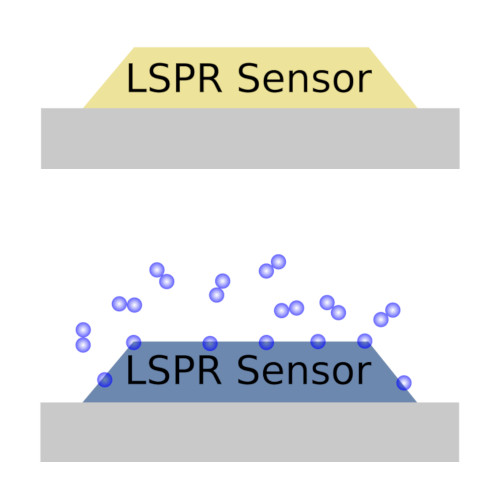
Schematic illustration of the plasmonic H2 sensing principle, where the sorption of hydrogen into hydride-forming metal nanoparticles induces a change in their localized surface plasmon resonance frequency, which leads to a color change that is resolved in a spectroscopic measurement in the visible light spectral range. (Image by the Authors of the manuscript.)
Accelerating Plasmonic Hydrogen Sensors for Inert Gas Environments by Transformer-Based Deep Learning
Viktor Martvall, Henrik Klein Moberg, Athanasios Theodoridis, David Tomeček, Pernilla Ekborg-Tanner, Sara Nilsson, Giovanni Volpe, Paul Erhart, Christoph Langhammer
ACS Sensors 10, 376–386 (2025)
arXiv: 2312.15372
doi: 10.1021/acssensors.4c02616

Rapidly detecting hydrogen leaks is critical for the safe large-scale implementation of hydrogen technologies. However, to date, no technically viable sensor solution exists that meets the corresponding response time targets under technically relevant conditions. Here, we demonstrate how a tailored long short-term transformer ensemble model for accelerated sensing (LEMAS) speeds up the response of an optical plasmonic hydrogen sensor by up to a factor of 40 and eliminates its intrinsic pressure dependence in an environment emulating the inert gas encapsulation of large-scale hydrogen installations by accurately predicting its response value to a hydrogen concentration change before it is physically reached by the sensor hardware. Moreover, LEMAS provides a measure for the uncertainty of the predictions that are pivotal for safety-critical sensor applications. Our results advertise the use of deep learning for the acceleration of sensor response, also beyond the realm of plasmonic hydrogen detection.