News

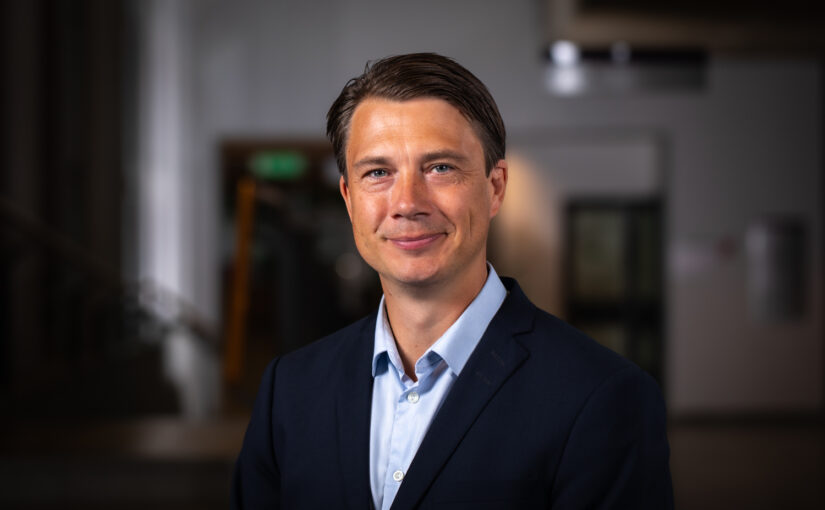
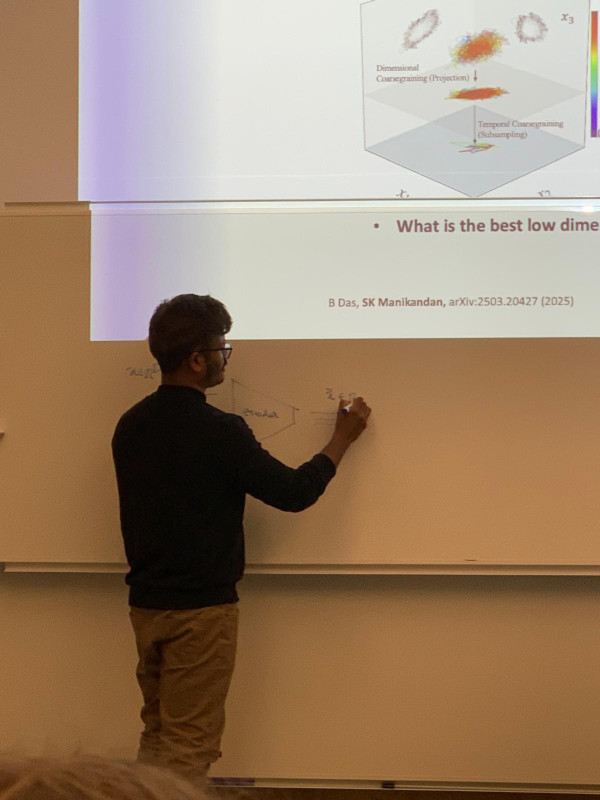
Hari Prakash received the Best Early-Career Researcher Presentation Award at ETAI 2025, San Diego

Hari Prakash received the Best Early Career Researcher Presentation Award at Emerging Topics in Artificial Intelligence (ETAI) 2025 held in San Diego, from 3 to 7 August 2025.

The award, which includes a certificate, a cash prize of $300, and a T-shirt, is presented by the organisers of the conference in collaboration with SPIE Optics + Photonics.

Hari was awarded the prize for his presentation titled “Inchworm-Inspired Soft Robot with Groove-Guided Locomotion”. Below is the full abstract of her presentation:

Soft robots require directional control to navigate complex terrains. However, achieving such control often requires multiple actuators, which increases mechanical complexity, complicates control systems, and raises energy consumption. Here, we introduce an inchworm-inspired soft robot whose locomotion direction is controlled passively by patterned substrates. The robot employs a single rolled dielectric elastomer actuator, while groove patterns on a 3D-printed substrate guide its alignment and trajectory. Through systematic experiments, we demonstrate that varying groove angles enables precise control of locomotion direction without the need for complex actuation strategies. This groove-guided approach reduces energy consumption, simplifies robot design, and expands the applicability of bio-inspired soft robots in fields such as search and rescue, pipe inspection, and planetary exploration.

Soft Matter Lab members present at SPIE Optics+Photonics conference in San Diego, 3-7 August 2025

The Soft Matter Lab participates to the SPIE Optics+Photonics conference in San Diego, CA, USA, 3-7 August 2025, with the presentations listed below.

Giovanni Volpe, who serves as Symposium Chair for the SPIE Optics+Photonics Congress in 2025, is a coauthor of the following invited presentations:

Giovanni Volpe will also be the reference presenter of the following Poster contributions:

Presentation by M. Granfors at SPIE-ETAI, San Diego, 7 August 2025

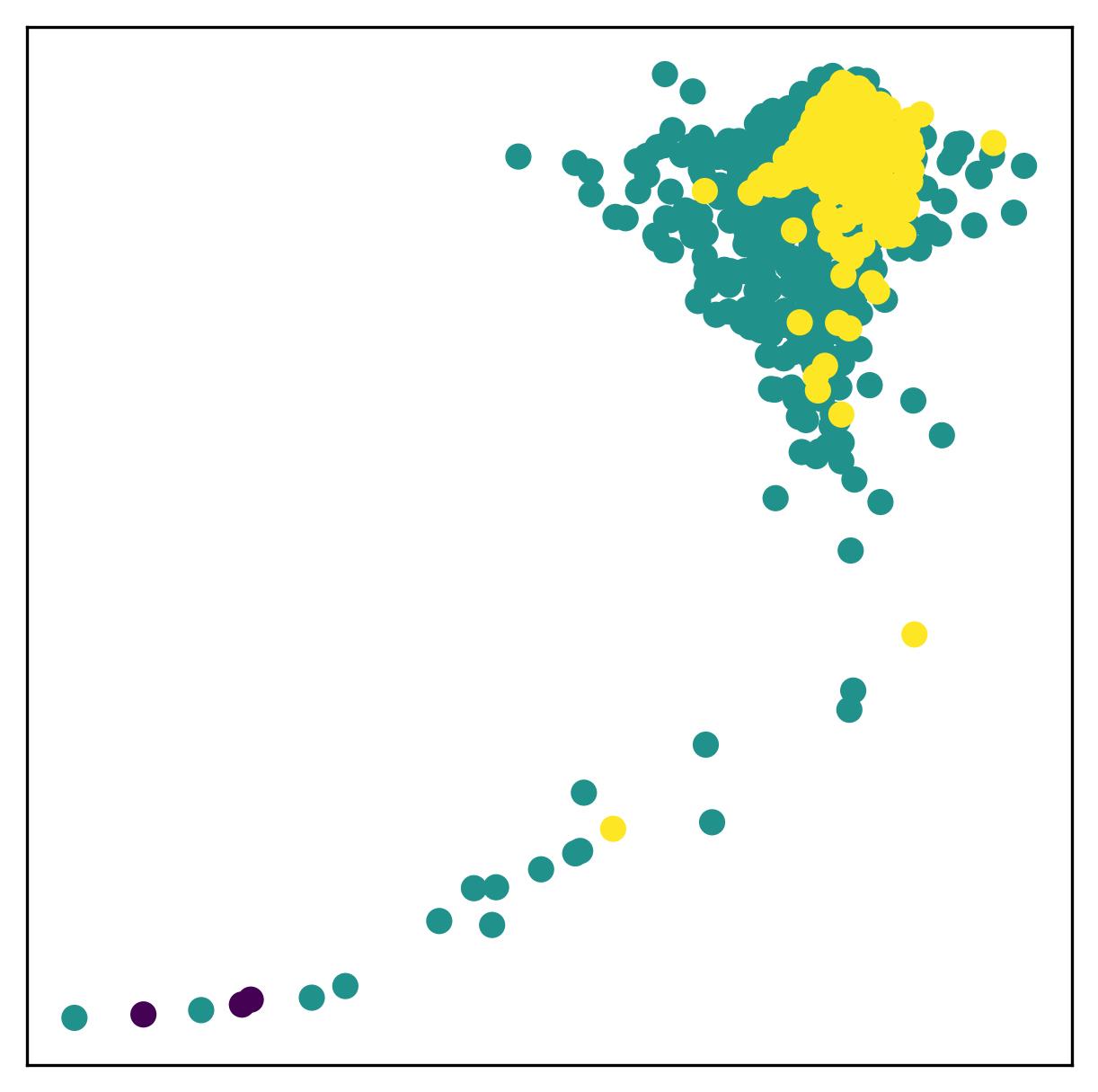
GAUDI leverages a hierarchical graph-convolutional variational autoencoder architecture, where an encoder progressively compresses the graph into a low-dimensional latent space, and a decoder reconstructs the graph from the latent embedding. (Image by M. Granfors and J. Pineda.)
Global graph features unveiled by unsupervised geometric deep learning
Mirja Granfors, Jesús Pineda, Blanca Zufiria Gerbolés, Joana Pereira, Carlo Manzo, and Giovanni Volpe
Date: 7 August 2025
Time: 2:45 PM – 3:00 PM
Place: Conv. Ctr. Room 4

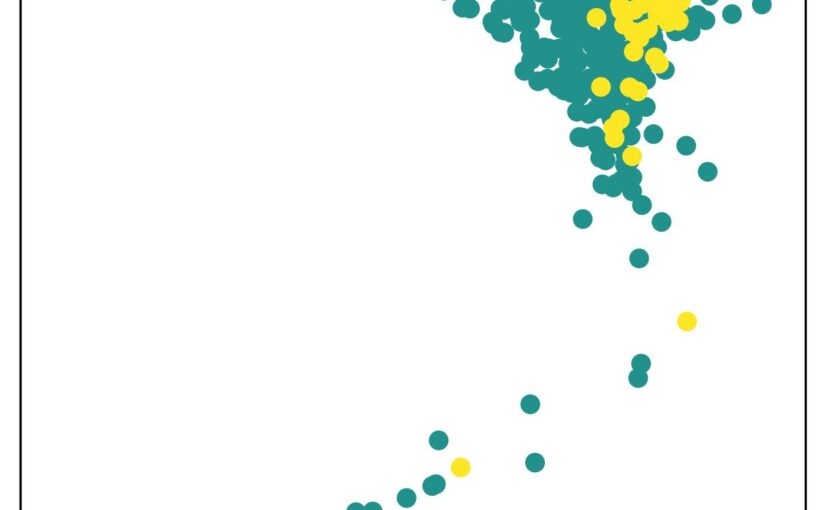
Graphs are used to model complex relationships, such as interactions between particles or connections between brain regions. The structural complexity and variability of graphs pose challenges to their efficient analysis and classification. Here, we propose GAUDI (Graph Autoencoder Uncovering Descriptive Information), a graph autoencoder that addresses these challenges. GAUDI is trained in an unsupervised manner to capture the most critical parameters of graphs in the latent space, thereby enabling the extraction of essential parameters characterizing the graphs. We demonstrate the performance of GAUDI across diverse graph data originating from complex systems, including the estimation of the parameters of Watts-Strogatz graphs, the classification of protein assembly structures from single-molecule localization microscopy data, the analysis of collective behaviors, and correlations between brain connections and age. This approach offers a robust framework for efficiently analyzing and interpreting complex graph data, facilitating the extraction of meaningful patterns and insights across a wide range of applications.

Invited Presentation by B. Zufiria-Gerbolés at SPIE-ETAI, San Diego, 7 August 2025

Memory capacity in aging. A Brain reservoir computing architecture with uniform random signals applied to all nodes. (Image from the article.)
Computational memory capacity predicts aging and cognitive decline
Blanca Zufiria-Gerbolés, Mite Mijalkov, Ludvig Storm, Dániel Veréb, Zhilei Xu, Anna Canal-Garcia, Jiawei Sun, Yu-Wei Chang, Hang Zhao, Emiliano Gómez-Ruiz, Massimiliano Passaretti, Sara Garcia-Ptacek, Miia Kivipelto, Per Svenningsson, Henrik Zetterberg, Heidi Jacobs, Kathy Lüdge, Daniel Brunner, Bernhard Mehlig, Giovanni Volpe, Joana B. Pereira
SPIE-ETAI, San Diego, CA, USA, 3 – 7 August 2025
Date: 7 August 2025
Time: 11:15 AM – 11:45 AM PDT
Place: Conv. Ctr. Room 4

Using reservoir computing and diffusion-weighted imaging, we explored changes in brain connectivity patterns and their impact on cognition during aging. We found that whole-brain networks perform optimally at low densities, with performance decreasing as network density increases, particularly in regions with weaker connections. This decline was strongly associated with age and cognitive performance. Our results suggest that a core network of anatomical hubs is essential for optimal brain function, while peripheral connections are more vulnerable to aging. This study highlights the potential of reservoir computing for understanding age-related cognitive decline.

Reference
Mite Mijalkov, Ludvig Storm, Blanca Zufiria-Gerbolés, Dániel Veréb, Zhilei Xu, Anna Canal-Garcia, Jiawei Sun, Yu-Wei Chang, Hang Zhao, Emiliano Gómez-Ruiz, Massimiliano Passaretti, Sara Garcia-Ptacek, Miia Kivipelto, Per Svenningsson, Henrik Zetterberg, Heidi Jacobs, Kathy Lüdge, Daniel Brunner, Bernhard Mehlig, Giovanni Volpe, Joana B. Pereira, Computational memory capacity predicts aging and cognitive decline
Nature Communications 16, 2748 (2025)

Presentation by M.Selin at SPIE-OTOM, San Diego, 6 August 2025

Illustration of adsorption process of a polymer coated particle. A single particle is brought to a liquid-liquid interface using an optical tweezers and once the polymer shell makes contact with the interface the particle immediately jumps into the interface. (Image by M. Selin.)
Mapping the adsorption dynamics of core-shell particles at liquid-liquid interfaces with optical tweezers
Martin Selin, Maret Ickler, Gerardo Campos-Villalobos, Fabrizio Camerin, Nicolas Vogel, Antonio Ciarlo, Giovanni Volpe, and Marcel Rey
Date: 6 August 2025
Time: 4:30 PM – 4:45 PM PDT
Place: Conv. Ctr. Room 3

Colloidal systems are integral to industries such as food and cosmetics, where liquid-liquid interfaces—like oils dispersed in water—are common. Whether colloidal particles adsorb to these interfaces depends on multiple factors such as particle surface chemistry, pH and salinity.

Here, we investigate how core–shell particles breach a liquid-liquid interface by using optical tweezers to gently push the particles into dodecane-water interfaces formed by microbubbles. Our core–shell particles feature a silica core and a PDMAEMA shell and by varying the amount of monomer added during synthesis the size of the shell can be tuned. Using the tweezers we measure the extent of the polymer shell. Importantly, we find that uncoated silica particles do not adsorb in pure water, whereas polymer coated particles absorb rapidly once the polymer layer contacts the interface, also when the core itself remains microns away. The longer the polymer the greater the distance from which the particle absorbs.

We also observe similar adsorption other polymer shells like PNIPAM and PVP, indicating that the presence of a polymer coating, rather than its specific chemical composition, is the key factor governing adsorption. At low and high pH the polymer shell contracts, also the binding energy becomes weaker making the absorption slower. In very acidic conditions the binding is so weak that the optical tweezers can pull particles out from the interface, allowing us to directly observe individual polymers detaching. These findings provide new insight into how polymer coatings dictate particle-interface interactions, paving the way for improved control of colloidal behavior.

Presentation by D. Pérez Guerrero at SPIE-ETAI, San Diego, 6 August 2025

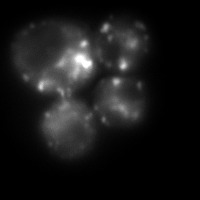
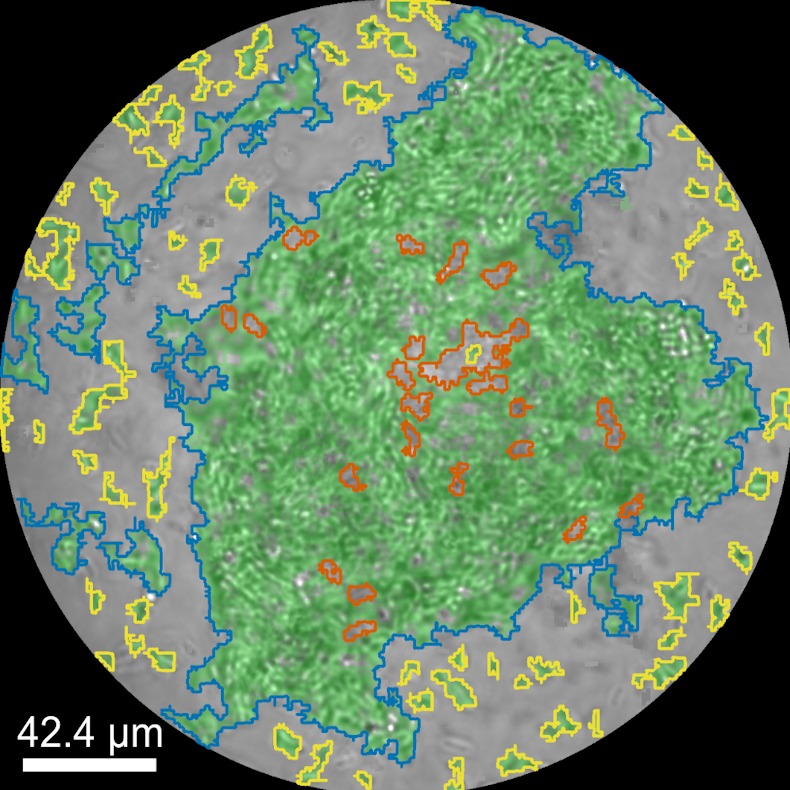
Automated segnmentation of bacterial structures within a droplet. The image shows a bright-field microscopy view where a large biofilm region (green, outlined in blue) has been segmented from surrounding features. Small aggregates (yellow contours) are also highlighted. This segmentation enables structural differentiation of biofilm components for downstream quantitative analysis. (Image by D. Pérez Guerrero.)
Quantitative analysis of dynamic biofilm structures via time-resolved droplet microfluidics and artificial intelligence
Daniela Pérez Guerrero, Jesús Manuel Antúnez Domínguez, Aurélie Vigne, Daniel Midtvedt, Wylie Ahmed, Lisa Muiznieks, Giovanni Volpe and Caroline Beck Adiels.
SPIE-ETAI, San Diego, CA, USA, 03 – 07 August 2025
Date: 6 August 2025
Time: 2:30 PM – 2:45 PM PDT
Place: Conv. Ctr. Room 4

Biofilms are structured communities of microorganisms that play a crucial role in medicine, biotechnology, and ecology, contributing to microbial adaptation to any environment. Despite their significance, understanding their formation, development, and behavior remains a challenge for the community. We utilize high-throughput droplet microfluidics to enable biofilm growth in miniaturized environments, generating extensive time-lapse bright-field microscopy images. To overcome experimental constraints, including dense structural heterogeneity and skewed illumination, we developed a deep learning-based segmentation approach capable of identifying biofilm structures in complex imaging conditions. Our method operates in an unsupervised manner, reducing the need for ground truth annotations and mitigating the introduced bias of manual segmentation approaches.

Our unsupervised model effectively detects and quantifies biofilm structures, even in late-stage growth, where traditional segmentation techniques fail. The neural network demonstrates robust performance across the development cycle, distinguishing biofilm boundaries and bacteria aggregates separated from the main biofilm structure despite imaging inconsistencies. Additionally, our approach reduces manual intervention, streamlining the analysis of high-throughput biofilm imaging data.

This AI-powered segmentation technique provides a reliable and scalable tool for biofilm analysis, addressing key limitations of conventional methods. By bridging the gap between microbiology research and automated image analysis, our approach facilitates more efficient and reproducible biofilm studies.

Presentation by Y.-W. Chang at SPIE-ETAI, San Diego, 6 August, 2025

BRAPH 2 Genesis enables swift creation of custom, reproducible software distributions—tackling the growing complexity of neuroscience by streamlining analysis across diverse data types and workflows. (Image by B. Zufiria-Gerbolés and Y.-W. Chang.)
BRAPH 2: a flexible, open-source, reproducible, community-oriented, easy-to-use framework for replicable network analysis in neurosciences
Yu-Wei Chang, Blanca Zufiria Gerbolés, Joana B Pereira, Giovanni Volpe
Date: 6 August 2023
Time: 11:00 AM PDT

As network analyses in neuroscience continue to grow in both complexity and size, flexible methods are urgently needed to provide unbiased, reproducible insights into brain function. BRAPH 2 is a versatile, open-source framework that meets this challenge by offering streamlined workflows for advanced statistical models and deep learning in a community-oriented environment. Through its Genesis compiler, users can build specialized distributions with custom pipelines, ensuring flexibility and scalability across diverse research domains. These powerful capabilities will ensure reproducibility and accelerate discoveries in neuroscience.


Presentation by Anoop C. Patil at SPIE-ETAI, San Diego, 6 August 2025

In this work, we present an unsupervised deep learning framework using Variational Autoencoders (VAEs) to decode stress-specific biomolecular fingerprints directly from Raman spectral data across multiple plant species and genotypes. (Image by the Authors of the manuscript. A part of the image was designed using Biorender.com.)
From Spectra to Stress: Unsupervised Deep Learning for Plant Health Monitoring
Anoop C. Patil, Benny Jian Rong Sng, Yu-Wei Chang, Joana B. Pereira, Chua Nam-Hai, Rajani Sarojam, Gajendra Pratap Singh, In-Cheol Jang, and Giovanni Volpe
Date: 6 August 2025
Time: 10:30 AM – 11:00 AM
Place: Conv. Ctr. Room 4

Plants experience a wide variety of stresses, from light and temperature fluctuations to bacterial infections. Each stress has a biomolecular fingerprint, but detecting and interpreting these signatures across species can be challenging. This work presents a deep learning-based approach using Variational Autoencoders (VAEs) to uncover how plants respond to light stress, shade avoidance, temperature stress, and bacterial infection — all without requiring any human intervention in spectral processing. By encoding Raman spectral data into an intuitive latent space, this method automatically categorizes and visualizes stress-specific biomolecular shifts, offering a powerful, unsupervised tool for stress phenotyping in crops.

Reference:
Patil, A.C. et al. Deep-Learning Investigation of Vibrational Raman Spectra for Plant-Stress Analysis. arXiv preprint arXiv:2507.15772v1 (2025). URL https://arxiv.org/abs/2507.15772

Presentation by B. García Rodríguez at SPIE-ETAI, San Diego, 5 August 2025

Biomolecular condensates are analyzed and characterized using a holographic microscope, which utilizes a variational autoencoder (VAE) to quantify size, protein concentration, and the sharpness of the RNA-binding protein interface. (Image by B. Garcia.)
Structure and dynamics of biomolecular condensates revealed by deep learning enhanced interferometric microscopy
Berenice García Rodríguez, Makasewicz Katarzyna, Giovanni Volpe, Paolo Arosio, Daniel Sundås Midtvedt.
Date: 5 August 2025
Time: 5:00 PM – 5:15 PM PDT
Place:
Conv. Ctr. Room 4
Presentation type:
Oral

Biomolecular condensates are biological structures that form through weak, multivalent interactions primarily between low complexity domains of intrinsically disordered proteins, existing in cells as submicrometer structures. Their functions rely sensitively on physical properties such as size, internal protein concentration, and interfacial tension. However, direct measurements of these properties in submicrometer condensates remain scarce. In this work, we employ deep learning enhanced interferometric imaging to quantify size, protein concentration, and the sharpness of the interface of submicrometer condensates formed by the low complexity domain of the RNA-binding protein DDX4-LCD. We find that, within the two-phase region, DDX4-LCD forms spherical condensates with an internal protein concentration that can be slightly modulated by adding salt to the solution. Furthermore, we find that multiple populations of protein clusters coexist in the sample, some persisting even outside the two-phase region of the phase diagram, separable by their interface properties and dynamics. This hints at a more complex phase diagram of DDX4-LCD condensation than previously anticipated.


Presentation by M. Selin at SPIE-ETAI, San Diego, 5 August 2025

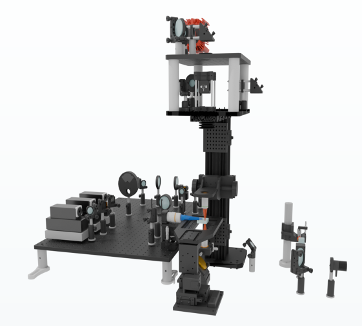
Illustration of three different experiments autonomously performed by the SmartTrap system: DNA pulling experiments (top), red blood cell stretching (bottom left), and particle-particle interaction measurements (bottom right). (Image by M. Selin.)
Advanced autonomous optical tweezers experiments
Martin Selin, A. Ciarlo, G. Pesce, L. Bengtsson, J. Camuñas-Soler, V. Sundar Rajan, F. Westerlund, L. M. Wilhelmsson, I. Pastor, F. Ritort, S. B. Smith, C. Bustamante, G. Volpe
Date: 5 August 2025
Time: 4:30 PM – 4:45 PM PDT
Place: Conv. Ctr. Room 4

Single-molecule studies are vital for elucidating fundamental biological processes, including protein folding, DNA transcription, and replication. However, performing these experiments manually on individual molecules is notoriously time-consuming and costly. To address this challenge, we have developed a fully autonomous single-molecule force spectroscopy platform by integrating a custom-built optical tweezers instrument with real-time deep-learning-based image analysis and adaptive control protocols. Our system achieves human-level throughput in terms of experiments per hour while remaining robust enough to operate continuously for hours without intervention. We demonstrate the versatility of our platform by having it perform DNA pulling experiments on both lambda DNA and DNA hairpins fully autonomously. These results push the boundaries of high-throughput data collection in single-molecule biophysics, paving the way for merging single-molecule studies with large-scale, data-driven approaches—ultimately enabling new insights into the dynamic, transient states of complex biological systems.