Machine learning for active matter published on Nature Machine Intelligence

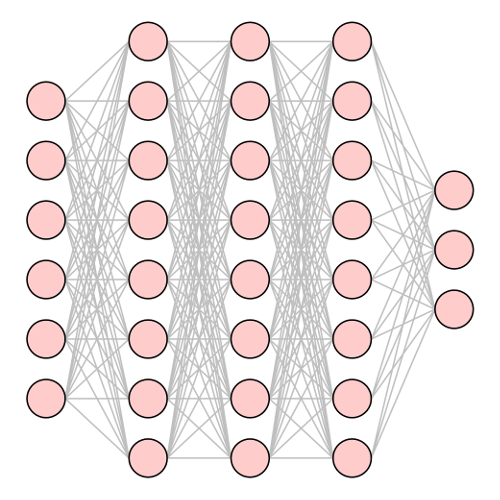
Neural net with input layer (left), dense internal layers, and output layer (right).

Machine learning for active matter
Frank Cichos, Kristian Gustavsson, Bernhard Mehlig & Giovanni Volpe
Nature Machine Intelligence 2(2), 94–103 (2020)
doi: https://doi.org/10.1038/s42256-020-0146-9

The availability of large datasets has boosted the application of machine learning in many fields and is now starting to shape active-matter research as well. Machine learning techniques have already been successfully applied to active-matter data—for example, deep neural networks to analyse images and track objects, and recurrent nets and random forests to analyse time series. Yet machine learning can also help to disentangle the complexity of biological active matter, helping, for example, to establish a relation between genetic code and emergent bacterial behaviour, to find navigation strategies in complex environments, and to map physical cues to animal behaviours. In this Review, we highlight the current state of the art in the application of machine learning to active matter and discuss opportunities and challenges that are emerging. We also emphasize how active matter and machine learning can work together for mutual benefit.
Virtual genetic diagnosis for familial hypercholesterolemia powered by machine learning published in European Journal of Preventive Cardiology

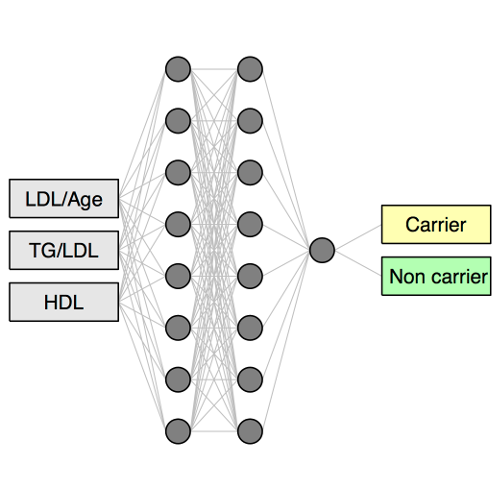
Neural networks consist of a series of connected layers of neurons, whose connection weights are adjusted to learn how to determine the diagnosis from the input data.

Virtual genetic diagnosis for familial hypercholesterolemia powered by machine learning
Anna Pina, Saga Helgadottir, Rosellina Margherita Mancina, Chiara Pavanello, Carlo Pirazzi, Tiziana Montalcini, Roberto Henriques, Laura Calabresi, Olov Wiklund, M Paula Macedo, Luca Valenti, Giovanni Volpe, Stefano Romeo
European Journal of Preventive Cardiology (2020)
doi: https://doi.org/10.1177/2047487319898951

Aims

Familial hypercholesterolemia (FH) is the most common genetic disorder of lipid metabolism. The gold standard for FH diagnosis is genetic testing, available, however, only in selected university hospitals. Clinical scores – for example, the Dutch Lipid Score – are often employed as alternative, more accessible, albeit less accurate FH diagnostic tools. The aim of this study is to obtain a more reliable approach to FH diagnosis by a “virtual” genetic test using machine-learning approaches.

Methods and results

We used three machine-learning algorithms (a classification tree (CT), a gradient boosting machine (GBM), a neural network (NN)) to predict the presence of FH-causative genetic mutations in two independent FH cohorts: the FH Gothenburg cohort (split into training data (N = 174) and internal test (N = 74)) and the FH-CEGP Milan cohort (external test, N = 364). By evaluating their area under the receiver operating characteristic (AUROC) curves, we found that the three machine-learning algorithms performed better (AUROC 0.79 (CT), 0.83 (GBM), and 0.83 (NN) on the Gothenburg cohort, and 0.70 (CT), 0.78 (GBM), and 0.76 (NN) on the Milan cohort) than the clinical Dutch Lipid Score (AUROC 0.68 and 0.64 on the Gothenburg and Milan cohorts, respectively) in predicting carriers of FH-causative mutations.

Conclusion

In the diagnosis of FH-causative genetic mutations, all three machine-learning approaches we have tested outperform the Dutch Lipid Score, which is the clinical standard. We expect these machine-learning algorithms to provide the tools to implement a virtual genetic test of FH. These tools might prove particularly important for lipid clinics without access to genetic testing.

Clustering of Janus Particles published in Soft Matter

Clustering of Janus particles in optical potential driven by hydrodynamic fluxes

Clustering of Janus Particles in Optical Potential Driven by Hydrodynamic Fluxes
S. Masoumeh Mousavi, Iryna Kasianiuk, Denis Kasyanyuk, Sabareesh K. P. Velu, Agnese Callegari, Luca Biancofiore & Giovanni Volpe
Soft Matter 15(28), 5748—5759 (2019)
doi: 10.1039/C8SM02282H
arXiv: 1811.01989

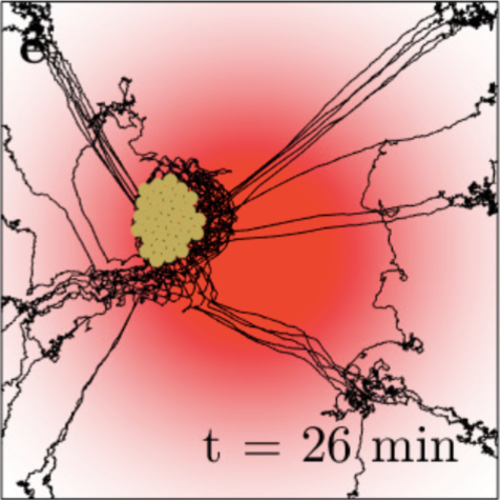
Self-organisation is driven by the interactions between the individual components of a system mediated by the environment, and is one of the most important strategies used by many biological systems to develop complex and functional structures. Furthermore, biologically-inspired self-organisation offers opportunities to develop the next generation of materials and devices for electronics, photonics and nanotechnology. In this work, we demonstrate experimentally that a system of Janus particles (silica microspheres half-coated with gold) aggregates into clusters in the presence of a Gaussian optical potential and disaggregates when the optical potential is switched off. We show that the underlying mechanism is the existence of a hydrodynamic flow induced by a temperature gradient generated by the light absorption at the metallic patches on the Janus particles. We also perform simulations, which agree well with the experiments and whose results permit us to clarify the underlying mechanism. The possibility of hydrodynamic-flux-induced reversible clustering may have applications in the fields of drug delivery, cargo transport, bioremediation and biopatterning.

Anomalous Diffusion Measurement with Neural Networks published in Phys Rev E

Measurement of Anomalous Diffusion Using Recurrent Neural Networks

Measurement of Anomalous Diffusion Using Recurrent Neural Networks
Stefano Bo, Falko Schmidt, Ralf Eichborn & Giovanni Volpe
Physical Review E 100(1), 010102(R) (2019)
doi: 10.1103/PhysRevE.100.010102
arXiv: 1905.02038

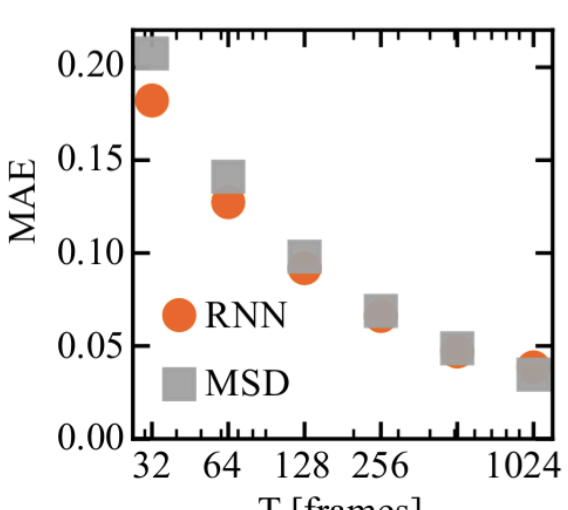
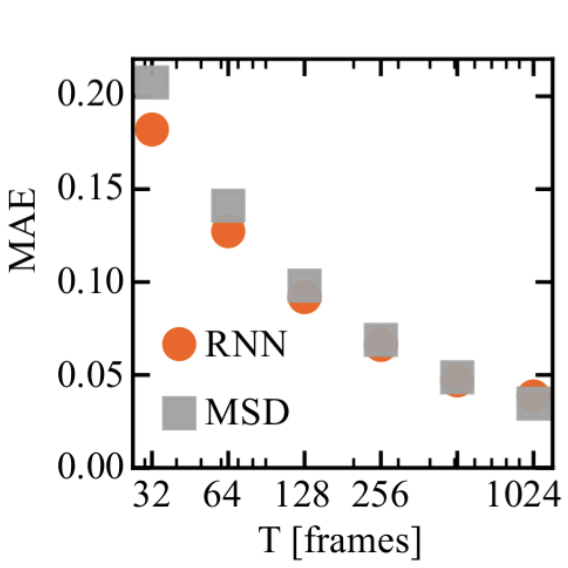
Anomalous diffusion occurs in many physical and biological phenomena, when the growth of the mean squared displacement (MSD) with time has an exponent different from one. We show that recurrent neural networks (RNN) can efficiently characterize anomalous diffusion by determining the exponent from a single short trajectory, outperforming the standard estimation based on the MSD when the available data points are limited, as is often the case in experiments. Furthermore, the RNN can handle more complex tasks where there are no standard approaches, such as determining the anomalous diffusion exponent from a trajectory sampled at irregular times, and estimating the switching time and anomalous diffusion exponents of an intermittent system that switches between different kinds of anomalous diffusion. We validate our method on experimental data obtained from sub-diffusive colloids trapped in speckle light fields and super-diffusive microswimmers.

Influence of Sensorial Delay on Clustering and Swarming published in Phys. Rev. E

Influence of Sensorial Delay on Clustering and Swarming

Influence of Sensorial Delay on Clustering and Swarming
Rafal Piwowarczyk, Martin Selin, Thomas Ihle & Giovanni Volpe
Physical Review E 100(1), 012607 (2019)
doi: 10.1103/PhysRevE.100.012607
arXiv:  1803.06026

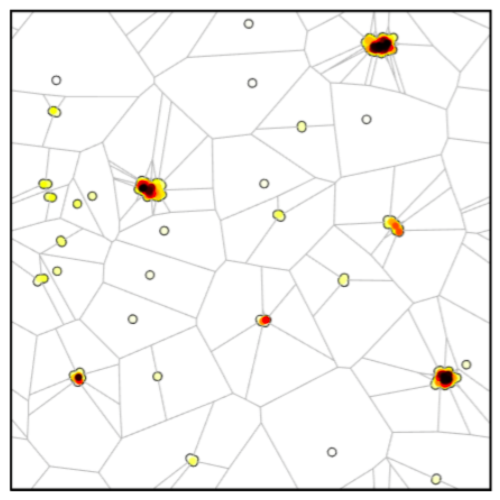
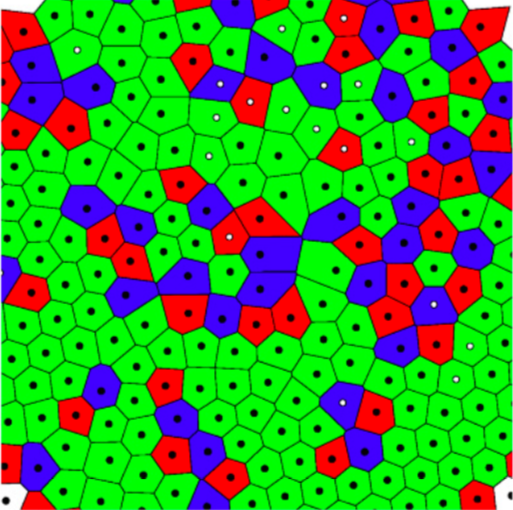
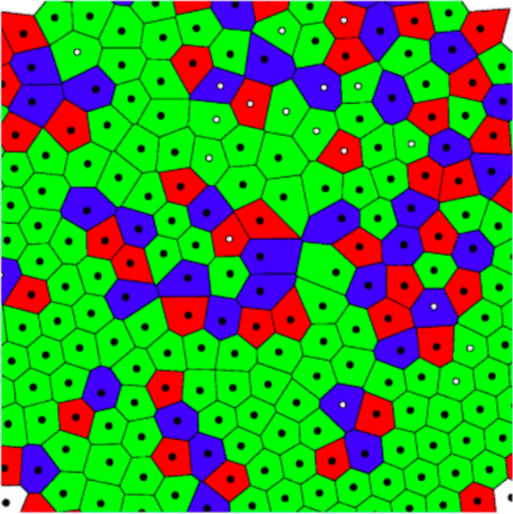
We show that sensorial delay alters the collective motion of self-propelling agents with aligning interactions: In a two-dimensional Vicsek model, short delays enhance the emergence of clusters and swarms, while long or negative delays prevent their formation. In order to quantify this phenomenon, we introduce a global clustering parameter based on the Voronoi tessellation, which permits us to efficiently measure the formation of clusters. Thanks to its simplicity, sensorial delay might already play a role in the organization of living organisms and can provide a powerful tool to engineer and dynamically tune the behavior of large ensembles of autonomous robots.

Intracavity Optical Trapping published in Nature Commun.

Intracavity Optical Trapping

Intracavity optical trapping of microscopic particles in a ring-cavity fiber laser
Fatemeh Kalantarifard, Parviz Elahi, Ghaith Makey, Onofrio M. Maragò, F. Ömer Ilday & Giovanni Volpe
Nature Communications 10, 2683 (2019)
doi: 10.1038/s41467-019-10662-7
arXiv: 1808.07831

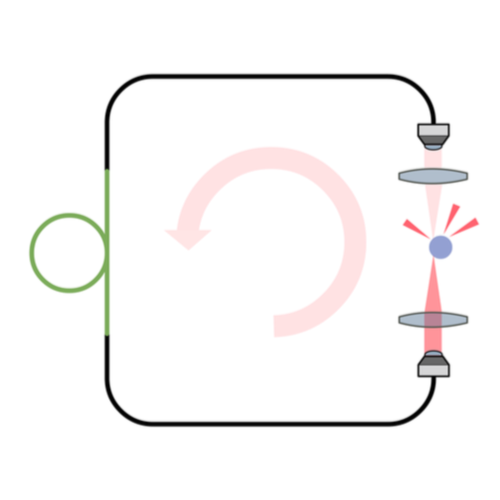
Standard optical tweezers rely on optical forces arising when a focused laser beam interacts with a microscopic particle: scattering forces, pushing the particle along the beam direction, and gradient forces, attracting it towards the high-intensity focal spot. Importantly, the incoming laser beam is not affected by the particle position because the particle is outside the laser cavity. Here, we demonstrate that intracavity nonlinear feedback forces emerge when the particle is placed inside the optical cavity, resulting in orders-of-magnitude higher confinement along the three axes per unit laser intensity on the sample. This scheme allows trapping at very low numerical apertures and reduces the laser intensity to which the particle is exposed by two orders of magnitude compared to a standard 3D optical tweezers. These results are highly relevant for many applications requiring manipulation of samples that are subject to photodamage, such as in biophysics and nanosciences.

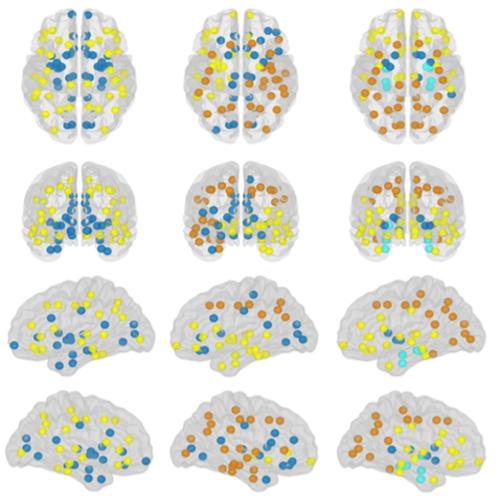
Subtypes of Brain Atrophy in Alzheimer’s Disease published in Front. Neurol.

Subtypes of Alzheimer’s disease display distinct network abnormalities extending beyond their pattern of brain atrophy

Subtypes of Alzheimer’s disease display distinct network abnormalities extending beyond their pattern of brain atrophy
Daniel Ferreira, Joana B. Pereira, Giovanni Volpe & Eric Westman
Frontiers in Neurology 10, 524 (2019)
DOI: 10.3389/fneur.2019.00524

Different subtypes of Alzheimer’s disease (AD) with characteristic distributions of neurofibrillary tangles and corresponding brain atrophy patterns have been identified using structural magnetic resonance imaging (MRI). However, the underlying biological mechanisms that determine this differential expression of neurofibrillary tangles are still unknown. Here, we applied graph theoretical analysis to structural MRI data to test the hypothesis that differential network disruption is at the basis of the emergence of these AD subtypes. We studied a total of 175 AD patients and 81 controls. Subtyping was done using the Scheltens’ scale for medial temporal lobe atrophy, the Koedam’s scale for posterior atrophy, and the Pasquier’s global cortical atrophy scale for frontal atrophy. A total of 89 AD patients showed a brain atrophy pattern consistent with typical AD; 30 patients showed a limbic-predominant pattern; 29 patients showed a hippocampal-sparing pattern; and 27 showed minimal atrophy. We built brain structural networks from 68 cortical regions and 14 subcortical gray matter structures for each AD subtype and for the controls, and we compared between-group measures of integration, segregation, and modular organization. At the global level, modularity was increased and differential modular reorganization was detected in the four subtypes. We also found a decrease of transitivity in the typical and hippocampal-sparing subtypes, as well as an increase of average local efficiency in the minimal atrophy and hippocampal-sparing subtypes. We conclude that the AD subtypes have a distinct signature of network disruption associated with their atrophy patterns and further extending to other brain regions, presumably reflecting the differential spread of neurofibrillary tangles. We discuss the hypothetical emergence of these subtypes and possible clinical implications.

Digital Video Microscopy Enhanced by Deep Learning published in Optica

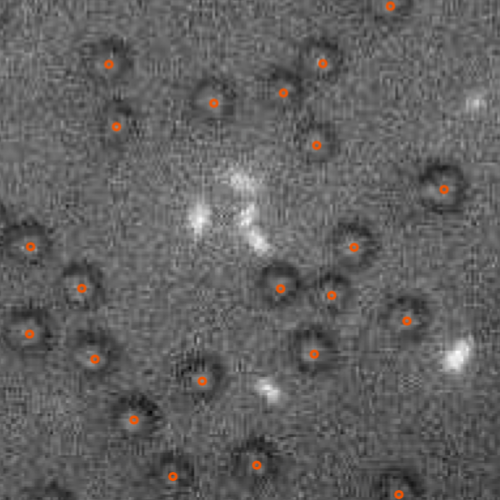
Digital video microscopy enhanced by deep learning

Digital video microscopy enhanced by deep learning
(Cover article)
Saga Helgadottir, Aykut Argun & Giovanni Volpe
Optica 6(4), 506—513 (2019)
doi: 10.1364/OPTICA.6.000506
arXiv: 1812.02653
GitHub: DeepTrack

Single particle tracking is essential in many branches of science and technology, from the measurement of biomolecular forces to the study of colloidal crystals. Standard methods rely on algorithmic approaches; by fine-tuning several user-defined parameters, these methods can be highly successful at tracking a well-defined kind of particle under low-noise conditions with constant and homogenous illumination. Here, we introduce an alternative data-driven approach based on a convolutional neural network, which we name DeepTrack. We show that DeepTrack outperforms algorithmic approaches, especially in the presence of noise and under poor illumination conditions. We use DeepTrack to track an optically trapped particle under very noisy and unsteady illumination conditions, where standard algorithmic approaches fail. We then demonstrate how DeepTrack can also be used to track multiple particles and non-spherical objects such as bacteria, also at very low signal-to-noise ratios. In order to make DeepTrack readily available for other users, we provide a Python software package, which can be easily personalized and optimized for specific applications.

Featured in :
Deep Learning for Particle Tracking”, Optics & Photonics News (December 1, 2019)

Funding:

ERC-founder H2020 European Research Council (ERC) Starting Grant ComplexSwimmers (677511).

Video 1:

Video 2:

Video 3:

Video 4:

Video 5:

Video 6:

Video 7:

Video 8:

Light-controlled assembly of active colloidal molecules published in the Journal of Chemical Physics

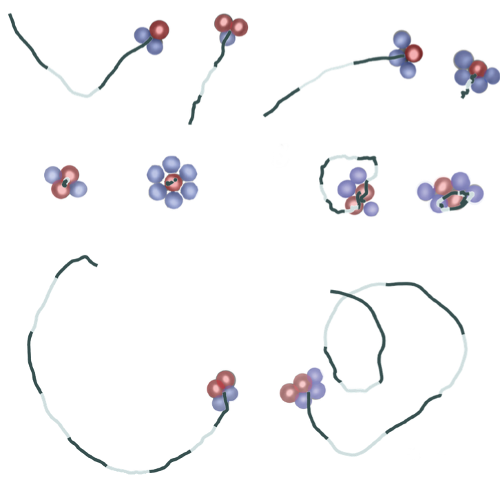
Light-controlled Assembly of Active Colloidal Molecules

Light-controlled Assembly of Active Colloidal Molecules
Falko Schmidt, Benno Liebchen, Hartmut Löwen & Giovanni Volpe
Journal of Chemical Physics 150(9), 094905 (2019)
doi: 10.1063/1.5079861
arXiv: 1801.06868

Thanks to a constant energy input, active matter can self-assemble into phases with complex architectures and functionalities such as living clusters that dynamically form, reshape, and break-up, which are forbidden in equilibrium materials by the entropy maximization (or free energy minimization) principle. The challenge to control this active self-assembly has evoked widespread efforts typically hinging on engineering of the properties of individual motile constituents. Here, we provide a different route, where activity occurs as an emergent phenomenon only when individual building blocks bind together in a way that we control by laser light. Using experiments and simulations of two species of immotile microspheres, we exemplify this route by creating active molecules featuring a complex array of behaviors, becoming migrators, spinners, and rotators. The possibility to control the dynamics of active self-assembly via light-controllable nonreciprocal interactions will inspire new approaches to understand living matter and to design active materials.

Funding:

ERC-founder H2020 European Research Council (ERC) Starting Grant ComplexSwimmers (677511).
VR-founder Vetenskapsrådet (Grant No. 2016-03523).
German Research Foundation DFG within LO 418–19-1.

Ordering of binary colloidal crystals by random potentials on ArXiv

Ordering of binary colloidal crystals by random potentials

Ordering of binary colloidal crystals by random potentials
André S. Nunes, Sabareesh K. P. Velu, Iryna Kasianiuk, Denys Kasyanyuk, Agnese Callegari, Giorgio Volpe, Margarida M. Telo da Gama, Giovanni Volpe & Nuno A. M. Araújo
arXiv: 1903.01579

Structural defects are ubiquitous in condensed matter, and not always a nuisance. For example, they underlie phenomena such as Anderson localization and hyperuniformity, and they are now being exploited to engineer novel materials. Here, we show experimentally that the density of structural defects in a 2D binary colloidal crystal can be engineered with a random potential. We generate the random potential using an optical speckle pattern, whose induced forces act strongly on one species of particles (strong particles) and weakly on the other (weak particles). Thus, the strong particles are more attracted to the randomly distributed local minima of the optical potential, leaving a trail of defects in the crystalline structure of the colloidal crystal. While, as expected, the crystalline ordering initially decreases with increasing fraction of strong particles, the crystalline order is surprisingly recovered for sufficiently large fractions. We confirm our experimental results with particle-based simulations, which permit us to elucidate how this non-monotonic behavior results from the competition between the particle-potential and particle-particle interactions.