Invited talk by G. Volpe at GSJP, 1 October 2020

Logo of GSJP2020 – First Global Symposium on Janus Particles.

Giovanni Volpe will give an online invited presentation at the First Global Symposium on Janus Particles (GSJP) 2020.

GSJP will bring together a collection of experts who are in the vanguard of scientific and engineering investigations on Janus particles all around the globe.

The contribution of Giovanni Volpe will be presented according to the following schedule:

Giovanni Volpe
Light-controlled Assembly of Active Colloidal Molecules

Activity and life have emerged from a primordial broth of simple building blocks when the presence of energy flows made these blocks come together and interact in non-trivial ways. Here, we use experiments and simulations demonstrating that active molecules can be created and controlled by light. Shining light on a primordial broth containing passive particles of two different species, we create active colloidal molecules of increasing complexity, which behave as migrators, spinners and rotators. This demonstrates a powerful new route for nonequilibrium self-assembly, which may help explaining the emergence of complex systems in living matter and may also proof useful as a design principle for the construction of flexible micromotors and cargo transport in health care applications.

Date: 1 October 2020
Time: 10:10 (EST)
Place: Online

Diagnosis of a genetic disease improves with machine learning, a summary in Swedish published in Fysikaktuellt

Neural networks consist of a series of connected layers of neurons, whose connection weights are adjusted to learn how to determine the diagnosis from the input data.

A summary in Swedish of our previously published article “Virtual genetic diagnosis for familial hypercholesterolemia powered by machine learning” has been published in Fysikaktuellt, the journal of the Swedish Physical Society (Svenska fysikersamfundet).

Article: “Diagnostisering av sjukdomar förbättras med maskininlärning”, Saga Helgadottir, Giovanni Volpe and Stefano Romeo (in Swedish)

Original article: Virtual genetic diagnosis for familial hypercholesterolemia powered by machine learning

Press release: 
Algoritm lär sig diagnostisera genetisk sjukdom (in Swedish)
An algorithm that learns to diagnose genetic disease (in English)

Invited talk by G. Volpe at SCOP2020, 25 September 2020

Student Conference on Optics and Photonics (SCOP), organized by the OSA student chapter of the Physical Research Laboratory, Ahmedabad, India.

Giovanni Volpe will give an online invited presentation at the Student Conference on Optics and Photonics (SCOP), organized by the OSA student chapter of Physical Research Laboratory, Ahmedabad, India.

The conference addresses various topics in optics with an emphasis on non linear optics and quantum optics, will be held during 23-25 September, 2020 at the Physical Research Laboratory (PRL), Ahmedabad, India.
The conference includes invited talks by eminent scientists from India and abroad, as well as posters and oral presentations by student participants and research fellows.

The contribution of Giovanni Volpe will be presented according to the following schedule:

Giovanni Volpe
Deep Learning for microscopy and optical trapping
Date: 25 September 2020
Time: 15:10 IST (GMT+5:30)
Place: Online

E-workshop: Novel Features and Applications of Optical Manipulation

The School of Nano Science, IPM, Tehran, Iran, with the support of IASBS, Zanjan, Iran, is organizing a one-day e-workshop on
Novel Features and Applications of Optical Manipulation
on September 8th, 2020.

The workshop will address the latest features of optical manipulation. Distinguished lecturers in the field will present exciting aspects and applications of optical manipulation along with providing educational outreach to students.

The workshop is open to all and it is free, but pre-registration is required. Registration dates: between 10 and 25 August.

Invited lecturers:
Prof. Kishan Dolakia
Prof. Giovanni Volpe
Prof. Onofrio Maragò
Dr. Valentina Emiliani
Dr. Samaneh Rezvani
Dr. Fatemeh Kalandarifard

Organizers:
Dr. Alireza Moradi
Prof. Reza Asgari

Date: 8 September 2020
Link: Workshop Homepage, Registration

Feedback-controlled active brownian colloids with space-dependent rotational dynamics published in Nature Communications

Active Colloids with Position-Dependent Rotational Diffusivity

Active Colloids with Position-Dependent Rotational Diffusivity
Miguel Angel Fernandez-Rodriguez, Fabio Grillo, Laura Alvarez, Marco Rathlef, Ivo Buttinoni, Giovanni Volpe & Lucio Isa
Nature Communications 11, 4223 (2020)
doi: 10.1038/s41467-020-17864-4
arXiv: 1911.02291

The non-thermal nature of self-propelling colloids offers new insights into non-equilibrium physics. The central mathematical model to describe their trajectories is active Brownian motion, where a particle moves with a constant speed, while randomly changing direction due to rotational diffusion. While several feedback strategies exist to achieve position-dependent velocity, the possibility of spatial and temporal control over rotational diffusion, which is inherently dictated by thermal fluctuations, remains untapped. Here, we decouple rotational diffusion from thermal fluctuations. Using external magnetic fields and discrete-time feedback loops, we tune the rotational diffusivity of active colloids above and below its thermal value at will and explore a rich range of phenomena including anomalous diffusion, directed transport, and localization. These findings add a new dimension to the control of active matter, with implications for a broad range of disciplines, from optimal transport to smart materials.

Soft Matter Lab presentations at the SPIE Optics+Photonics Digital Forum

Seven members of the Soft Matter Lab (Saga HelgadottirBenjamin Midtvedt, Aykut Argun, Laura Pérez-GarciaDaniel MidtvedtHarshith BachimanchiEmiliano Gómez) were selected for oral and poster presentations at the SPIE Optics+Photonics Digital Forum, August 24-28, 2020.

The SPIE digital forum is a free, online only event.
The registration for the Digital Forum includes access to all presentations and proceedings.

The Soft Matter Lab contributions are part of the SPIE Nanoscience + Engineering conferences, namely the conference on Emerging Topics in Artificial Intelligence 2020 and the conference on Optical Trapping and Optical Micromanipulation XVII.

The contributions being presented are listed below, including also the presentations co-authored by Giovanni Volpe.

Note: the presentation times are indicated according to PDT (Pacific Daylight Time) (GMT-7)

Emerging Topics in Artificial Intelligence 2020

Saga Helgadottir
Digital video microscopy with deep learning (Invited Paper)
26 August 2020, 10:30 AM
SPIE Link: here.

Aykut Argun
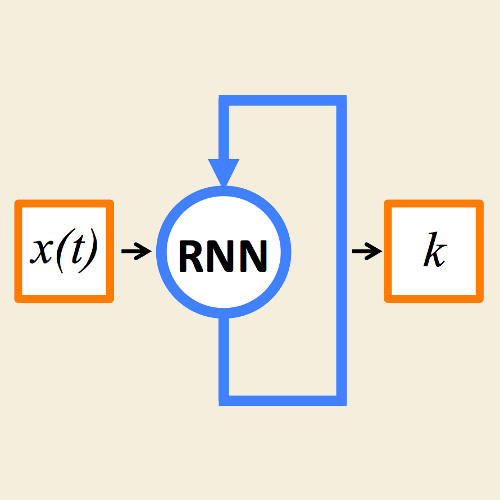
Calibration of force fields using recurrent neural networks
26 August 2020, 8:30 AM
SPIE Link: here.

Laura Pérez-García
Deep-learning enhanced light-sheet microscopy
25 August 2020, 9:10 AM
SPIE Link: here.

Daniel Midtvedt
Holographic characterization of subwavelength particles enhanced by deep learning
24 August 2020, 2:40 PM
SPIE Link: here.

Benjamin Midtvedt
DeepTrack: A comprehensive deep learning framework for digital microscopy
26 August 2020, 11:40 AM
SPIE Link: here.

Gorka Muñoz-Gil
The anomalous diffusion challenge: Single trajectory characterisation as a competition
26 August 2020, 12:00 PM
SPIE Link: here.

Meera Srikrishna
Brain tissue segmentation using U-Nets in cranial CT scans
25 August 2020, 2:00 PM
SPIE Link: here.

Juan S. Sierra
Automated corneal endothelium image segmentation in the presence of cornea guttata via convolutional neural networks
26 August 2020, 11:50 AM
SPIE Link: here.

Harshith Bachimanchi
Digital holographic microscopy driven by deep learning: A study on marine planktons (Poster)
24 August 2020, 5:30 PM
SPIE Link: here.

Emiliano Gómez
BRAPH 2.0: Software for the analysis of brain connectivity with graph theory (Poster)
24 August 2020, 5:30 PM
SPIE Link: here.

Optical Trapping and Optical Micromanipulation XVII

Laura Pérez-García
Reconstructing complex force fields with optical tweezers
24 August 2020, 5:00 PM
SPIE Link: here.

Alejandro V. Arzola
Direct visualization of the spin-orbit angular momentum conversion in optical trapping
25 August 2020, 10:40 AM
SPIE Link: here.

Isaac Lenton
Illuminating the complex behaviour of particles in optical traps with machine learning
26 August 2020, 9:10 AM
SPIE Link: here.

Fatemeh Kalantarifard
Optical trapping of microparticles and yeast cells at ultra-low intensity by intracavity nonlinear feedback forces
24 August 2020, 11:10 AM
SPIE Link: here.

Note: the presentation times are indicated according to PDT (Pacific Daylight Time) (GMT-7)

Machine learning reveals complex behaviours in optically trapped particles published in Machine Learning: Science and Technology

Illustration of a fully connected neural network with three inputs, three outputs, and three hidden layers.

Machine learning reveals complex behaviours in optically trapped particles
Isaac C. D. Lenton, Giovanni Volpe, Alexander B. Stilgoe, Timo A. Nieminen & Halina Rubinsztein-Dunlop
Machine Learning: Science and Technology, 1 045009 (2020)
doi: 10.1088/2632-2153/abae76
arXiv: 2004.08264

Since their invention in the 1980s, optical tweezers have found a wide range of applications, from biophotonics and mechanobiology to microscopy and optomechanics. Simulations of the motion of microscopic particles held by optical tweezers are often required to explore complex phenomena and to interpret experimental data. For the sake of computational efficiency, these simulations usually model the optical tweezers as an harmonic potential. However, more physically-accurate optical-scattering models are required to accurately model more onerous systems; this is especially true for optical traps generated with complex fields. Although accurate, these models tend to be prohibitively slow for problems with more than one or two degrees of freedom (DoF), which has limited their broad adoption. Here, we demonstrate that machine learning permits one to combine the speed of the harmonic model with the accuracy of optical-scattering models. Specifically, we show that a neural network can be trained to rapidly and accurately predict the optical forces acting on a microscopic particle. We demonstrate the utility of this approach on two phenomena that are prohibitively slow to accurately simulate otherwise: the escape dynamics of swelling microparticles in an optical trap, and the rotation rates of particles in a superposition of beams with opposite orbital angular momenta. Thanks to its high speed and accuracy, this method can greatly enhance the range of phenomena that can be efficiently simulated and studied.

Seminar by G. Volpe at ICFO, 16 June 2020

Lucky Encounters: From Optical Tweezers to deep Learning
Giovanni Volpe
ICFO Alumni Seminar (Online)
16 June 2020

In this semi-autobiographical talk, I will look back at my career and its evolution. It all started at ICFO with a PhD on optical tweezers in 2008. It then continued with a series of diverse research projects on different fields: active matter, stochastic thermodynamics, neurosciences and, finally, deep learning. I will emphasize how my career has been shaped by lucky encounters. Encounters that have taken me to places and topics I’d never have imagined beforehand. But it all makes sense, in insight.

Date: 16 June 2020
Time: 15:00
Place: Online

Anisotropic dynamics of a self-assembled colloidal chain in an active bath published on Soft Matter

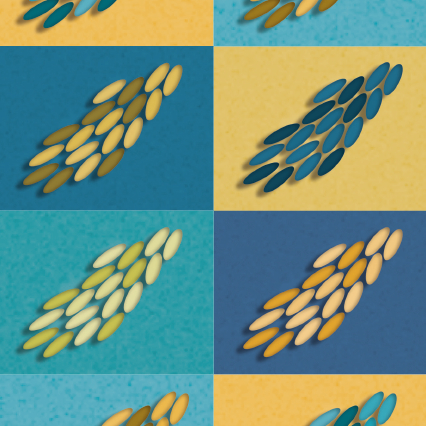
Bright-field microscopy image of a magnetic chain trapped at the liquid-air interface in a bacterial bath

Anisotropic dynamics of a self-assembled colloidal chain in an active bath
Mehdi Shafiei Aporvari, Mustafa Utkur, Emine Ulku Saritas, Giovanni Volpe & Joakim Stenhammar
Soft Matter, 2020, 16, 5609-5614
doi: https://doi.org/10.1039/D0SM00318B
arXiv: 2002.09961

Anisotropic macromolecules exposed to non-equilibrium (active) noise are very common in biological systems, and an accurate understanding of their anisotropic dynamics is therefore crucial. Here, we experimentally investigate the dynamics of isolated chains assembled from magnetic microparticles at a liquid–air interface and moving in an active bath consisting of motile E. coli bacteria. We investigate both the internal chain dynamics and the anisotropic center-of-mass dynamics through particle tracking. We find that both the internal and center-of-mass dynamics are greatly enhanced compared to the passive case, i.e., a system without bacteria, and that the center-of-mass diffusion coefficient D features a non-monotonic dependence as a function of the chain length. Furthermore, our results show that the relationship between the components of D parallel and perpendicular with respect to the direction of the applied magnetic field is preserved in the active bath compared to the passive case, with a higher diffusion in the parallel direction, in contrast to previous findings in the literature. We argue that this qualitative difference is due to subtle differences in the experimental geometry and conditions and the relative roles played by long-range hydrodynamic interactions and short-range collisions.

Characterisation of Physical Processes from Anomalous Diffusion Data, special issue on Journal of Physics A

Logo of the AnDi challenge.

Characterisation of Physical Processes from Anomalous Diffusion Data
Guest Editors
Miguel A Garcia-March, Maciej Lewenstein, Carlo Manzo, Ralf Metzler, Gorka Muñoz-Gil, Giovanni Volpe
Journal of Physics A: Mathematical and Theoretical
URL: Special Issue on Characterisation of Physical Processes from Anomalous Diffusion Data

In many systems, stochastic transport deviates from the standard laws of Brownian motion. Determining the exponent α characterising anomalous diffusion and identifying the physical origin of this behaviour are crucial steps to understanding the nature of the systems under observation. However, the determination of these properties from the analysis of the measured trajectories is often difficult, especially when these trajectories are short, irregularly sampled, or switching between different behaviours.

Over the last years, several methods have been proposed to quantify anomalous diffusion and the underlying physical process, going beyond the classical calculation of the mean squared displacement. More recently, the advent of machine learning has produced a boost in the methods to quantify anomalous diffusion.

The AnDi challenge aims at bringing together a vibrating and multidisciplinary community of scientists working on this problem. The use of the same reference datasets will allow an unbiased assessment of the performance of methods for characterising anomalous diffusion from single trajectories. This Special Issue will report on these approaches and their performance.

The deadline for submissions will be 30th June 2021 and you can submit manuscripts through ScholarOne Manuscripts. All papers will be refereed according to the usual high standards of the journal.