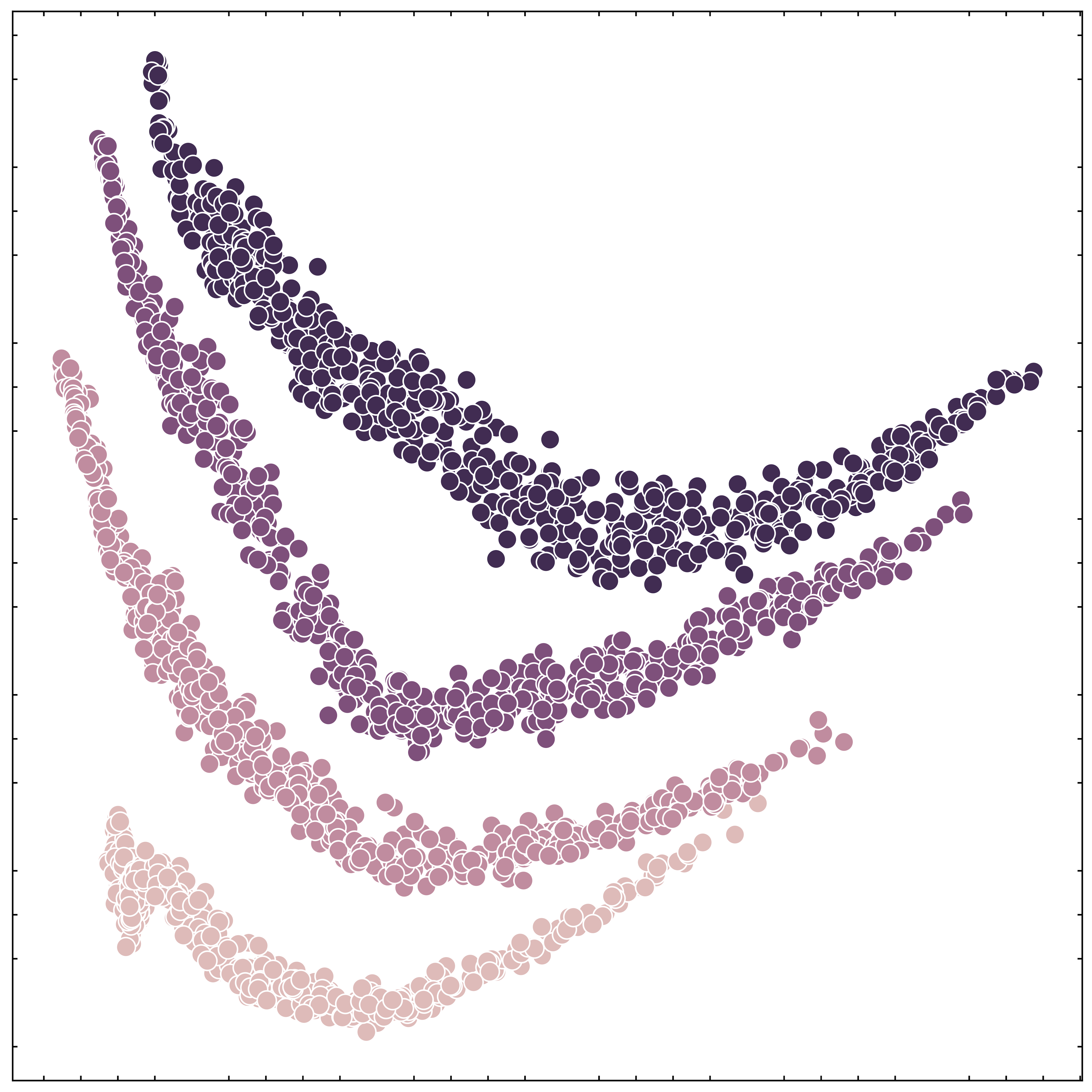
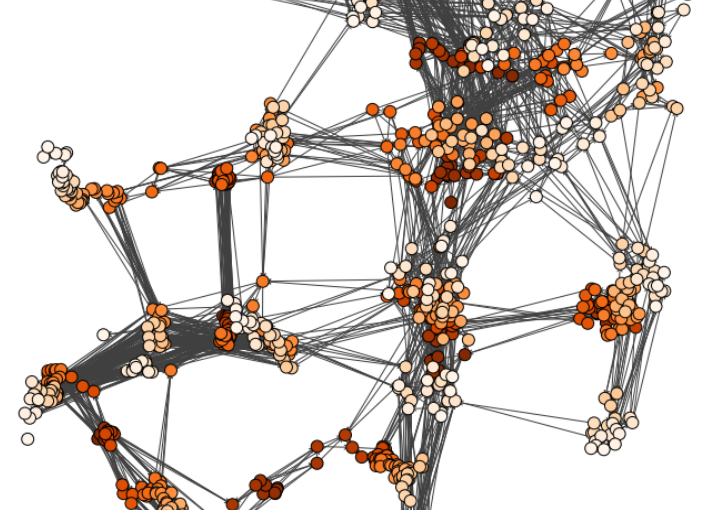
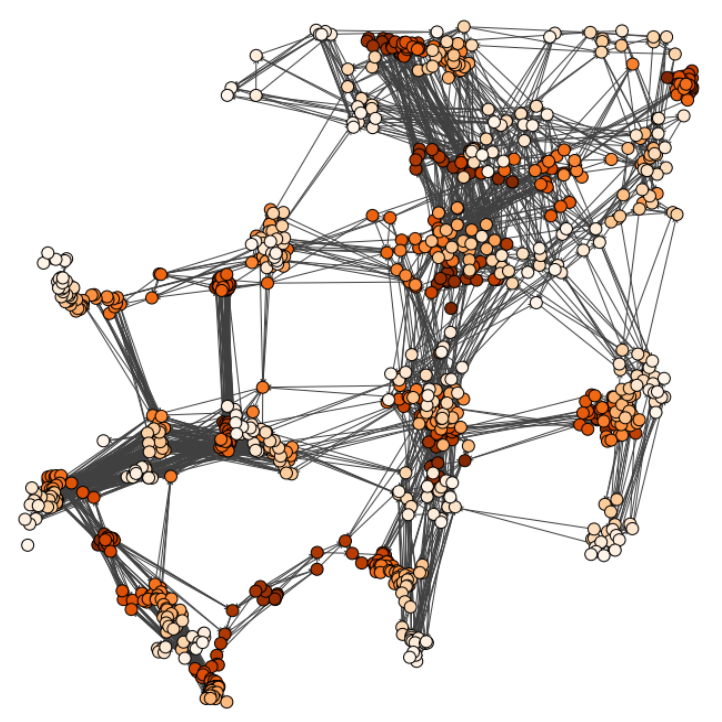
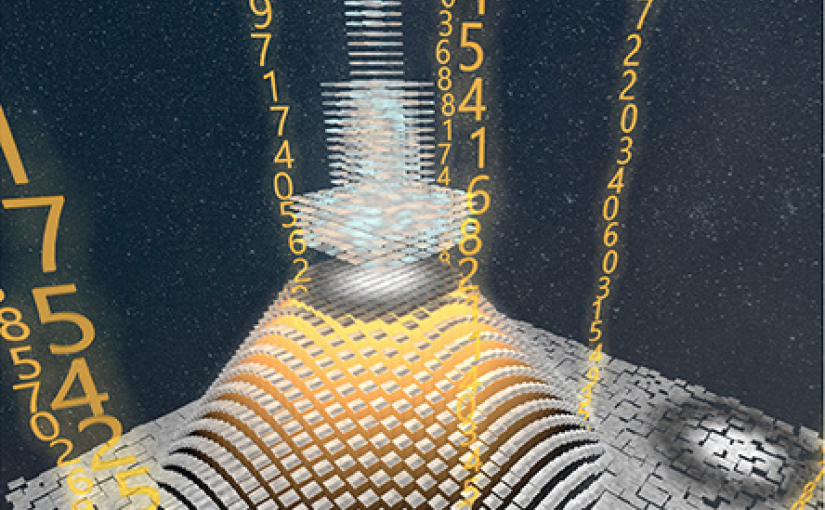
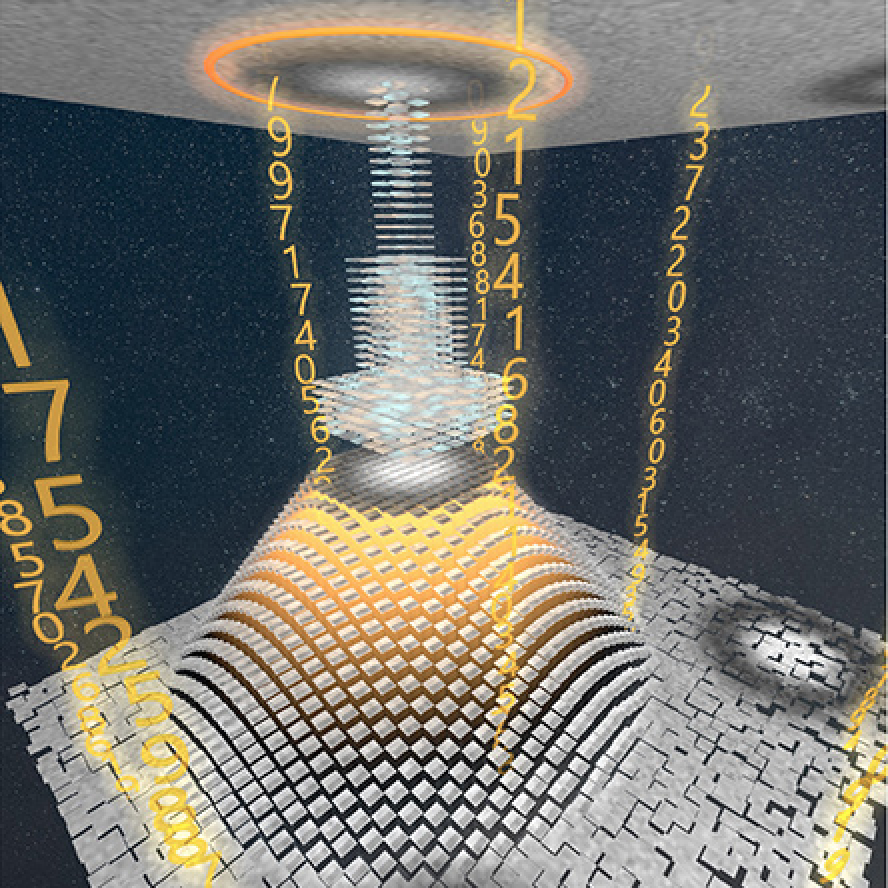
The plot shows the latent space of the graph autoencoder. Each point represents a graph, and is coloured based on a structural parameter of the graph. (Image by M. Granfors.)Mirja Granfors defended her Master thesis in physics at the University of Gothenburg on June 8 2023. Congrats!
Title: Enhancing Graph Analysis and Compression with Multihead Attention and Graph-Pooling Autoencoders
Abstract:
Graphs are used to model complex relationships in various domains. Analyzing and classifying graphs efficiently poses significant challenges due to their inherent structural complexity. This thesis presents two distinct projects aimed at enhancing graph analysis and compression through novel and innovative techniques. In the first project, a multihead attention module for node features is developed, enabling effective prediction of graph edges for connection in time. By applying attention mechanisms, the module selectively focuses on relevant features, facilitating accurate edge predictions. This approach expands the potential applications of graph analysis by improving the understanding of graph connectivity and identifying critical relationships between nodes. The second project introduces a novel graph autoencoder with multiple steps of size reduction by graph-pooling. Unlike traditional graph autoencoders, which commonly employ graph convolutional networks, this approach utilizes several poolings to capture diverse structural information and compress the graph representation. The pooling-based autoencoder not only achieves efficient graph compression but also captures the structural information of the graph. This enables the classification of graphs based on their structure, providing a valuable tool for tasks such as graph categorization.
Supervisor: Jesús Pineda Examiner: Giovanni Volpe Opponent: Gideon Jägenstedt
John Klint and Niphredil Klint defended their Master thesis in Physics at the University of Gothenburg on 7 June 2023 at 17:00. Congrats!
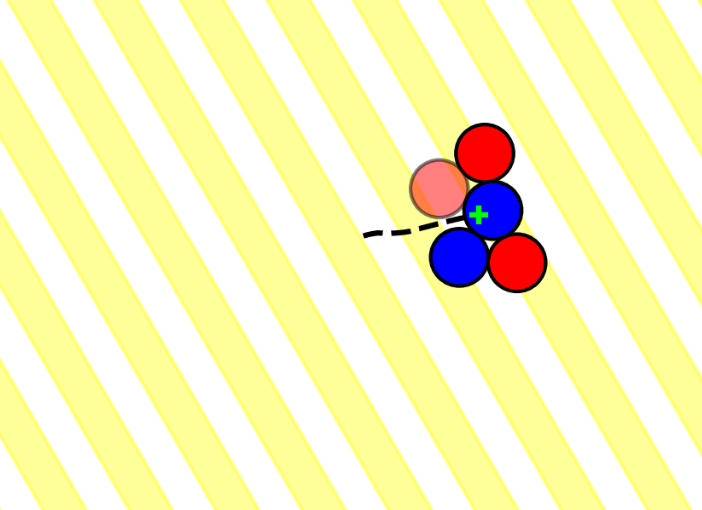
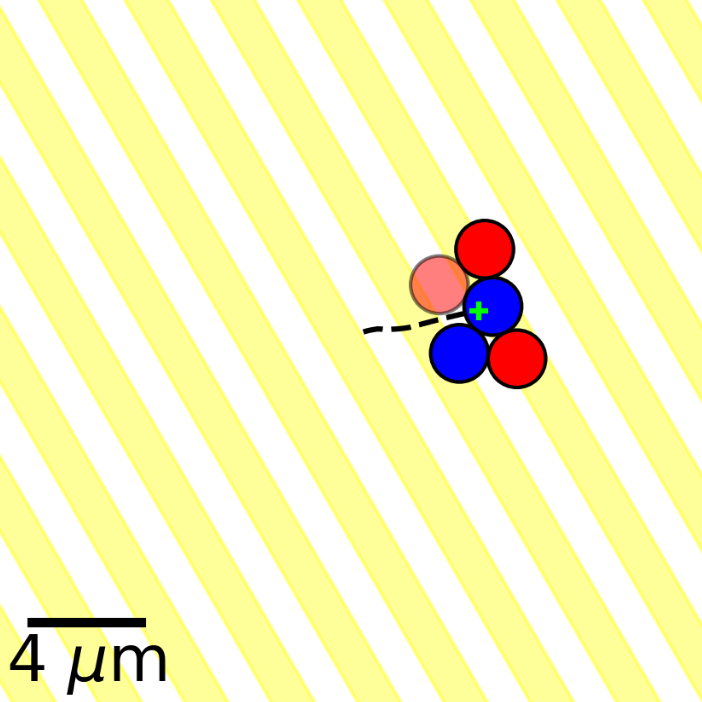
Self-Organized colloidal molecule in a traveling wave pattern. (Image by J. and N. Klint)Title: Light-Controlled Self-Organization of Active Molecules
Abstract:
Active matter systems can be found on many different length- and time-scales in nature. Tiny molecular machines, colonies of bacteria and swarming insects are all examples of such systems. What they all have in common is that they are composed of agents that convert energy into different types of directed motion. This activity occurs only when the agents are in a non-equilibrium state. Often, the interactions give rise to emergent behaviours otherwise not observed for single individuals. A key aspect of active matter systems is that without an energy source, the agents do not exhibit any directed motion and therefore no emergence. The energy source may consist of, for example, light, heat, chemical reactions or vibrations.
Research into active matter often involves laboratory experiments and these can be both expensive and time-consuming to set up. In this project, we explore a simple yet powerful numerical method designed to be efficient but still capable of capturing essential phenomena of light-activated systems. We consider two distinct types of colloidal particles, one that absorbs light and one that does not absorb light. When light is absorbed by one of the particle species, a temperature gradient is generated. Both types of particles are attracted to higher temperatures, and this phoretic attraction is the only interaction at a distance considered between the particles. Since the only particles that generate a temperature gradient are the ones that absorb light, there is an effective non-reciprocal phoretic interaction, which is directed from centre to centre. To avoid unphysical overlaps in the simulation, we implemented a volume exclusion scheme to account for the finite size and hard-core nature of the particles.
Through simulations, we examined and catalogued emergent properties for clusters of particles and statistically determined their speed and rotational frequency. We also investigated cluster lifetimes and categorised different formations of active colloidal molecules. Furthermore, we implemented a number of different ways to simulate the illumination of the agents, from homogeneous light to square and Gaussian light pulses. We successfully induced several emergent properties, such as cluster disintegration immediately followed by regeneration (in a cellular automata-like fashion), as well as speed and rotational frequency modulation and orientation of clusters in the direction of the wavefront.
The results obtained from our simulations are in agreement with previous experimental research on similar non-reciprocal systems governed by phoretic interactions. Our model and its implementation is capable of capturing a wide range of emergent behaviours. We have confirmed that the model can be used to explore how various light environments influence the behaviour of light-activated agents. The minimalistic approach of our work can be seen as a vantage point for further numerical studies of active matter systems.
Examiner: Giovanni Volpe Supervisor: Agnese Callegari Opponent: Mathias Samuelsson
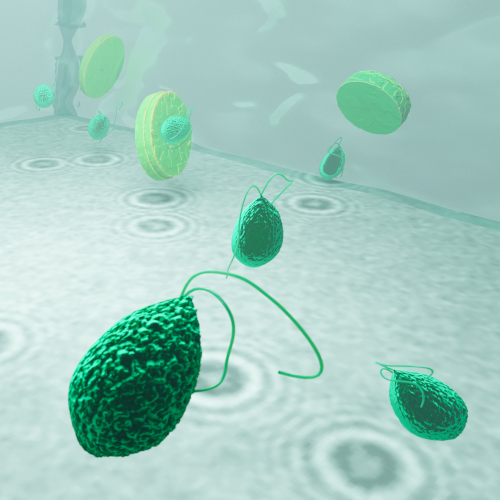
Planktons imaged under a holographic microscope. (Illustration by J. Heuschele.)Quantitative microplankton tracking by holographic microscopy and deep learning Harshith Bachimanchi
1 June 2023, 15:00 CEST
The marine microbial food web plays a central role in the global carbon cycle. However, our mechanistic understanding of the ocean is biased toward its larger constituents, while rates and biomass fluxes in the microbial food web are mainly inferred from indirect measurements and ensemble averages. Yet, resolution at the level of the individual microplankton is required to advance our understanding of the microbial food web. Here, we demonstrate that, by combining holographic microscopy with deep learning, we can follow microplanktons throughout their lifespan, continuously measuring their three-dimensional position and dry mass. The deep-learning algorithms circumvent the computationally intensive processing of holographic data and allow rapid measurements over extended time periods. This permits us to reliably estimate growth rates, both in terms of dry mass increase and cell divisions, as well as to measure trophic interactions between species such as predation events. The individual resolution provides information about selectivity, individual feeding rates, and handling times for individual microplanktons. The method is particularly useful to detail the rates and routes of organic matter transfer in micro-zooplankton, the most important and least known group of primary consumers in the oceans. Studying individual interactions in idealized small systems provides insights that help us understand microbial food webs and ultimately larger-scale processes. We exemplify this by detailed descriptions of micro-zooplankton feeding events, cell divisions, and long-term monitoring of single cells from division to division.
Input graph structure including a redundant number of edges. (Image by J. Pineda.)Geometric deep learning reveals the spatiotemporal features of microscopic motion Jesús Pineda
Characterizing dynamic processes in living systems provides essential information for advancing our understanding of life processes in health and diseases and for developing new technologies and treatments. In the past two decades, optical microscopy has undergone significant developments, enabling us to study the motion of cells, organelles, and individual molecules with unprecedented detail at various scales in space and time. However, analyzing the dynamic processes that occur in complex and crowded environments remains a challenge. This work introduces MAGIK, a deep-learning framework for the analysis of biological system dynamics from time-lapse microscopy. MAGIK models the movement and interactions of particles through a directed graph where nodes represent detections and edges connect spatiotemporally close nodes. The framework utilizes an attention-based graph neural network (GNN) to process the graph and modulate the strength of associations between its elements, enabling MAGIK to derive insights into the dynamics of the systems. MAGIK provides a key enabling technology to estimate any dynamic aspect of the particles, from reconstructing their trajectories to inferring local and global dynamics. We demonstrate the flexibility and reliability of the framework by applying it to real and simulated data corresponding to a broad range of biological experiments.
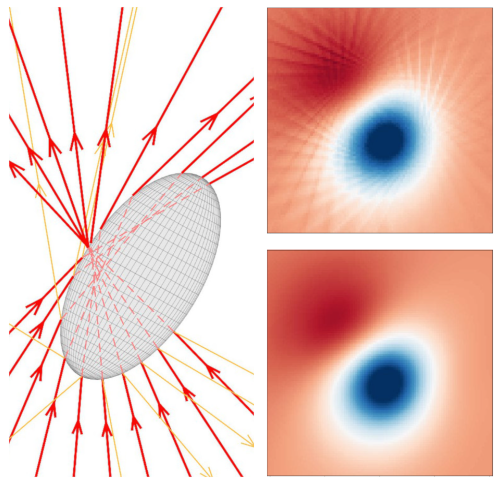
Focused rays scattered by an ellipsoidal particles. (Image reproduced from: 10.1021/acsphotonics.2c01565.)Faster and more accurate geometrical-optics optical force calculation using neural networks
Agnese Callegari
Optical forces are often calculated by discretizing the trapping light beam into a set of rays and using geometrical optics to compute the exchange of momentum. However, the number of rays sets a trade-off between calculation speed and accuracy. Here, we show that using neural networks permits one to overcome this limitation, obtaining not only faster but also more accurate simulations. We demonstrate this using an optically trapped spherical particle for which we obtain an analytical solution to use as ground truth. Then, we take advantage of the acceleration provided by neural networks to study the dynamics of an ellipsoidal particle in a double trap, which would be computationally impossible otherwise.
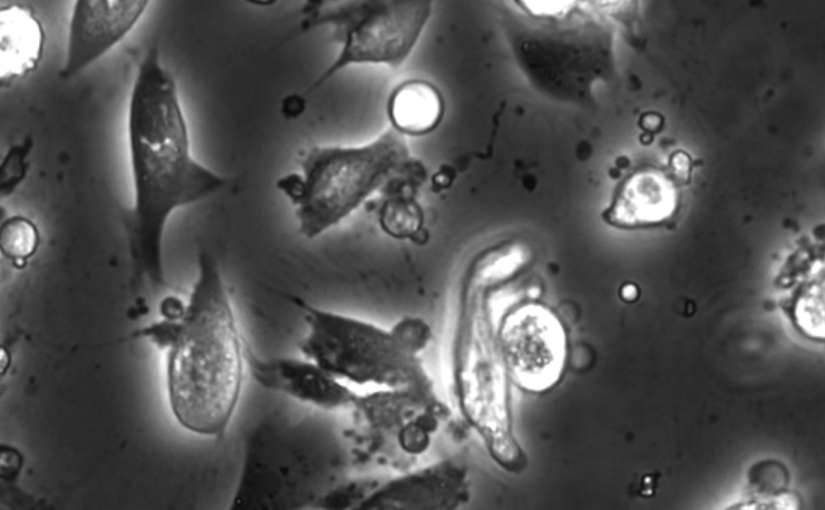
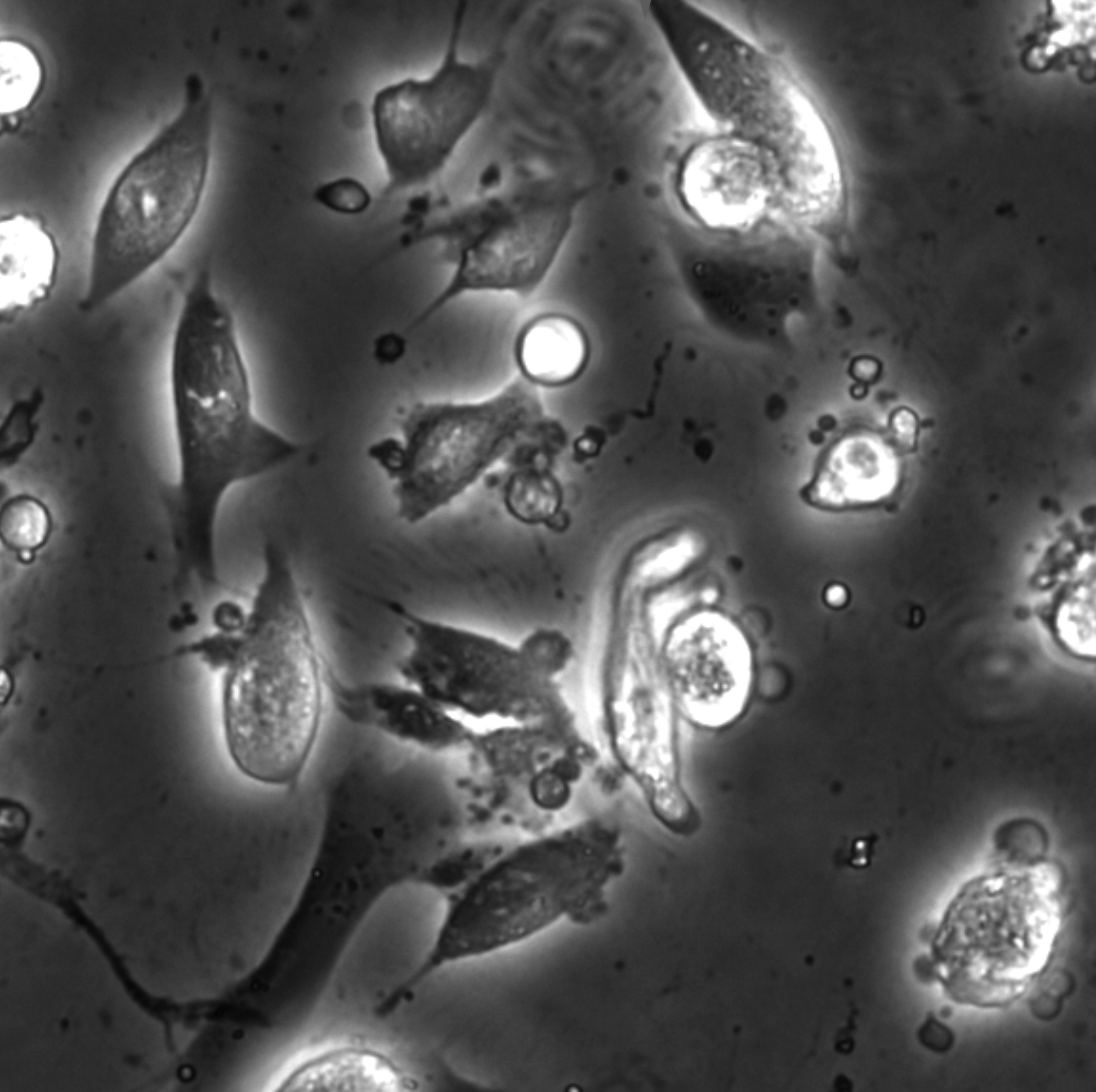
Phase-contrast image before virtual staining. (Image reproduced from https://doi.org/10.1101/2022.07.18.500422.)Dynamic live/apoptotic cell assay using phase-contrast imaging and deep learning
Caroline B. Adiels
Chemical live/dead assay has a long history of providing information about the viability of cells cultured in vitro. The standard methods rely on imaging chemically-stained cells using fluorescence microscopy and further analysis of the obtained images to retrieve the proportion of living cells in the sample. However, such a technique is not only time-consuming but also invasive. Due to the toxicity of chemical dyes, once a sample is stained, it is discarded, meaning that longitudinal studies are impossible using this approach. Further, information about when cells start programmed cell death (apoptosis) is more relevant for dynamic studies. Here, we present an alternative method where cell images from phase-contrast time-lapse microscopy are virtually-stained using deep learning. In this study, human endothelial cells are stained live or apoptotic and subsequently counted using the self-supervised single-shot deep-learning technique (LodeSTAR). Our approach is less labour-intensive than traditional chemical staining procedures and provides dynamic live/apoptotic cell ratios from a continuous cell population with minimal impact. Further, it can be used to extract data from dense cell samples, where manual counting is unfeasible.
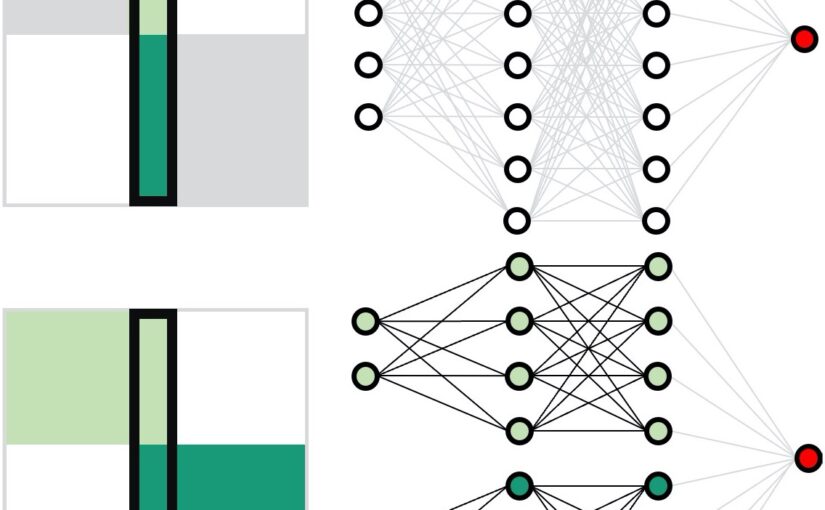
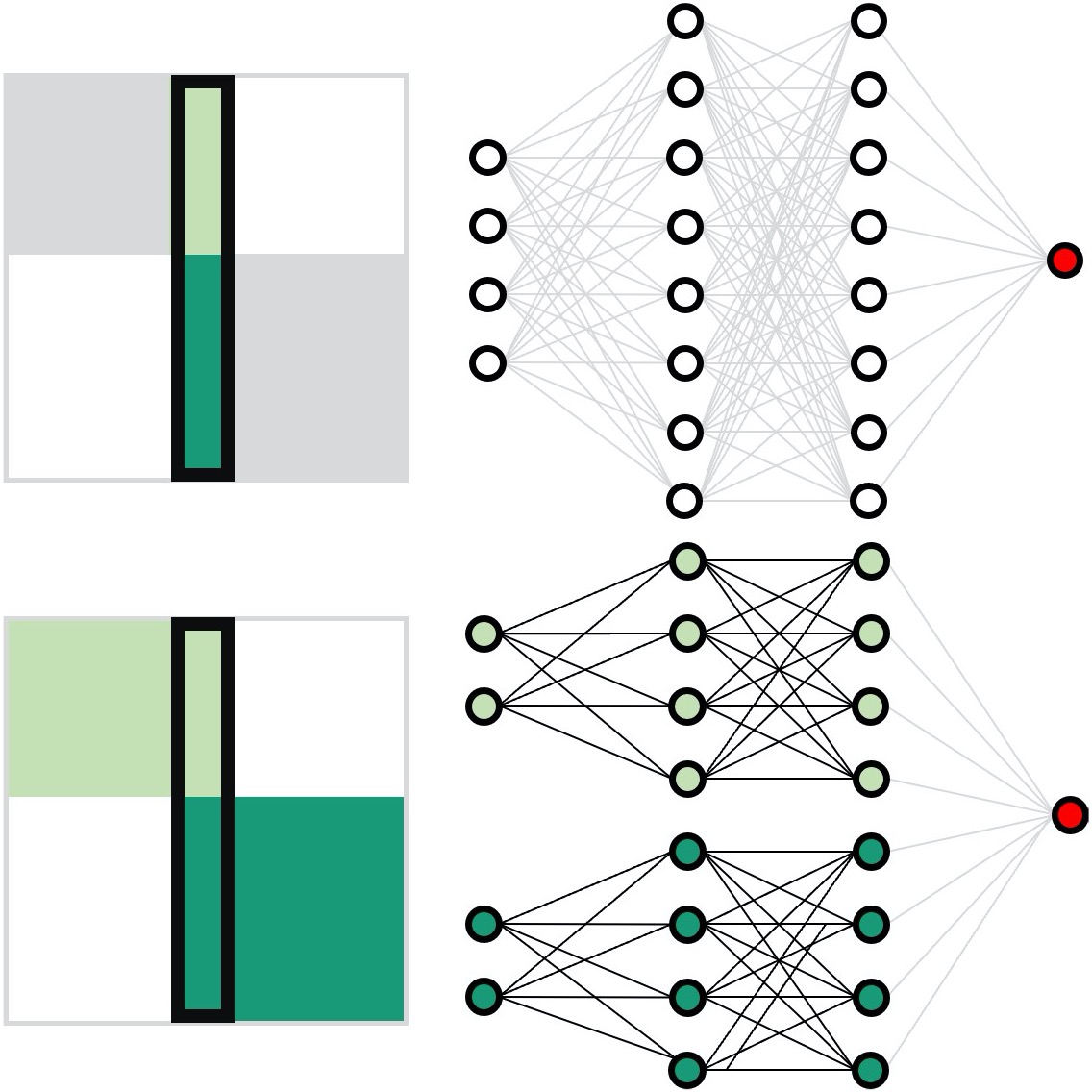
Working principles for training neural networks with highly incomplete dataset: vanilla (upper panel) vs GapNet (lower panel) (Image by Y.-W. Chang.)
Training of neural network with incomplete medical datasets
Yu-Wei Chang
Neural network training and validation rely on the availability of large high-quality datasets. However, in many cases, only incomplete datasets are available, particularly in health care applications, where each patient typically undergoes different clinical procedures or can drop out of a study. Here, we introduce GapNet, an alternative deep-learning training approach that can use highly incomplete datasets without overfitting or introducing artefacts. Using two highly incomplete real-world medical datasets, we show that GapNet improves the identification of patients with underlying Alzheimer’s disease pathology and of patients at risk of hospitalization due to Covid-19. Compared to commonly used imputation methods, this improvement suggests that GapNet can become a general tool to handle incomplete medical datasets.
Basudev Roy.Study of out-of-plane rotations in optical tweezers and applications in soft matter and biological systems
Basudev Roy
Indian Institute of Technology Madras, India Date: 24 May 2023 Time: 12:30 Place: Nexus
Abstract:
A rigid body can have 6 degrees of freedom, namely the three translational degrees of freedom and the three rotational degrees of freedom. Of these, the translational degrees have been well explored in optical tweezers community. However, only the in-plane rotational degree of freedom has been explored. We call this in-plane degree of rotational freedom, the yaw motion in the nomenclature of the airlines. The pitch and roll degrees are only beginning to be explored recently.
In this talk, I will show you 4 ways of generating pitch rotation using the optical tweezers. I will also show you one way of detection of pitch rotation at high resolution using birefringent particles. Further, I will discuss some applications of this pitch rotation in soft matter systems and biology. I will also show you a few other projects that we are working on inside the lab.
Bio:
Basudev Roy got his MSc from Indian Institute of Technology Kharagpur and MS from the University of Maryland, College Park. He got his PhD from Indian Institute of Science Education and Research, Kolkata in 2015. He was an Alexander von Humboldt fellow at the University of Tuebingen, Germany for his postdoctoral research from 2015 to 2017. He joined Indian Institute of Technology Madras, India since 2017 where he is now an Associate Professor.
Planktons imaged under a holographic microscope. (Illustration by J. Heuschele.)Deep learning in plankton ecology Harshith Bachimanchi
Presentation at Biology department, Lund University
12 May 2023, 13:00 CEST
In this mini-symposium organised by Dr. Erik Selander at Lund University, I have spoken about our recent work with marine microplankton, where we have combined holographic microscopy with deep learning to measure the ‘dry’ mass and 3D swimming dynamics of different species of planktons. The article related to this presentation can be found at the following here: Microplankton life histories revealed by holographic microscopy and deep learning.
The presentation was followed by discussions with Prof. Karin Rengefors group at Lund university on the topic of application of AI based methods for various kinds of studies in phytoplankton ecology and evolution.