Mirja Granfors, Jesús Pineda, Blanca Zufiria Gerbolés, Joana B. Pereira, Carlo Manzo, and Giovanni Volpe
Date: 7 October 2026
Time: 11:45 – 13:00 and 17:20 – 19:00
Place: Biblioteket, Arbetets museum, Norrköping
Modern optical techniques such as super-resolution microscopy generate rich, spatially resolved data that can be naturally represented as graphs. However, the structural variability of these graphs poses significant challenges for their analysis and classification, particularly when similar underlying processes can produce substantially different graph realizations.
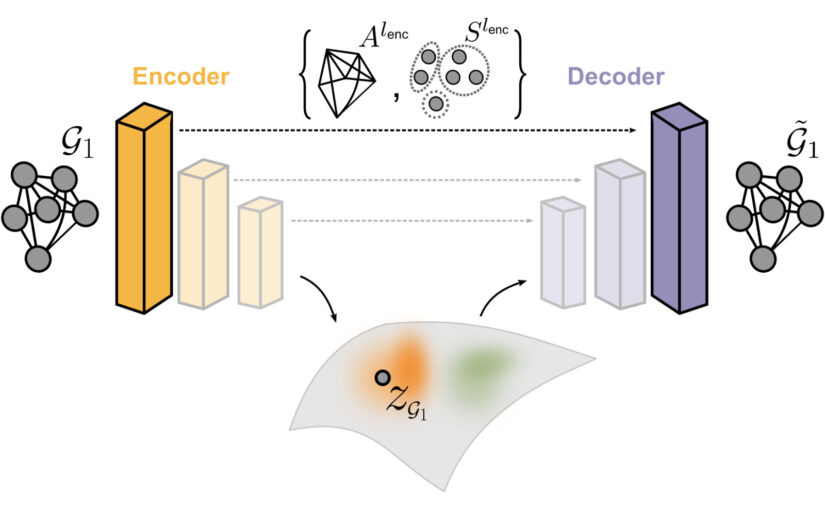
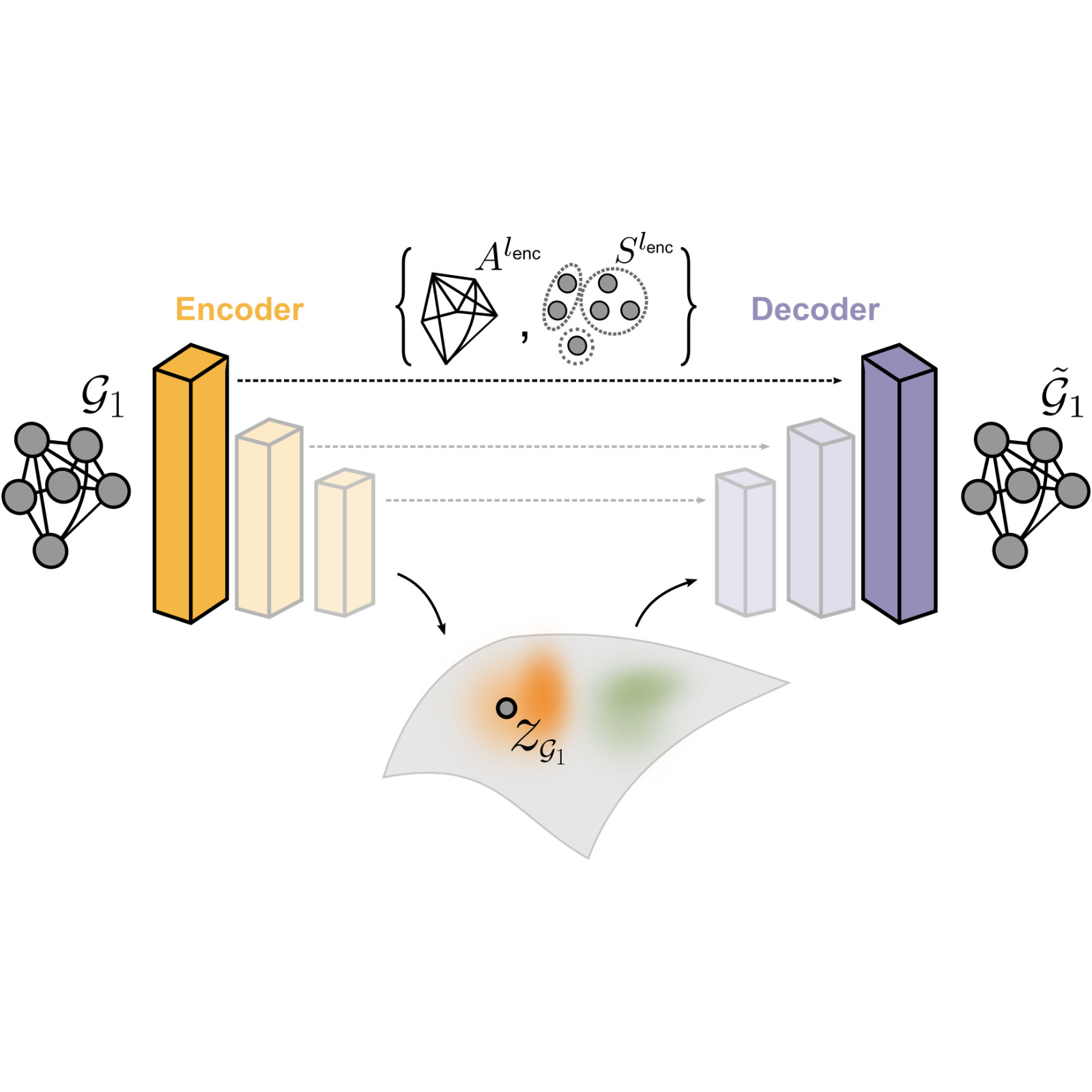
To address this challenge, we introduce Graph Autoencoder Uncovering Descriptive Information (GAUDI), an unsupervised graph deep learning framework designed to capture both local details and global structure. GAUDI employs a hierarchical graph-convolutional variational autoencoder architecture with pooling and upsampling layers connected through skip connections, preserving essential connectivity information throughout the encoding–decoding process.
Despite substantial variability between graph realizations generated from identical or highly similar underlying parameters, GAUDI consistently maps them to nearby regions of a structured, continuous latent space. This enables the identification of invariant process-level features while separating them from stochastic variability.
We demonstrate this capability using super-resolution microscopy, where GAUDI characterizes protein assemblies and organizes structurally variable graphs according to their underlying state. The framework is further demonstrated on small-world network models, collective motion in the Vicsek model, and age-related changes in brain connectivity. These results highlight GAUDI as a broadly applicable approach for extracting meaningful information from complex graph-structured data across microscopy and other fields.