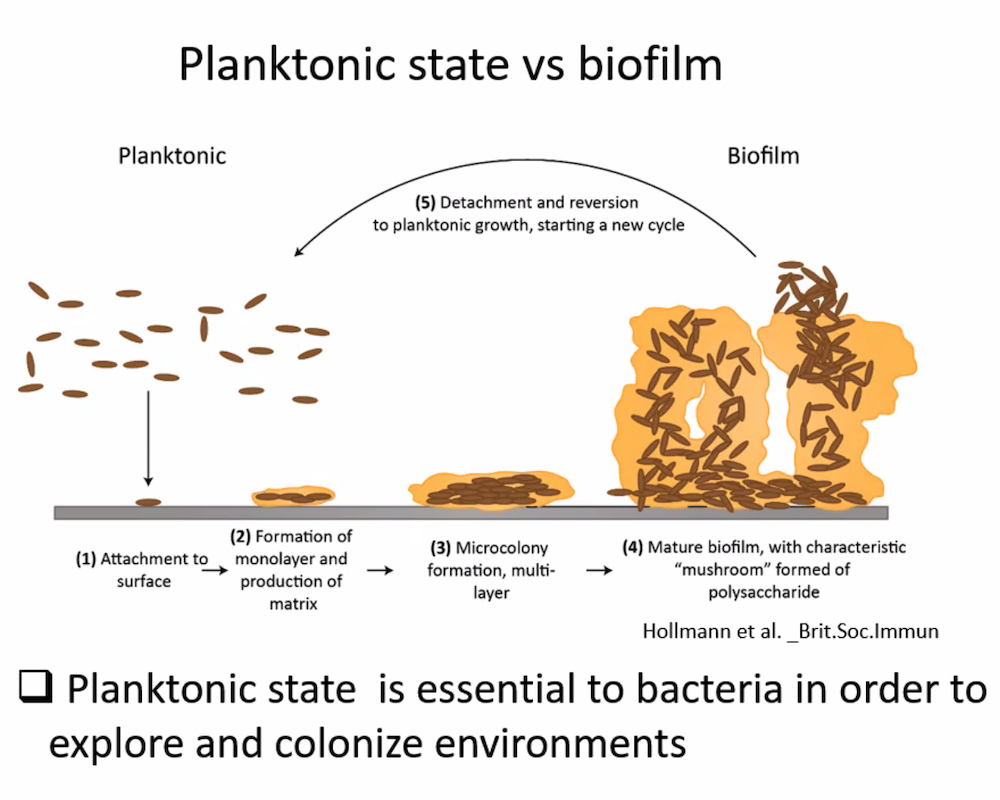
In this seminar, I will present some examples of how the behaviour of active particles can be influenced by their environment. In particular, I’ll show the formation of active molecules and active droploids from passive colloidal building blocks; the emergence of non-Boltzmann statistics and active-depletion forces between plates in an active bath; and the environment topography alters the way to multicellularity in the bacterium Myxococcus xanthus.
Artificial intelligence in microscopy, photonics, and active matter
Giovanni Volpe
27 July 2022, 12:40 (CEST) MoLE Conference 2022
Donostia/San Sebastián, Spain, 25-29 July 2022
After a brief overview of artificial intelligence, machine learning and deep learning, I will present a series of recent works in which we have employed deep learning for applications in microscopy, optical tweezers, and active matter. In particular, I will explain how we employed deep learning to enhance digital video microscopy, to perform virtual staining of tissues, to estimate the properties of anomalous diffusion, to characterize microscopic force fields, to improve the calculation of optical forces, and to characterize nanoparticles. Finally, I will provide an outlook on the future for the application of deep learning in these fields.
Artificial intelligence in microscopy, photonics, and active matter
Giovanni Volpe
30 June 2022, 16:20 (CEST) Active and Intelligent Living Matter Conference
Erice, Italy, 26 June-1 July 2022
After a brief overview of artificial intelligence, machine learning and deep learning, I will present a series of recent works in which we have employed deep learning for applications in microscopy, optical tweezers, and active matter. In particular, I will explain how we employed deep learning to enhance digital video microscopy, to perform virtual staining of tissues, to estimate the properties of anomalous diffusion, to characterize microscopic force fields, to improve the calculation of optical forces, and to characterize nanoparticles. Finally, I will provide an outlook on the future for the application of deep learning in these fields.
Observer, Target Generation and Control Design in Robotics
Vide Ramsten
10 June 2022, 15:00 CET
Abstract
In this presentation, three topics related to Control Theory will be discussed together with practical examples from my Bachelor and Master thesis projects. First, the concept of state observers will be presented, where internal system states are estimated based on the measurable outputs of the system. Second, target generation will be discussed, in which the particular output or state trajectory of the system that is desired, is created. Lastly, we consider controller design, where we specify how to create the input given the previously defined parts such as target reference, measurable output and estimated system states. The theory will be applied to two projects. One in which a wheeled robot is developed for guiding purposes, so that the robot can show users the way to certain locations specified by the user. The project gives examples of state observers by localization algorithms, as well as target generation by path planning algorithms. The other example is a robotic testing system for passive prosthesis, where target generation through a motion-capture system is used as a reference for robot motion. A control strategy has been implemented in order to track this reference signal.
Short Bio
Vide Ramsten got his Bachelor degree in Automation and Mechatronic at the Chalmers University of Technology. After that, he continued his studies in a master programme in Systems, Control and Mechatronics at Chalmers. During his master, he did a double degree exchange with the University of Stuttgart, Germany in Engineering Cybernetics. While in Germany, he did a six-month internship at the robotics company BEC Gmbh focused on applications of control in robotics, as well as his master thesis at the Fraunhofer Institute of Manufacturing Engineering and Automation IPA.
Emergent Complex Behaviors in Active Matter
Giovanni Volpe
9 June 2022, 14:30 (IST)
Online for MNBF Workshop: International Workshop On Active Systems
IIT Madras, India, 8-9 June 2022
Robots in real-world scenarios
Lun Li
7 June 2022, 15:00 CET
Abstract
In this presentation, I will demonstrate how robots can work in the real-world and dynamic environments assisting or replacing humans and present examples from my previous work experiences. I will also explain the basic knowledge about robots, the challenges to design a robust robot system for business, and the current state of the robotics industry.
Short Bio
Lun Li is a robotics engineer. His work focuses on artificial intelligence and robot designing in the areas of robot navigation, manipulation, and cooperation. In the past three years, he has served as the CTO of robot startups in China. He has led two robot projects, one is an agricultural robotic jasmine tea harvester, and the other is an industrial unmanned forklift. The latter has been successfully launched in the market. Before entering the workplace, he got his two bachelor’s degrees from Beihang University in China and a master’s degree from Texas A&M University in United States.
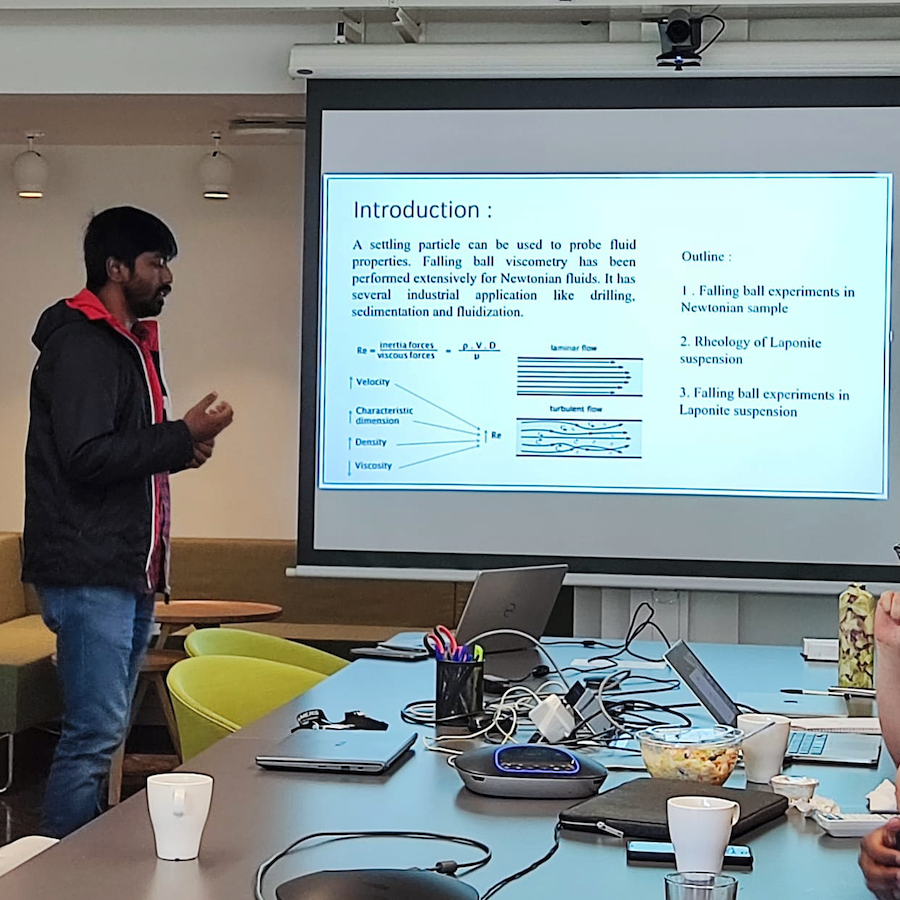
(Photo by G. Pesce)Investigating the micro-rheology of an aging colloidal clay suspension using an optical tweezer
Rajkumar Biswas
Raman Research Institute, Bangalore, India.
1 June 2022, 12:30 CET
Optical tweezers (OT) can be employed to measure pico-Newton forces acting on a colloidal particle trapped in a medium and have been used to successfully probe complex systems having fragile structures. In this work, we use an optical tweezer setup to study aging aqueous suspensions of Laponite clay particles of different concentrations. Laponite particles in aqueous suspension form fragile networks whose rigidities grow with time due to the gradual evolution of inter-particle electrostatic interactions. Using OT, we study the displacements of a trapped micron-sized colloidal bead in a Laponite suspension medium during the evolution of the underlying structures. By analyzing the power spectrum, we demonstrate that the viscosity of the aging Laponite suspension increases with time. Furthermore, we perform active micro-rheology experiments wherein we apply a sinusoidal oscillation to the sample cell while keeping the particle trapped in the Laponite suspension. Simultaneously, the force response of the trapped particle is recorded during the controlled applied oscillation. The phase lag between the applied oscillatory signal and the force experienced by the trapped particle due to the oscillatory deformation is calculated. A range of frequencies is applied to estimate the elastic (G’) and viscous (G”) moduli of the Laponite suspension over a broad range of time scales and at different suspension ages. It is found that G’ is lower than G” at the lower frequencies and eventually crosses G” at a frequency that depends on the Laponite concentration. We change the size of the trapped particle to study how the probe particle size affects the micro-rheological measurements of the viscoelastic gel-like medium. We next investigate the concentration- and aging-dependences of the fragile structures in Laponite suspensions of different concentrations using cryogenic electron microscopy. The average pore areas of these structures are seen to decrease with increasing Laponite concentrations. We show that the crossover frequency of G’ and G”, obtained from micro-rheological measurements, is proportional to the average diameter of the pores in the Laponite gel measured using electron microscopy.
Short Bio
Rajkumar Biswas is currently doing his PhD in Raman Research Institute (RRI), India. Before joining RRI in 2016, he completed his bachelor’s and masters in Physics from St. Xavier’s college, Kolkata and Indian Institute of Technology, Guwahati (IITG) respectively. In RRI he is working in the Soft Condensed Matter group with Prof. Ranjini Bandyopadhyay. His research focuses on rheological and dynamical properties of different soft matter systems. He has worked on various projects which includes rheological studies of Laponite gels using falling ball viscometer and optical tweezer. Along with that, he has been studying the dynamical heterogeneities in colloidal and granular systems.
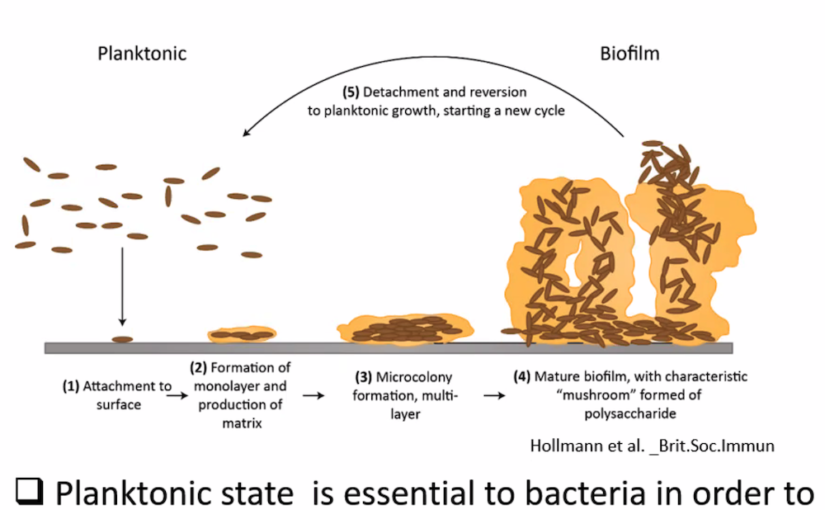
Slide from E. Clément’s presentation. (Image by A. Callegari via Zoom)Bacteria exploring Newtonian and non-Newtonian complex fluids: from behavioral variability to medium assisted tumbling
Eric Clément
PMMH-ESPCI-PSL, Sorbonne University, University Paris-Cité
31 May 2022, 11:00 CET
Understanding the way motile micro-organisms such as bacteria explore their environment is central to many ecological, medical and biotechnological questions. Here, I will present recent advances on the actual spatial exploration process undertaken by flagellated bacteria such as E.coli, undergoing sequences of runs and tumbles, leading to a random-walk. The extreme sensitivity of the motor rotation switch (CCW/CW) to the presence of a phosphorylated protein (CheYP) in its vicinity, leads to a behavioral variability of run-times, characterized by a log-normal distribution [1]. This mechanism prevails in most Newtonian fluids and has important consequences on the residence times at surfaces [2] as well as the large scale transport and dispersion in confined environments [3]. However when the surrounding fluid is a yield-stress fluid, the locally high resistance to penetration takes control of the exploration process and the run persistence time distribution is strongly affected by the mechanical bending of the flagella bundle, hence controlling the spatial diffusivity as well as the onset of a motility barrier.
[1] N. Figueroa-Morales et al., 3D spatial exploration by E.coli echoes motor temporal variability, Phys. Rev. X, 10, 021004 (2020).
[2] G. Junot et al., Run-to-tumble variability controls the surface residence times of E. coli bacteria, to appear in Phys. Rev. Lett. (2022).
[3] N. Figueroa-Morales et al., E.coli “super-contaminates” narrow channels fostered by broad motor switching statistics, Science Advances, 6, eaay0155 (2020).
The AnDi Challenge: Objective comparison of methods to decode anomalous diffusion
Giovanni Volpe
18 May 2022, 9:00 (CEST)
Online for: 27th Annual IASBS Meeting on Condensed Matter Physics
IASBS, Zanjan, Iran
18-19 May 2022
Deviations from Brownian motion leading to anomalous diffusion are found in transport dynamics from quantum physics to life sciences. The characterization of anomalous diffusion from the measurement of an individual trajectory is a challenging task, which traditionally relies on calculating the trajectory mean squared displacement. However, this approach breaks down for cases of practical interest, e.g., short or noisy trajectories, heterogeneous behaviour, or non-ergodic processes. Recently, several new approaches have been proposed, mostly building on the ongoing machine-learning revolution. To perform an objective comparison of methods, we gathered the community and organized an open competition, the Anomalous Diffusion challenge (AnDi). Participating teams applied their algorithms to a commonly-defined dataset including diverse conditions. Although no single method performed best across all scenarios, machine learning-based approaches achieved superior performance for all tasks. The discussion of the challenge results provides practical advice for users and a benchmark for developers.
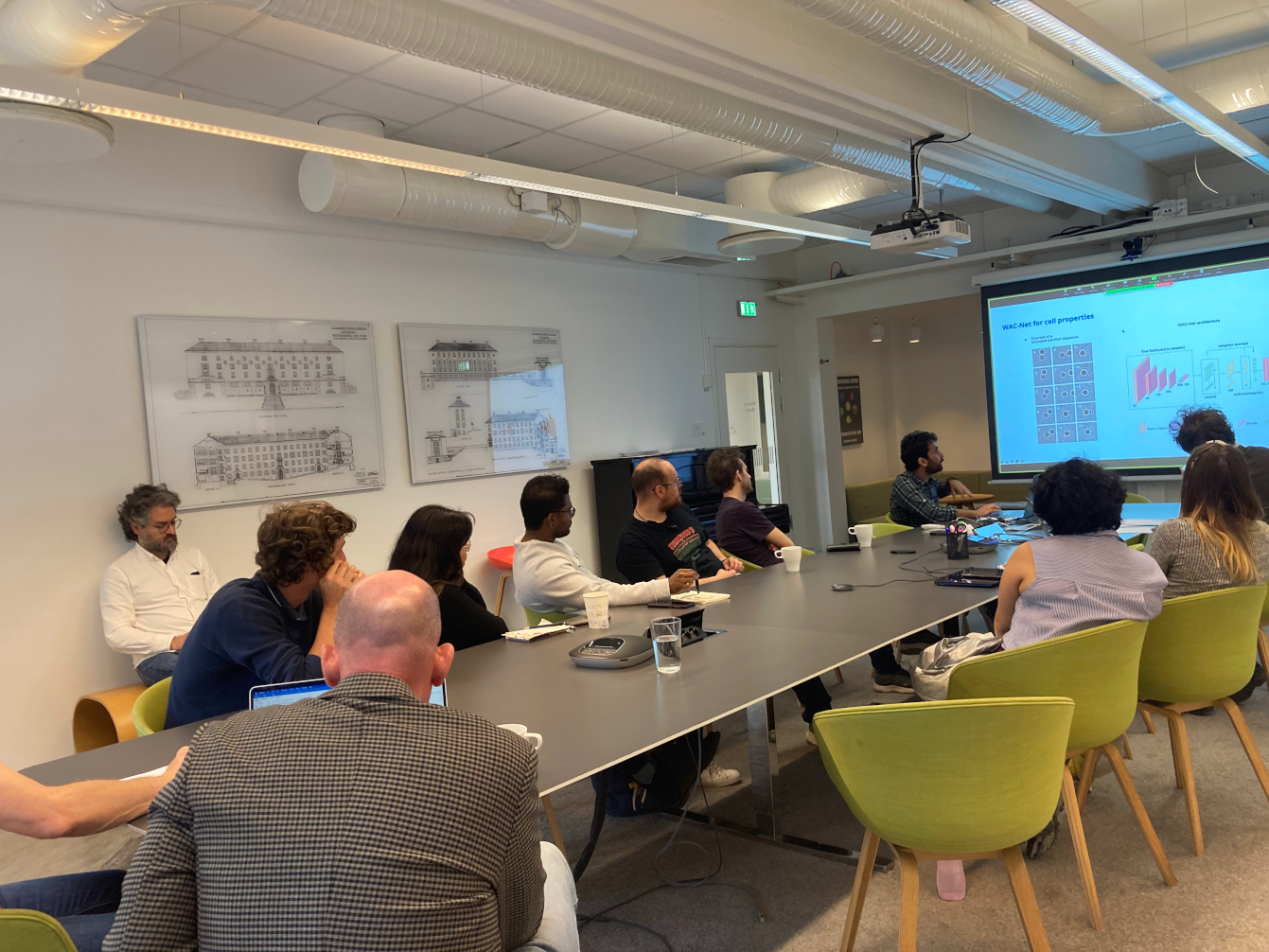
Harshith Bachimanchi’s half-time seminar. (Photo by Y.-W. Chang.)Harshith Bachimanchi completed the first half of his doctoral studies and defended his half-time on 10th May 2022.
The presentation was held in hybrid format, with part of the audience present in the Nexus room and the rest connected through zoom. The half-time consisted of a presentation of his past and planned projects followed by discussion and questions proposed by his opponent Bernhard Mehlig.
The presentation started with a description of his project about combining holographic microscopy with deep learning to measure the dry mass and three-dimensional swimming patterns of marine microorganisms (Microplankton life histories revealed by holographic microscopy and deep learning). Thereafter, he discussed about some of the new experiments in marine microbial ecology where the technique is currently being used. In the last section, he outlined the proposed continuation of his PhD on studying active matter systems in marine microscopic environments using holographic microscopy and artificial neural networks.