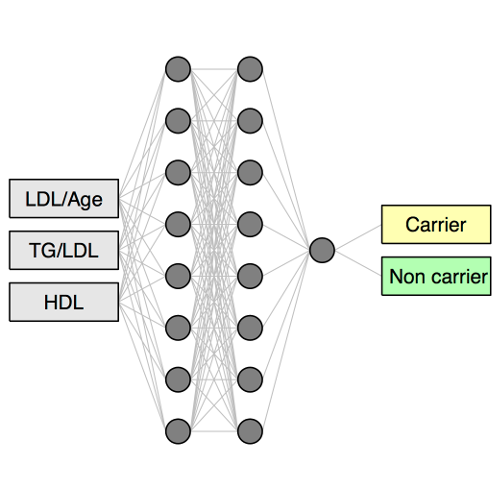
Neural networks consist of a series of connected layers of neurons, whose connection weights are adjusted to learn how to determine the diagnosis from the input data.
Active Colloids with Position-Dependent Rotational Diffusivity
Active Colloids with Position-Dependent Rotational Diffusivity
Miguel Angel Fernandez-Rodriguez, Fabio Grillo, Laura Alvarez, Marco Rathlef, Ivo Buttinoni, Giovanni Volpe & Lucio Isa
Nature Communications 11, 4223 (2020)
doi: 10.1038/s41467-020-17864-4
arXiv: 1911.02291
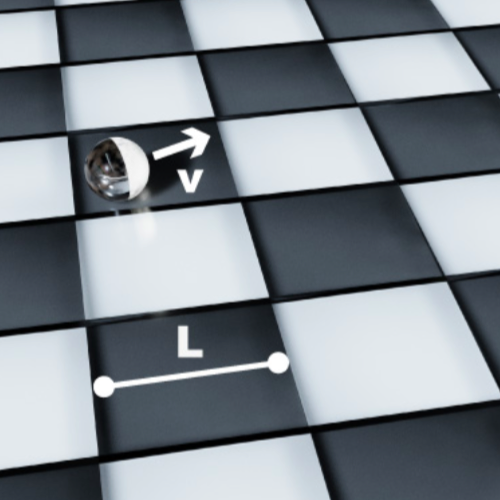
The non-thermal nature of self-propelling colloids offers new insights into non-equilibrium physics. The central mathematical model to describe their trajectories is active Brownian motion, where a particle moves with a constant speed, while randomly changing direction due to rotational diffusion. While several feedback strategies exist to achieve position-dependent velocity, the possibility of spatial and temporal control over rotational diffusion, which is inherently dictated by thermal fluctuations, remains untapped. Here, we decouple rotational diffusion from thermal fluctuations. Using external magnetic fields and discrete-time feedback loops, we tune the rotational diffusivity of active colloids above and below its thermal value at will and explore a rich range of phenomena including anomalous diffusion, directed transport, and localization. These findings add a new dimension to the control of active matter, with implications for a broad range of disciplines, from optimal transport to smart materials.
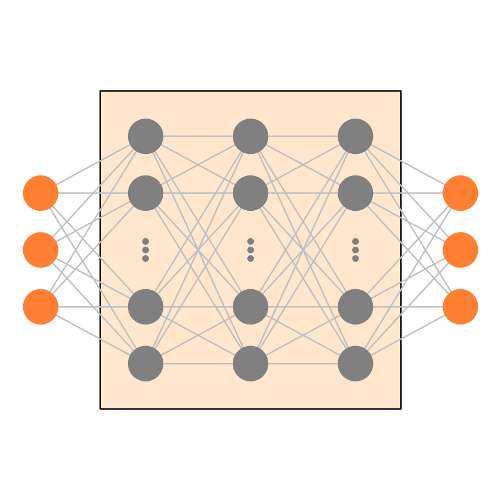
Illustration of a fully connected neural network with three inputs, three outputs, and three hidden layers.
Machine learning reveals complex behaviours in optically trapped particles
Isaac C. D. Lenton, Giovanni Volpe, Alexander B. Stilgoe, Timo A. Nieminen & Halina Rubinsztein-Dunlop
Machine Learning: Science and Technology, 1 045009 (2020)
doi: 10.1088/2632-2153/abae76
arXiv: 2004.08264
Since their invention in the 1980s, optical tweezers have found a wide range of applications, from biophotonics and mechanobiology to microscopy and optomechanics. Simulations of the motion of microscopic particles held by optical tweezers are often required to explore complex phenomena and to interpret experimental data. For the sake of computational efficiency, these simulations usually model the optical tweezers as an harmonic potential. However, more physically-accurate optical-scattering models are required to accurately model more onerous systems; this is especially true for optical traps generated with complex fields. Although accurate, these models tend to be prohibitively slow for problems with more than one or two degrees of freedom (DoF), which has limited their broad adoption. Here, we demonstrate that machine learning permits one to combine the speed of the harmonic model with the accuracy of optical-scattering models. Specifically, we show that a neural network can be trained to rapidly and accurately predict the optical forces acting on a microscopic particle. We demonstrate the utility of this approach on two phenomena that are prohibitively slow to accurately simulate otherwise: the escape dynamics of swelling microparticles in an optical trap, and the rotation rates of particles in a superposition of beams with opposite orbital angular momenta. Thanks to its high speed and accuracy, this method can greatly enhance the range of phenomena that can be efficiently simulated and studied.
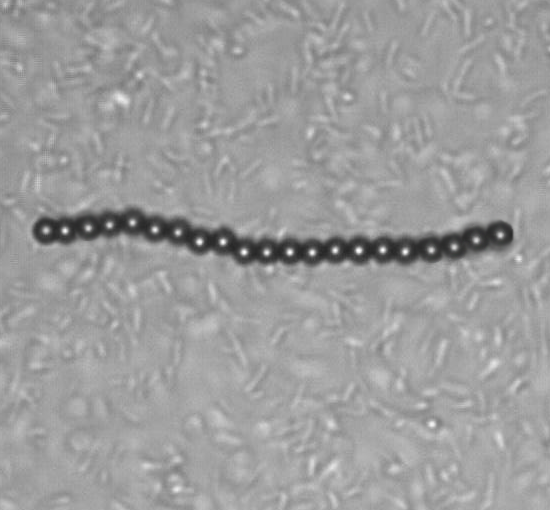
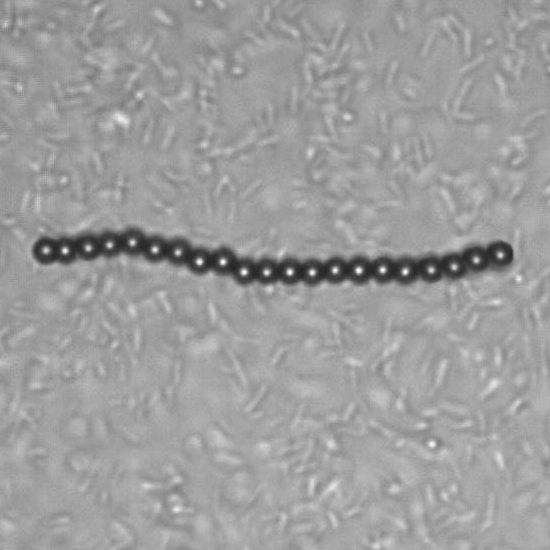
Bright-field microscopy image of a magnetic chain trapped at the liquid-air interface in a bacterial bath
Anisotropic dynamics of a self-assembled colloidal chain in an active bath
Mehdi Shafiei Aporvari, Mustafa Utkur, Emine Ulku Saritas, Giovanni Volpe & Joakim Stenhammar
Soft Matter, 2020, 16, 5609-5614
doi: https://doi.org/10.1039/D0SM00318B
arXiv: 2002.09961
Anisotropic macromolecules exposed to non-equilibrium (active) noise are very common in biological systems, and an accurate understanding of their anisotropic dynamics is therefore crucial. Here, we experimentally investigate the dynamics of isolated chains assembled from magnetic microparticles at a liquid–air interface and moving in an active bath consisting of motile E. coli bacteria. We investigate both the internal chain dynamics and the anisotropic center-of-mass dynamics through particle tracking. We find that both the internal and center-of-mass dynamics are greatly enhanced compared to the passive case, i.e., a system without bacteria, and that the center-of-mass diffusion coefficient D features a non-monotonic dependence as a function of the chain length. Furthermore, our results show that the relationship between the components of D parallel and perpendicular with respect to the direction of the applied magnetic field is preserved in the active bath compared to the passive case, with a higher diffusion in the parallel direction, in contrast to previous findings in the literature. We argue that this qualitative difference is due to subtle differences in the experimental geometry and conditions and the relative roles played by long-range hydrodynamic interactions and short-range collisions.
Characterisation of Physical Processes from Anomalous Diffusion Data Guest Editors
Miguel A Garcia-March, Maciej Lewenstein, Carlo Manzo, Ralf Metzler, Gorka Muñoz-Gil, Giovanni Volpe
Journal of Physics A: Mathematical and Theoretical
URL: Special Issue on Characterisation of Physical Processes from Anomalous Diffusion Data
In many systems, stochastic transport deviates from the standard laws of Brownian motion. Determining the exponent α characterising anomalous diffusion and identifying the physical origin of this behaviour are crucial steps to understanding the nature of the systems under observation. However, the determination of these properties from the analysis of the measured trajectories is often difficult, especially when these trajectories are short, irregularly sampled, or switching between different behaviours.
Over the last years, several methods have been proposed to quantify anomalous diffusion and the underlying physical process, going beyond the classical calculation of the mean squared displacement. More recently, the advent of machine learning has produced a boost in the methods to quantify anomalous diffusion.
The AnDi challenge aims at bringing together a vibrating and multidisciplinary community of scientists working on this problem. The use of the same reference datasets will allow an unbiased assessment of the performance of methods for characterising anomalous diffusion from single trajectories. This Special Issue will report on these approaches and their performance.
The deadline for submissions will be 30th June 2021 and you can submit manuscripts through ScholarOne Manuscripts. All papers will be refereed according to the usual high standards of the journal.
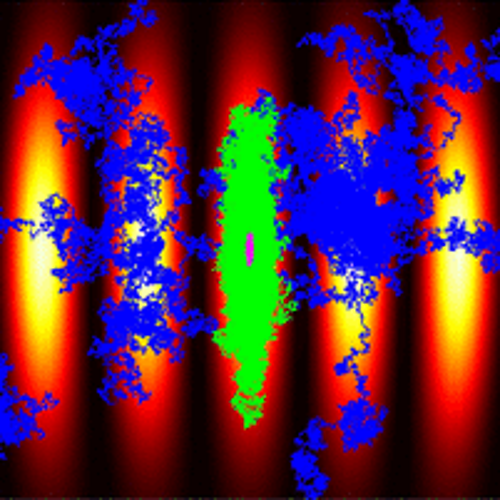
Counter-propagating laser beam intensity, represented and projected on the yz plane.Gain-Assisted Optomechanical Position Locking of Metal/Dielectric Nanoshells in Optical Potentials
Paolo Polimeno, Francesco Patti, Melissa Infusino, Jonathan Sánchez, Maria A. Iatì, Rosalba Saija, Giovanni Volpe, Onofrio M. Maragò & Alessandro Veltri
ACS Photonics 7(5), 1262–1270 (2020)
doi: https://doi.org/10.1021/acsphotonics.0c00213
We investigate gain-assisted optical forces on dye-enriched silver nanoshell in the quasi-static limit by means of a theoretical/numerical approach. We demonstrate the onset of nonlinear optical trapping of these resonant nanostructures in a counter-propagating Gaussian beam configuration. We study the optical forces and trapping behavior as a function of wavelength, particle gain level, and laser power. We support the theoretical analysis with Brownian dynamics simulations that show how particle position locking is achieved at high gains in extended optical trapping potentials. Finally, for wavelengths blue-detuned with respect to the plasmon-enhanced resonance, we observe particle channeling by the standing wave antinodes due to gradient force reversal. This work opens perspectives for gain-assisted optomechanics where nonlinear optical forces are finely tuned to efficiently trap, manipulate, channel, and deliver an externally controlled nanophotonic system.
Ordering of binary colloidal crystals by random potentials
Ordering of Binary Colloidal Crystals by Random Potentials
André S. Nunes, Sabareesh K. P. Velu, Iryna Kasianiuk, Denys Kasyanyuk, Agnese Callegari, Giorgio Volpe, Margarida M. Telo da Gama, Giovanni Volpe & Nuno A. M. Araújo
Soft Matter 16, 4267-4273 (2020)
doi: https://doi.org/10.1039/D0SM00208A
arXiv: 1903.01579
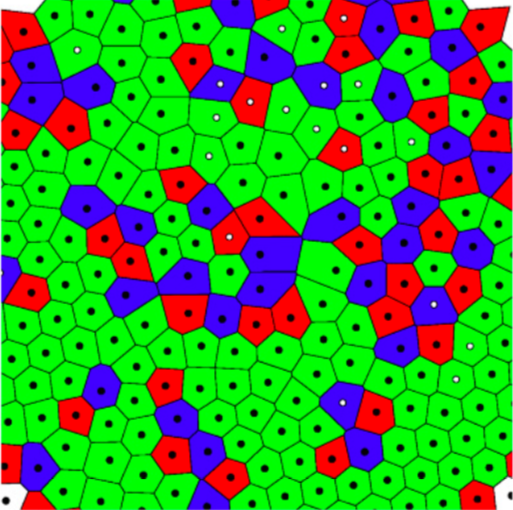
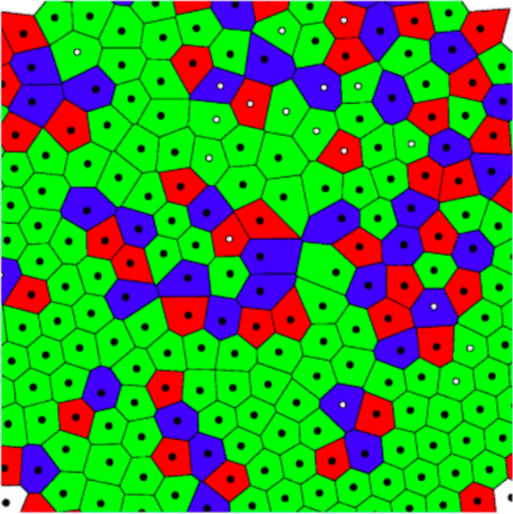
Structural defects are ubiquitous in condensed matter, and not always a nuisance. For example, they underlie phenomena such as Anderson localization and hyperuniformity, and they are now being exploited to engineer novel materials. Here, we show experimentally that the density of structural defects in a 2D binary colloidal crystal can be engineered with a random potential. We generate the random potential using an optical speckle pattern, whose induced forces act strongly on one species of particles (strong particles) and weakly on the other (weak particles). Thus, the strong particles are more attracted to the randomly distributed local minima of the optical potential, leaving a trail of defects in the crystalline structure of the colloidal crystal. While, as expected, the crystalline ordering initially decreases with an increasing fraction of strong particles, the crystalline order is surprisingly recovered for sufficiently large fractions. We confirm our experimental results with particle-based simulations, which permit us to elucidate how this non-monotonic behavior results from the competition between the particle-potential and particle-particle interactions.
AnDi: The Anomalous Diffusion Challenge
Gorka Muñoz-Gil, Giovanni Volpe, Miguel Angel Garcia-March, Ralf Metzler, Maciej Lewenstein & Carlo Manzo
arXiv: 2003.12036
The deviation from pure Brownian motion generally referred to as anomalous diffusion has received large attention in the scientific literature to describe many physical scenarios. Several methods, based on classical statistics and machine learning approaches, have been developed to characterize anomalous diffusion from experimental data, which are usually acquired as particle trajectories. With the aim to assess and compare the available methods to characterize anomalous diffusion, we have organized the Anomalous Diffusion (AnDi) Challenge (http://www.andi-challenge.org/). Specifically, the AnDi Challenge will address three different aspects of anomalous diffusion characterization, namely: (i) Inference of the anomalous diffusion exponent. (ii) Identification of the underlying diffusion model. (iii) Segmentation of trajectories. Each problem includes sub-tasks for different number of dimensions (1D, 2D and 3D). In order to compare the various methods, we have developed a dedicated open-source framework for the simulation of the anomalous diffusion trajectories that are used for the training and test datasets. The challenge was launched on March 1, 2020, and consists of three phases. Currently, the participation to the first phase is open. Submissions will be automatically evaluated and the performance of the top-scoring methods will be thoroughly analyzed and compared in an upcoming article.
Bright-field microscopy image of a magnetic chain trapped at the liquid-air interface in a bacterial bath
Anisotropic dynamics of a self-assembled colloidal chain in an active bath
Mehdi Shafiei Aporvari, Mustafa Utkur, Emine Ulku Saritas, Giovanni Volpe & Joakim Stenhammar
arXiv: 2002.09961
Anisotropic macromolecules exposed to non-equilibrium (active) noise are very common in biological systems, and an accurate understanding of their anisotropic dynamics is therefore crucial. Here, we experimentally investigate the dynamics of isolated chains assembled from magnetic microparticles at a liquid-air interface and moving in an active bath consisting of motile E. coli bacteria. We investigate both the internal chain dynamics and the anisotropic center-of-mass dynamics through particle tracking. We find that both the internal and center-of-mass dynamics are greatly enhanced compared to the passive case, and that the center-of-mass diffusion coefficient D features a non-monotonic dependence as a function of the chain length. Furthermore, our results show that the relationship between the parallel and perpendicular components of D is preserved in the active bath compared to the passive case, with a higher diffusion parallel to the chain direction, in contrast to previous findings in the literature. We argue that this qualitative difference is due to subtle differences in the experimental geometry and conditions and the relative roles played by long-range hydrodynamic interactions and short-range collisions.
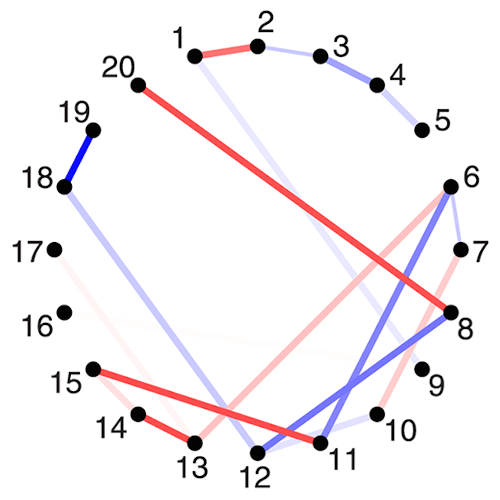
Example of a weighted small-world structural network.
Delayed correlations improve the reconstruction of the brain connectome
Mite Mijalkov, Joana B. Pereira & Giovanni Volpe
PLoS ONE 15(2), e0228334 (2020)
doi: https://doi.org/10.1371/journal.pone.0228334
The brain works as a large-scale complex network, known as the connectome. The strength of the connections between two brain regions in the connectome is commonly estimated by calculating the correlations between their patterns of activation. This approach relies on the assumption that the activation of connected regions occurs together and at the same time. However, there are delays between the activation of connected regions due to excitatory and inhibitory connections. Here, we propose a method to harvest this additional information and reconstruct the structural brain connectome using delayed correlations. This delayed-correlation method correctly identifies 70% to 80% of connections of simulated brain networks, compared to only 5% to 25% of connections detected by the standard methods; this result is robust against changes in the network parameters (small-worldness, excitatory vs. inhibitory connection ratio, weight distribution) and network activation dynamics. The delayed-correlation method predicts more accurately both the global network properties (characteristic path length, global efficiency, clustering coefficient, transitivity) and the nodal network properties (nodal degree, nodal clustering, nodal global efficiency), particularly at lower network densities. We obtain similar results in networks derived from animal and human data. These results suggest that the use of delayed correlations improves the reconstruction of the structural brain connectome and open new possibilities for the analysis of the brain connectome, as well as for other types of networks.