Poster by N. C. Palmero Cruz at the Protein Folding in Real Time conference, Stockholm, 11 March 2026

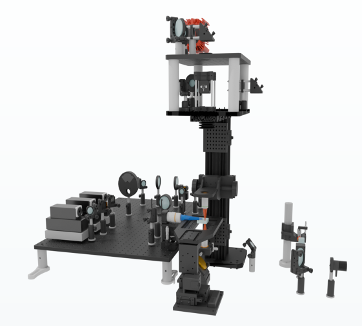
3D model of the integrated setup combining optical tweezers, light-sheet microscopy, and microfluidics to manipulate the gut microbiome in vivo in zebrafish. (Image by N. C. Palmero Cruz.)
Optical Manipulation of Gut Microbiome and Neural Responses in Zebrafish
Norma Caridad Palmero Cruz
Date: 11 March 2026
Time: 18.00-20.00
Place: Aula Medica, Stockholm Sweden
Conference Protein Folding in Real Time, 11-13 March 2026, Stockholm, Sweden

The gut-brain axis is a complex, bidirectional network linking the microbiome to the central nervous system, significantly affecting physiological processes and neurological health, including conditions like autism and depression. Due to the genetic similarities between zebrafish and humans, the zebrafish serves as a valuable model for investigating the bidirectional relationship between the gut and brain, offering insights into how it compares with human behaviors. Research on the connection between gut and brain development typically involves using germ-free lab animals, where the microbiome is eliminated, and comparing them to those with restored microbiomes. However, this method does not capture the complexity of microbiome-nervous system communication due to its all-or-nothing approach. This work presents a setup that combines microfluidic techniques, optical tweezers, and light sheet microscopy to precisely manipulate the microbiome in larval zebrafish in situ and in vivo. This approach offers deeper insights into gut-brain connectivity and its impact on neurological health.

Soft Matter Lab members present at SPIE Optics+Photonics conference in San Diego, 3-7 August 2025

The Soft Matter Lab participates to the SPIE Optics+Photonics conference in San Diego, CA, USA, 3-7 August 2025, with the presentations listed below.

Giovanni Volpe, who serves as Symposium Chair for the SPIE Optics+Photonics Congress in 2025, is a coauthor of the following invited presentations:

Giovanni Volpe will also be the reference presenter of the following Poster contributions:

Presentation by N. C. Palmero Cruz at SPIE-ETAI, San Diego, 5 August 2025

Light sheet fluorescence image of a zebrafish larva showing neuronal structures in the brain (green) and gut (purple). Schematic network representations illustrate putative neuronal connectivity within each region, with nodes representing neuronal cell bodies and edges indicating potential functional or structural links. The eye is indicated for anatomical reference. (Image by N. C. Palmero Cruz.)
Exploring gut-brain connectivity using zebrafish and graph theory
Norma Caridad Palmero Cruz, Sarah B. Flensburg, Hang Zhao, Antonio Ciarlo, Caroline Beck Adiels, Gilles Vanwalleghem, Giovanni Volpe
Date: 5 August 2025
Time: 3:15 – 3:30 PM
Place: Conv. Ctr. Room 4

The gut-brain axis constitutes a fundamental communication network linking the microbiome, enteric nervous system, and central nervous system, and is increasingly recognized for its role in mental health disorders. Although substantial progress has been made in characterizing this axis, the translation of research findings into clinical applications remains limited. In the present study, zebrafish are employed as a model organism due to their genetic and physiological similarities to humans, allowing the investigation of gut-brain interactions under controlled conditions. An experimental platform has been developed that integrates microfluidic, optical tweezers, and light sheet microscopy to introduce defined bacterial strains into the gut and to manipulate the local environment. This setup enables real-time, in vivo recording of neuronal activity across different stages of infection. By applying graph theoretical analysis to high-resolution imaging data, the study aims to characterize the neural connectivity of the gut-brain axis, potentially informing new strategies for understanding and treating mental and neurological disorders.


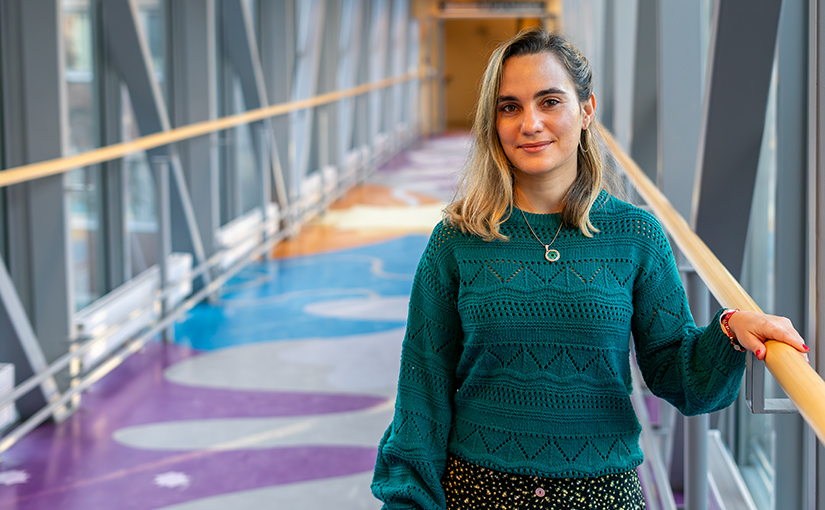
Norma Caridad Palmero Cruz joins the Soft Matter Lab

(Photo by A. Ciarlo.)
Norma Caridad Palmero Cruz starts her PhD at the Physics Department at the University of Gothenburg on 8th January 2024.

Norma has a Master degree in Physics from the University of Havana, Cuba.

In her PhD, Norma will focus on on the study of biological systems using optical tweezers and light sheets techniques.