Be friendly to your users:
Add comments and tutorials to your code Giovanni Volpe
MTL BrainHack School 2019, Montreal, 22 August 2019 https://brainhackmtl.github.io/school2019/
When releasing a software package, it is critical to provide potential users with all the information they need to help them using it.
Using the example of Braph — a software we recently developed to study brain connectivity http://braph.org/ —, I’ll illustrate how we have commented the code, created a website and off-line documentation, and recoded video tutorials.
I’ll conclude with some practical advice and some best practices.
FORMA: a high-performance algorithm for the calibration of optical tweezers
Laura Pérez-García, Alejandro V. Arzola, Jaime Donlucas Pérez, Giorgio Volpe & Giovanni Volpe
SPIE Nanoscience + Engineering, Optical trapping and Optical Manipulation XV, San Diego (CA), USA
11-15 August 2019
We introduce a powerful algorithm (FORMA) for the calibration of optical tweezers. FORMA estimates accurately the conservative and non-conservative components of the force field with important advantages over established techniques, being parameter-free, requiring ten-fold less data and executing orders-of-magnitude faster. We demonstrate FORMA performance using optical tweezers, showing how, outperforming other available techniques, it can identify and characterise stable and unstable equilibrium points in generic force fields.
Optical forces go smart
Giovanni Volpe
Plenary Presentation
SPIE Nanoscience + Engineering, San Diego (CA), USA
11-15 August 2019
Optical forces have revolutionized nanotechnology. In particular, optical forces have been used to measure and exert femtonewton forces on nanoscopic objects. This has provided the essential tools to develop nanothermodynamics, to explore nanoscopic interactions such as critical Casimir forces, and to realize microscopic devices capable of autonomous operation. The future of optical forces now lies in the development of smarter experimental setups and data-analysis algorithms, partially empowered by the machine-learning revolution. This will open unprecedented possibilities, such as the study of the energy and information flows in nanothermodynamics systems, the design of novel forms of interactions between nanoparticles, and the realization of smart microscopic devices.
Clustering of Janus particles in optical potential driven by hydrodynamic fluxes
Clustering of Janus Particles in Optical Potential Driven by Hydrodynamic Fluxes
S. Masoumeh Mousavi, Iryna Kasianiuk, Denis Kasyanyuk, Sabareesh K. P. Velu, Agnese Callegari, Luca Biancofiore & Giovanni Volpe
Soft Matter 15(28), 5748—5759(2019)
doi: 10.1039/C8SM02282H
arXiv: 1811.01989
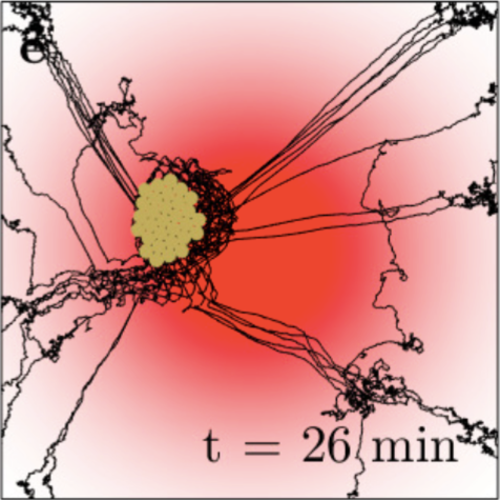
Self-organisation is driven by the interactions between the individual components of a system mediated by the environment, and is one of the most important strategies used by many biological systems to develop complex and functional structures. Furthermore, biologically-inspired self-organisation offers opportunities to develop the next generation of materials and devices for electronics, photonics and nanotechnology. In this work, we demonstrate experimentally that a system of Janus particles (silica microspheres half-coated with gold) aggregates into clusters in the presence of a Gaussian optical potential and disaggregates when the optical potential is switched off. We show that the underlying mechanism is the existence of a hydrodynamic flow induced by a temperature gradient generated by the light absorption at the metallic patches on the Janus particles. We also perform simulations, which agree well with the experiments and whose results permit us to clarify the underlying mechanism. The possibility of hydrodynamic-flux-induced reversible clustering may have applications in the fields of drug delivery, cargo transport, bioremediation and biopatterning.
Deep Learning Applications in Photonics and Active Matter Giovanni Volpe
Invited talk at the “Microscale Motion and Light” MPI-PKS Workshop, Dresden, Germany, 22-26 July 2019 https://www.pks.mpg.de/mml19/
After a brief overview of artificial intelligence, machine learning and deep learning, I will present a series of recent works in which we have employed deep learning for applications in photonics and active matter. In particular, I will explain how we employed deep learning to enhance digital video microscopy [1], to estimate the properties of anomalous diffusion [2], and to improve the calculation of optical forces. Finally, I will provide an outlook for the application of deep learning in photonics and active matter.
References
[1] S. Helgadottir, A. Argun and G. Volpe, Digital video microscopy enhanced by deep learning. Optica 6(4), 506—513 (2019)
doi: 10.1364/OPTICA.6.000506
[2] S. Bo, F Schmidt, R. Eichborn and G. Volpe, Measurement of Anomalous Diffusion Using Recurrent Neural Networks. arXiv: 1905.02038
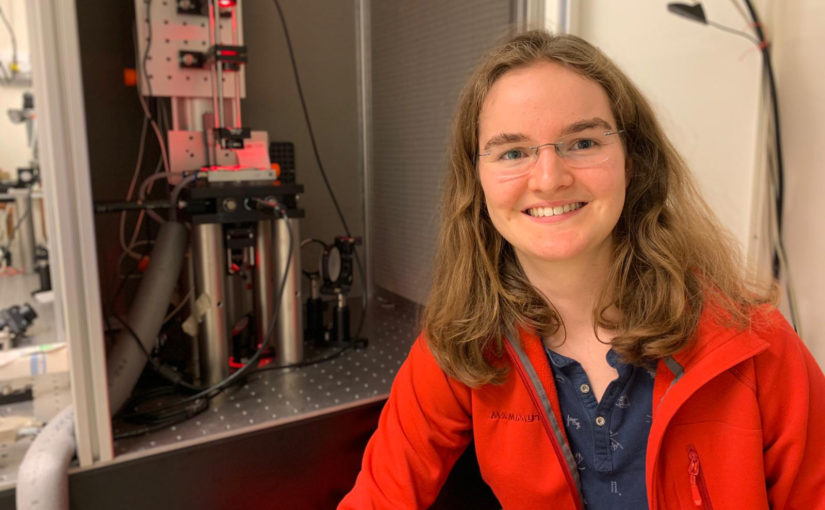
Sophia Simon is a bachelor student at the Freie Universität of Berlin. She will do her summer internship at the Soft Matter Lab from July 21 to September 27, 2019, with a grant from DAAD (Deutscher Akademischer Austauschdienst). She will work on the tunability of critical Casimir forces in critical mixtures.
Measurement of Anomalous Diffusion Using Recurrent Neural Networks
Measurement of Anomalous Diffusion Using Recurrent Neural Networks
Stefano Bo, Falko Schmidt, Ralf Eichborn & Giovanni Volpe
Physical Review E 100(1), 010102(R) (2019)
doi: 10.1103/PhysRevE.100.010102
arXiv: 1905.02038
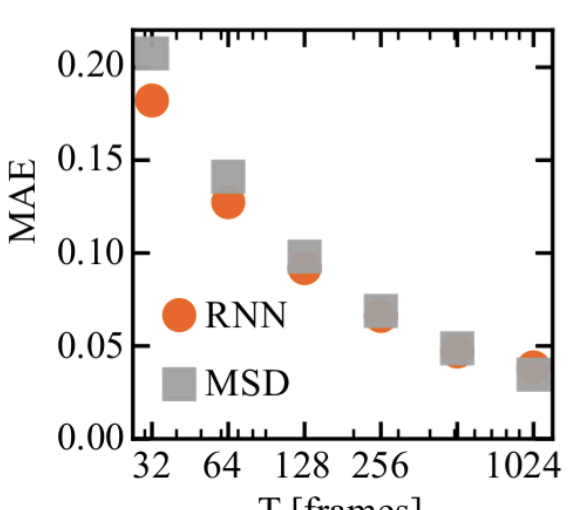
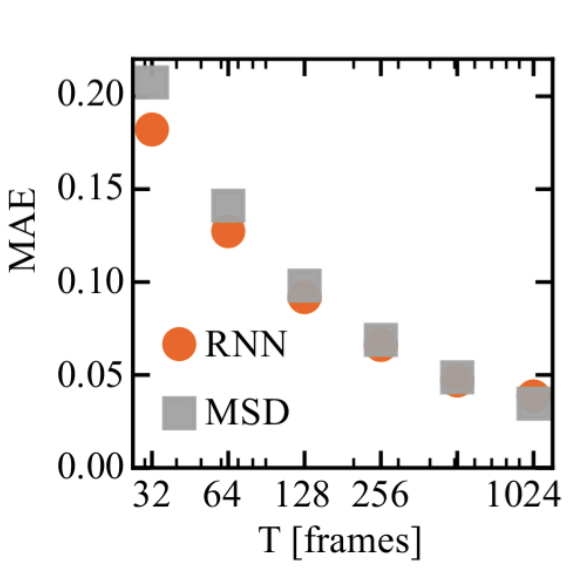
Anomalous diffusion occurs in many physical and biological phenomena, when the growth of the mean squared displacement (MSD) with time has an exponent different from one. We show that recurrent neural networks (RNN) can efficiently characterize anomalous diffusion by determining the exponent from a single short trajectory, outperforming the standard estimation based on the MSD when the available data points are limited, as is often the case in experiments. Furthermore, the RNN can handle more complex tasks where there are no standard approaches, such as determining the anomalous diffusion exponent from a trajectory sampled at irregular times, and estimating the switching time and anomalous diffusion exponents of an intermittent system that switches between different kinds of anomalous diffusion. We validate our method on experimental data obtained from sub-diffusive colloids trapped in speckle light fields and super-diffusive microswimmers.
Influence of Sensorial Delay on Clustering and Swarming
Influence of Sensorial Delay on Clustering and Swarming
Rafal Piwowarczyk, Martin Selin, Thomas Ihle & Giovanni Volpe
Physical Review E 100(1), 012607 (2019)
doi: 10.1103/PhysRevE.100.012607
arXiv: 1803.06026
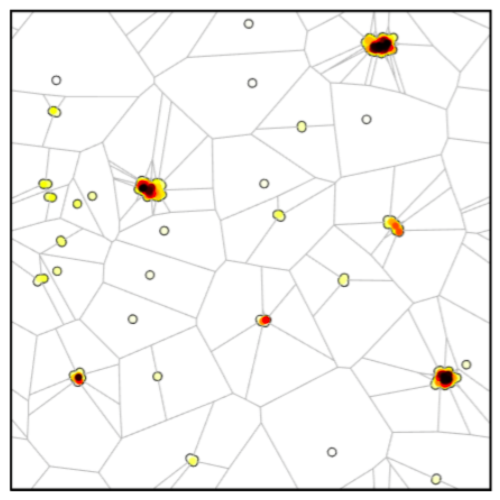
We show that sensorial delay alters the collective motion of self-propelling agents with aligning interactions: In a two-dimensional Vicsek model, short delays enhance the emergence of clusters and swarms, while long or negative delays prevent their formation. In order to quantify this phenomenon, we introduce a global clustering parameter based on the Voronoi tessellation, which permits us to efficiently measure the formation of clusters. Thanks to its simplicity, sensorial delay might already play a role in the organization of living organisms and can provide a powerful tool to engineer and dynamically tune the behavior of large ensembles of autonomous robots.
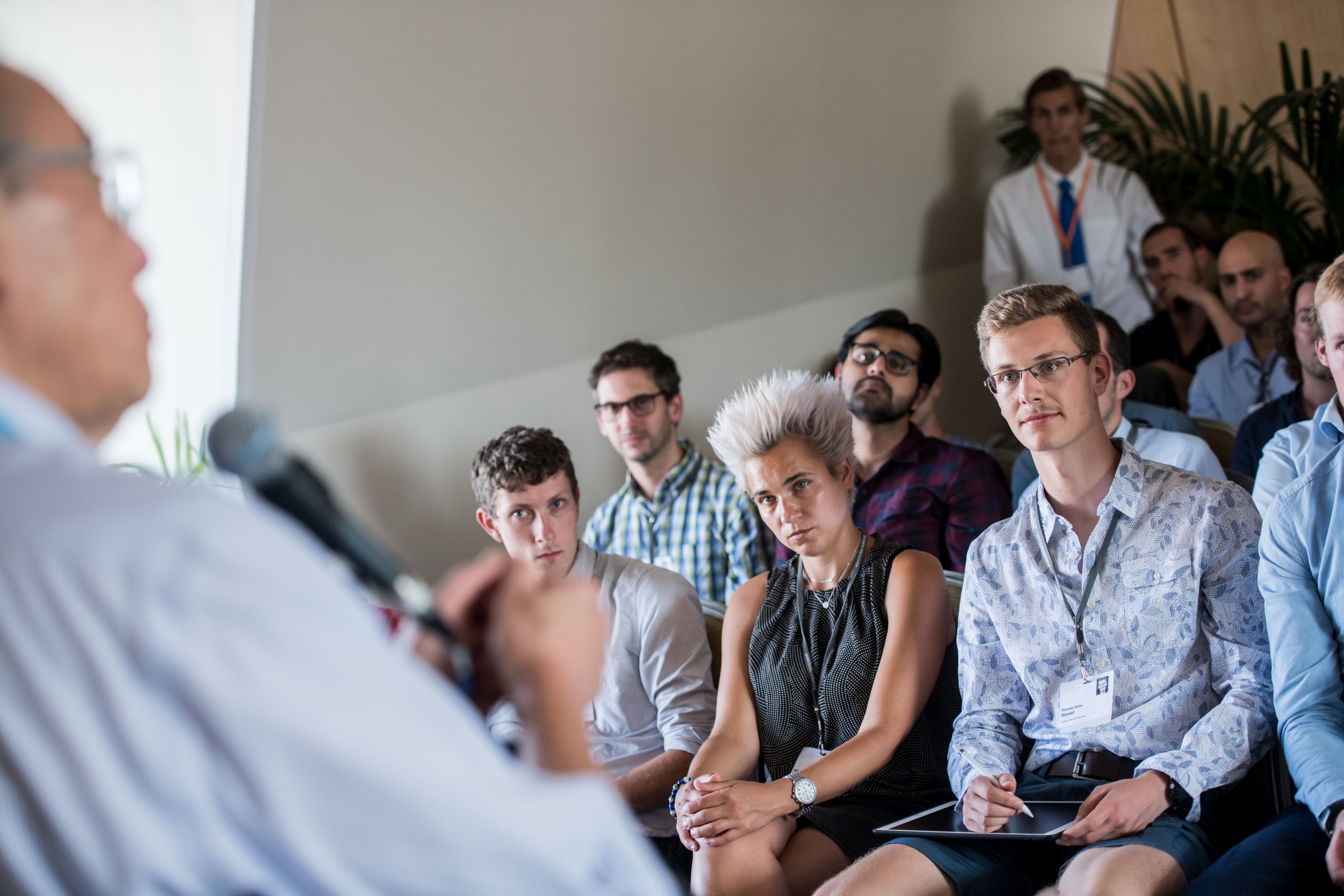
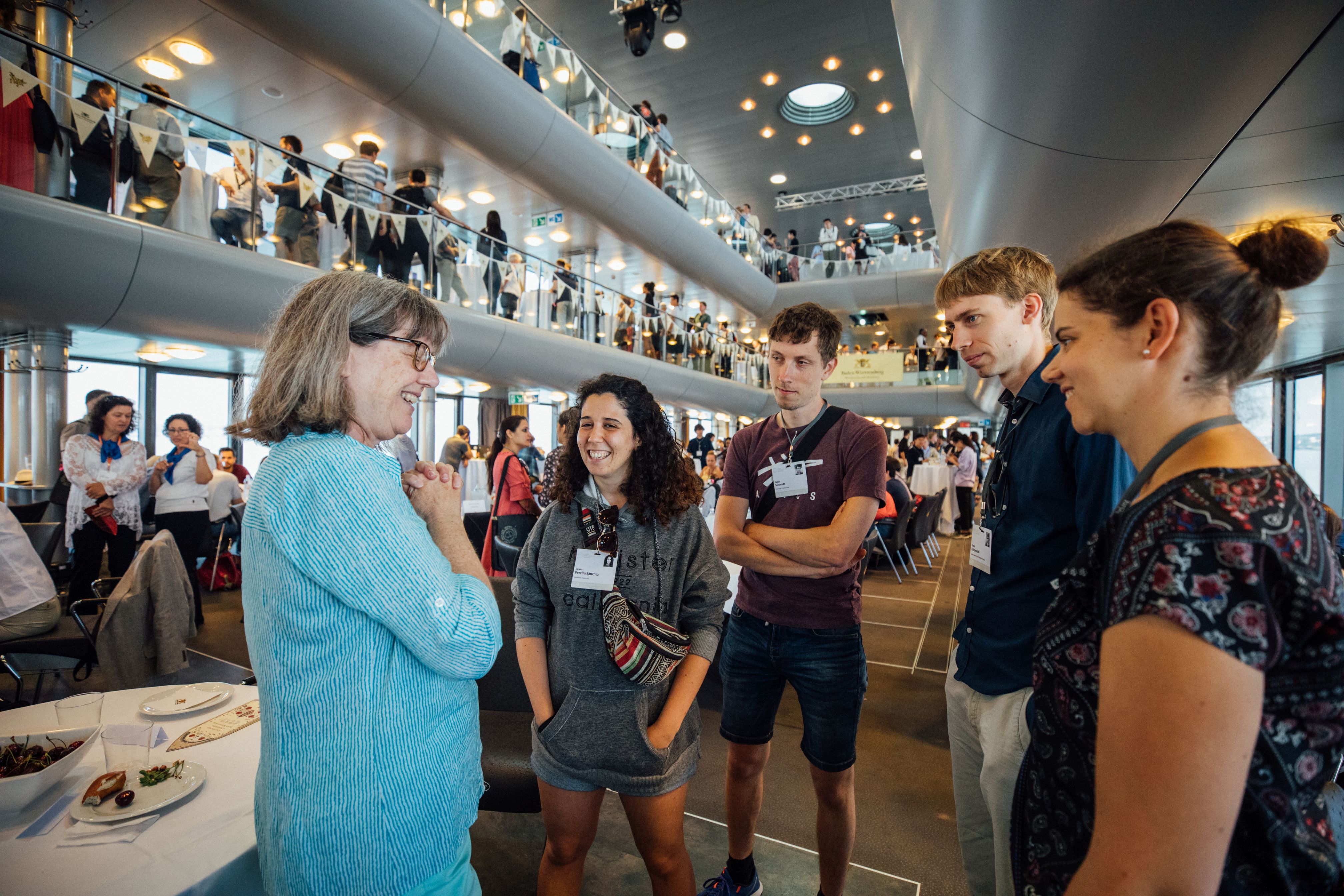
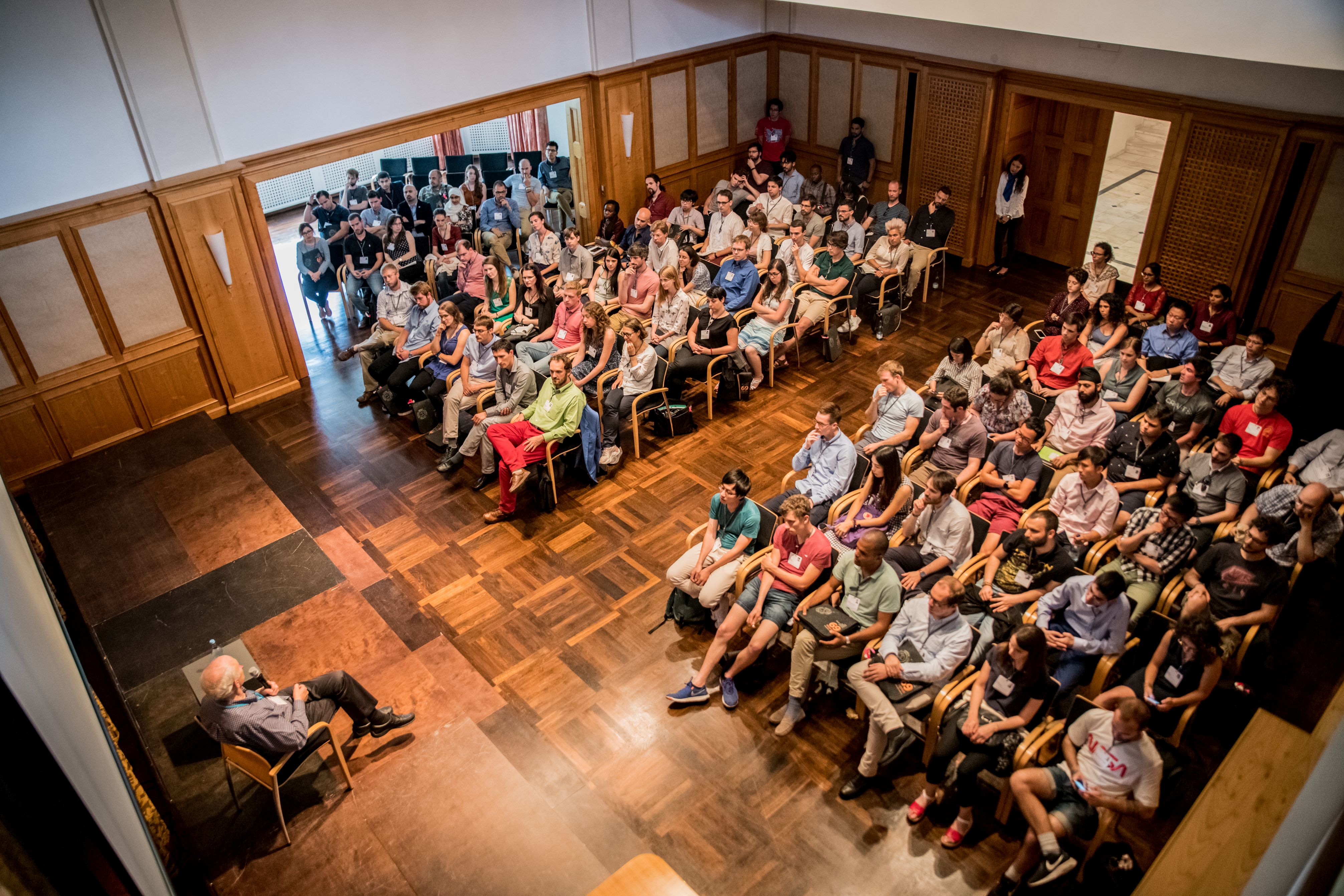
Picture from the open discussion with Steven Chu (Nobel Prize Physics 1997) on the left. 69th Lindau Nobel Laureate Meeting 02.07.2019 Photo/Credit: Patrick Kunkel/ Lindau Nobel Laureate Meetings Open ExhangePicture of the boat ride to Mainau Island with Donna Strickland (Nobel Prize Physics 2018) on the left. 69th Lindau Nobel Laureate Meeting, 04.07.2019, Lindau, Germany Picture/Credit: Julia Nimke/Lindau Nobel Laureate MeetingsPicture of the open discussion with David Gross (Nobel Prize Physics 2004) on the left. 69th Lindau Nobel Laureate Meeting 03.07.2019 Photo/Credit: Patrick Kunkel/ Lindau Nobel Laureate Meetings Open Exchange David J. Gross
Falko Schmidt, and Jalpa Soni have been selected to attain the 69th Lindau Nobel Laureate meeting in Lindau, Germany from the 30th June till 5th July 2019.
The Lindau meeting is a platform where 600 young scientists around the world meet former Nobel laureates (as well as Turing-award winners). There they can exchange scientific ideas and experiences, inspire each other and connect for a more interdisciplinary scientific community. These are the three incentives that make this meeting a unique experience.
Falko Schmidt had the privilege to attend it and shares the following insight:
“For me, the Lindau meeting was a unique experience where I was able to meet peers across many disciplines, share ideas and experiences beyond my field of active matter and received much feedback on career choices and daily life as a PhD. Especially fruitful were the many possibilities to engage with senior scientists such as the Nobel laureates which with their humour, insight and advice deepened my passion about science. Personally, I would consider my best encounters with Steven Chu and William Phillips (Nobel Prize in Physics in 1997 on laser cooling), Donna Strickland (Nobel Prize in Physics in 2018 on ultra-fast lasers), and Stefan Hell (Nobel Prize in Chemistry in 2014 on super-resolution microscopy). I am very grateful for the possibility of attending this meeting and would like to thank the Lindau Nobel committee and Söderbergs Foundation who were selecting and sponsoring me.
From now on, in times of struggle, I will always look back to this meeting and remember why we all love doing science.”
Deep Learning for Measurement and Manipulation on the Microscale
Giovanni Volpe
Invited talk in the Special session on “Similarities and differences between biological and artificial micro robots” at MARSS2019
Espoo, Finland
1-5 July 2019