News

Falko Schmidt starts his PhD

Falko Schmidt starts his PhD at the Physics Department of the University of Gothenburg on 1 January 2017.

He has a Master degree from the Physics Department of Leipzig University with a Master thesis on the realisation of a microscopic critical engine.

He will now work on his PhD thesis on the experimental study of critical fluctuations and critical Casimir forces.

Non-Boltzmann Distributions and Non-Equilibrium Relations in Active Baths published in Phys. Rev. E

Non-Boltzmann stationary distributions and non-equilibrium relations in active baths

Non-Boltzmann stationary distributions and non-equilibrium relations in active baths
Aykut Argun, Ali-Reza Moradi, Erçağ Pinçe, Gokhan Baris Bagci, Alberto Imparato & Giovanni Volpe
Physical Review E 94(6), 062150 (2016)
DOI: 10.1103/PhysRevE.94.062150

Most natural and engineered processes, such as biomolecular reactions, protein folding, and population dynamics, occur far from equilibrium and therefore cannot be treated within the framework of classical equilibrium thermodynamics. Here we experimentally study how some fundamental thermodynamic quantities and relations are affected by the presence of the nonequilibrium fluctuations associated with an active bath. We show in particular that, as the confinement of the particle increases, the stationary probability distribution of a Brownian particle confined within a harmonic potential becomes non-Boltzmann, featuring a transition from a Gaussian distribution to a heavy-tailed distribution. Because of this, nonequilibrium relations (e.g., the Jarzynski equality and Crooks fluctuation theorem) cannot be applied. We show that these relations can be restored by using the effective potential associated with the stationary probability distribution. We corroborate our experimental findings with theoretical arguments.

Aykut Argun starts his PhD

Aykut Argun starts his PhD at the Physics Department of the University of Gothenburg on 1 December 2017.

He has a Master degree from the Physics Department of Bilkent University with a Master thesis on the experimental study of thermodynamics in active baths.

He will now work on his PhD thesis on the experimental study of nanothermodynamics.

Saga Helgadottir joins the Soft Matter Lab

Saga Helgadottir joins the Soft Matter Lab on 28 November 2017 as a PhD student at the Physics Department of the University of Gothenburg.

She has a Master degree in Physics from Chalmers University of Technology with a Master thesis on the study of the effect of plasma on biofilms.

She will work on he PhD thesis on the realisation of hybrid microswimmers and the study of bacterial dynamics in complex and crowded environments.

Review on Active Matter published in Rev. Mod. Phys.

Active Brownian particles in complex and crowded environments

Active Brownian particles in complex and crowded environments (Invited review)
Clemens Bechinger, Roberto Di Leonardo, Hartmut Löwen, Charles Reichhardt, Giorgio Volpe & Giovanni Volpe
Reviews of Modern Physics 88(4), 045006 (2016)
DOI: 10.1103/RevModPhys.88.045006
arXiv: 1602.00081

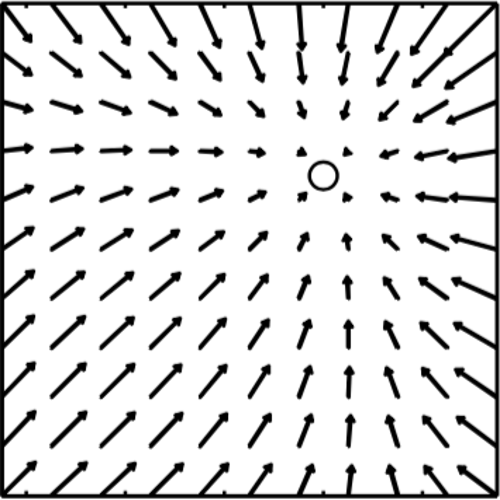
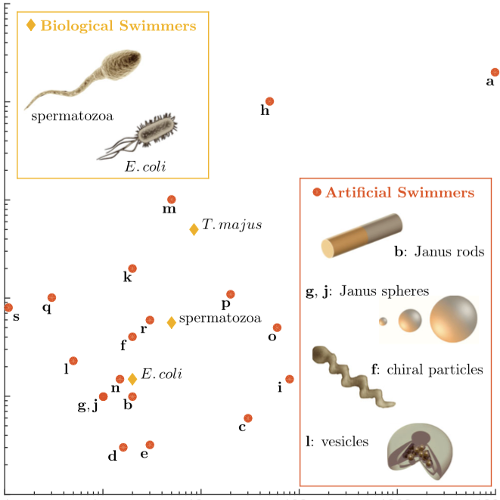
Differently from passive Brownian particles, active particles, also known as self-propelled Brownian particles or microswimmers and nanoswimmers, are capable of taking up energy from their environment and converting it into directed motion. Because of this constant flow of energy, their behavior can be explained and understood only within the framework of nonequilibrium physics. In the biological realm, many cells perform directed motion, for example, as a way to browse for nutrients or to avoid toxins. Inspired by these motile microorganisms, researchers have been developing artificial particles that feature similar swimming behaviors based on different mechanisms. These man-made micromachines and nanomachines hold a great potential as autonomous agents for health care, sustainability, and security applications. With a focus on the basic physical features of the interactions of self-propelled Brownian particles with a crowded and complex environment, this comprehensive review will provide a guided tour through its basic principles, the development of artificial self-propelling microparticles and nanoparticles, and their application to the study of nonequilibrium phenomena, as well as the open challenges that the field is currently facing.

Erçağ Pinçe defended his PhD Thesis. Congrats!

Erçağ Pinçe defended his PhD thesis on 21 October 2016. Assist. Prof. Evren Doruk Engin (Ankara University), Assist. Prof. Giovanni Volpe (Bilkent University), Assist. Prof. Balázs Hétenyi (Bilkent University), Assoc. Prof. Fatih Ömer İlday (Bilkent University) and Prof. Alper Kiraz (Koç University) participated as thesis committee members.

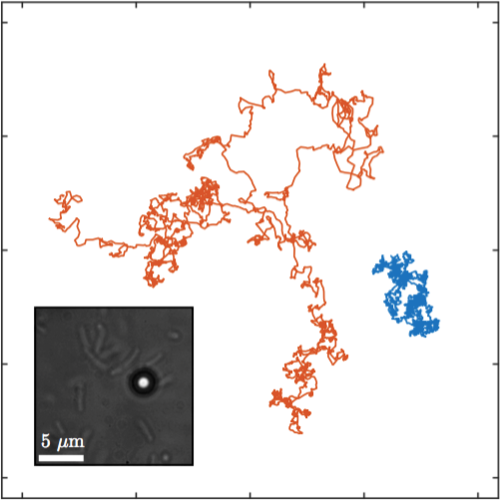
Erçağ Pinçe investigated the role that spatial disorder can play to alter collective dynamics in a colloidal living active matter system where motile E. Coli bacteria are present. The results suggested that the level of heterogeneity present in the background changes the long-term spatial dynamics in a colloidal ensemble coupled to a bacterial bath. This work provided insights about statistical behavior and far-from-equilibrium interactions in an active matter system.
Thesis title: Manipulation and control of collective behavior in active matter systems

Thesis advisor: Giovanni Volpe

Thesis abstract: Active matter systems consist of active constituents that transform energy into directed motion in a non-equilibrium setting. The interaction of active agents with each other and with their environment results in collective motion and emergence of long-range ordering. Examples to such dynamic behaviors in living active matter systems are pattern formation in bacterial colonies, ocking of birds and clustering of pedestrian crowds. All these phenomena stem from far-from-equilibrium interactions. The governing dynamics of these phenomena are not yet fully understood and extensively studied. In this thesis, we studied the role that spatial disorder can play to alter collective dynamics in a colloidal living active matter system. We showed that the level of heterogeneity in the environment in uences the long-range order in a colloidal ensemble coupled to a bacterial bath where the non-equilibrium forces imposed by the bacteria become pivotal to control switching between gathering and dispersal of colloids. Apart from studying environmental factors in a complex active matter system, we also focused on a new class of active particles, \bionic microswimmers”, and their clustering behavior. We demonstrated that spherical bionic microswimmers which are fabricated by attaching motile E. coli bacteria on melamine particles can agglomerate in large colloidal structures. Finally, we observed the emergence of swimming clusters as a result of the collective motion of bionic microswimmers. Our results provide insights about statistical behavior and far-from-equilibrium interactions in an active matter system.

Stochastic Differential Delay Equations with Colored State-Dependent Noise published in Markov Processes and Related Fields

An SDE approximation for stochastic differential delay equations with colored state-dependent noise

An SDE approximation for stochastic differential delay equations with colored state-dependent noise
Austin McDaniel, Ozer Duman, Giovanni Volpe & Jan Wehr
Markov Processes and Related Fields 22(3), 595-628 (2016)
arXiv: 1406.7287

We consider a general multidimensional stochastic differential delay equation (SDDE) with colored state-dependent noises. We approxi-mate it by a stochastic differential equation (SDE) system and calcu- late its limit as the time delays and the correlation times of the noises go to zero. The main result is proven using a theorem of convergence of stochastic integrals developed by Kurtz and Protter. The result formalizes and extends a method that has been used in the analysis of a noisy electrical circuit with delayed state-dependent noise, and may be further used as a working SDE approximation of an SDDE system modeling a real system, where noises are correlated in time and whose response to stimuli is delayed.