The Soft Matter Lab is involved in six presentations at the OSA Biophotonic Congress: Optics in the Life Sciences 2021, topical meeting of Optical Manipulation and its Applications.
Moreover, three of the presentations were selected as finalists for the best student paper in the topical meeting of Optical Manipulation and its Applications.
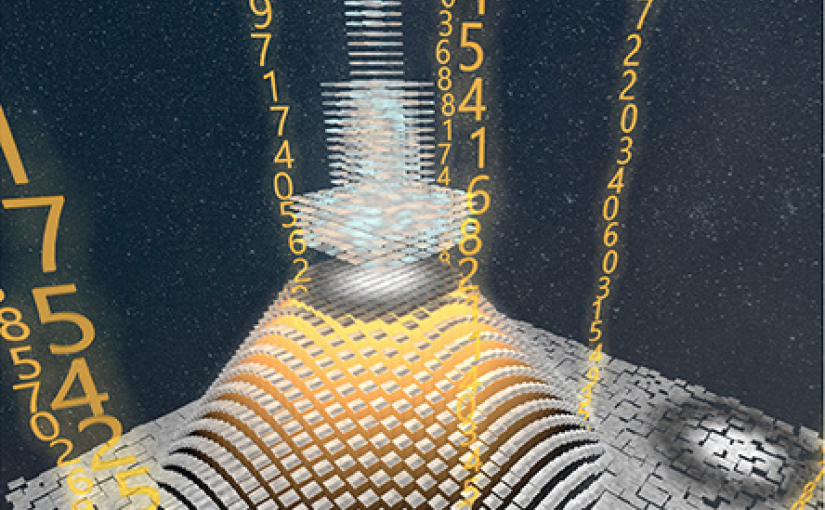
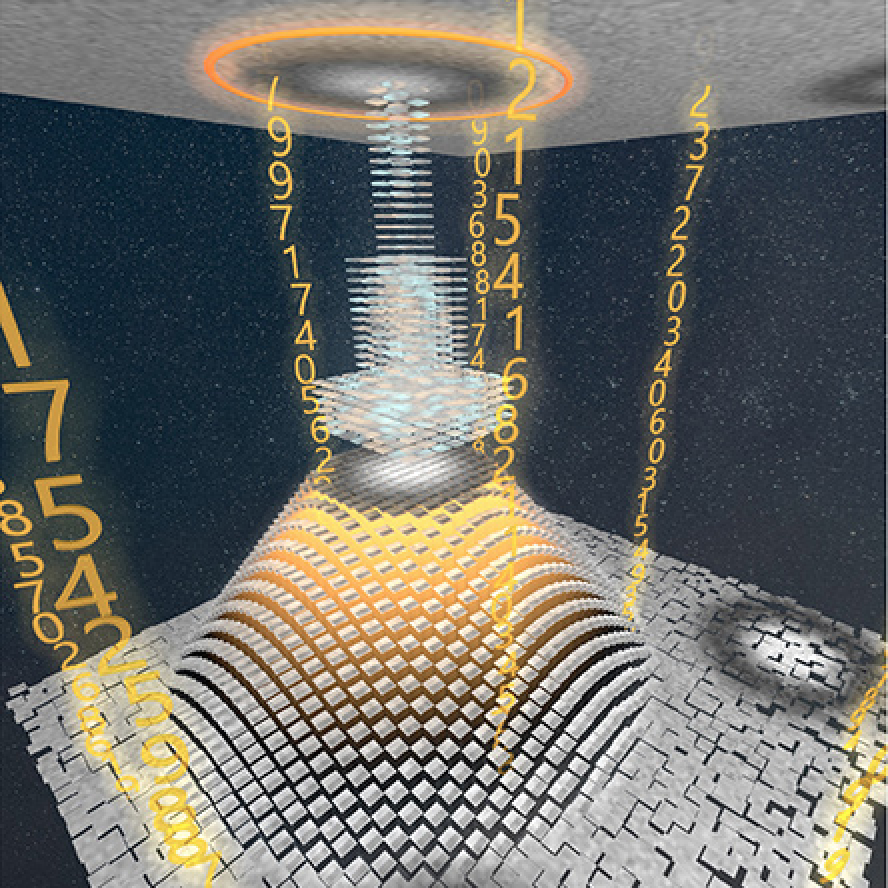
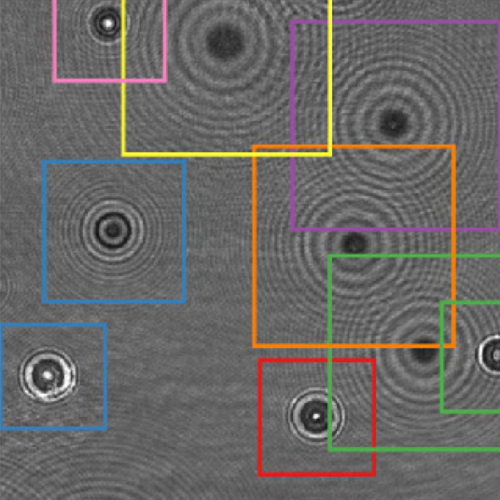
Deep learning for particle tracking. (Image by Aykut Argun)Machine Learning for Active Matter: Opportunities and Challenges
Giovanni Volpe
(online at) Nordita, Stockholm, Sweden
15 April 2021, 14:30-15.25
Machine-learning methods are starting to shape active-matter research. Which new trends will this start? Which new groundbreaking insight and applications can we expect? More fundamentally, what can this contribute to our understanding of active matter? Can this help us to identify unifying principles and systematise active matter? This presentation addresses some of these questions with some concrete examples, exploring how machine learning is steering active matter towards new directions, offering unprecedented opportunities and posing practical and fundamental challenges. I will illustrate some most successful recent applications of machine learning to active matter with a slight bias towards work done in my research group: enhancing data acquisition and analysis; providing new data-driven models; improving navigation and search strategies; offering insight into the emergent dynamics of active matter in crowded and complex environments. I will discuss the opportunities and challenges that are emerging: implementing feedback control; uncovering underlying principles to systematise active matter; understanding the behaviour, organisation and evolution of biological active matter; realising active matter with embodied intelligence. Finally, I will highlight how active matter and machine learning can work together for mutual benefit.
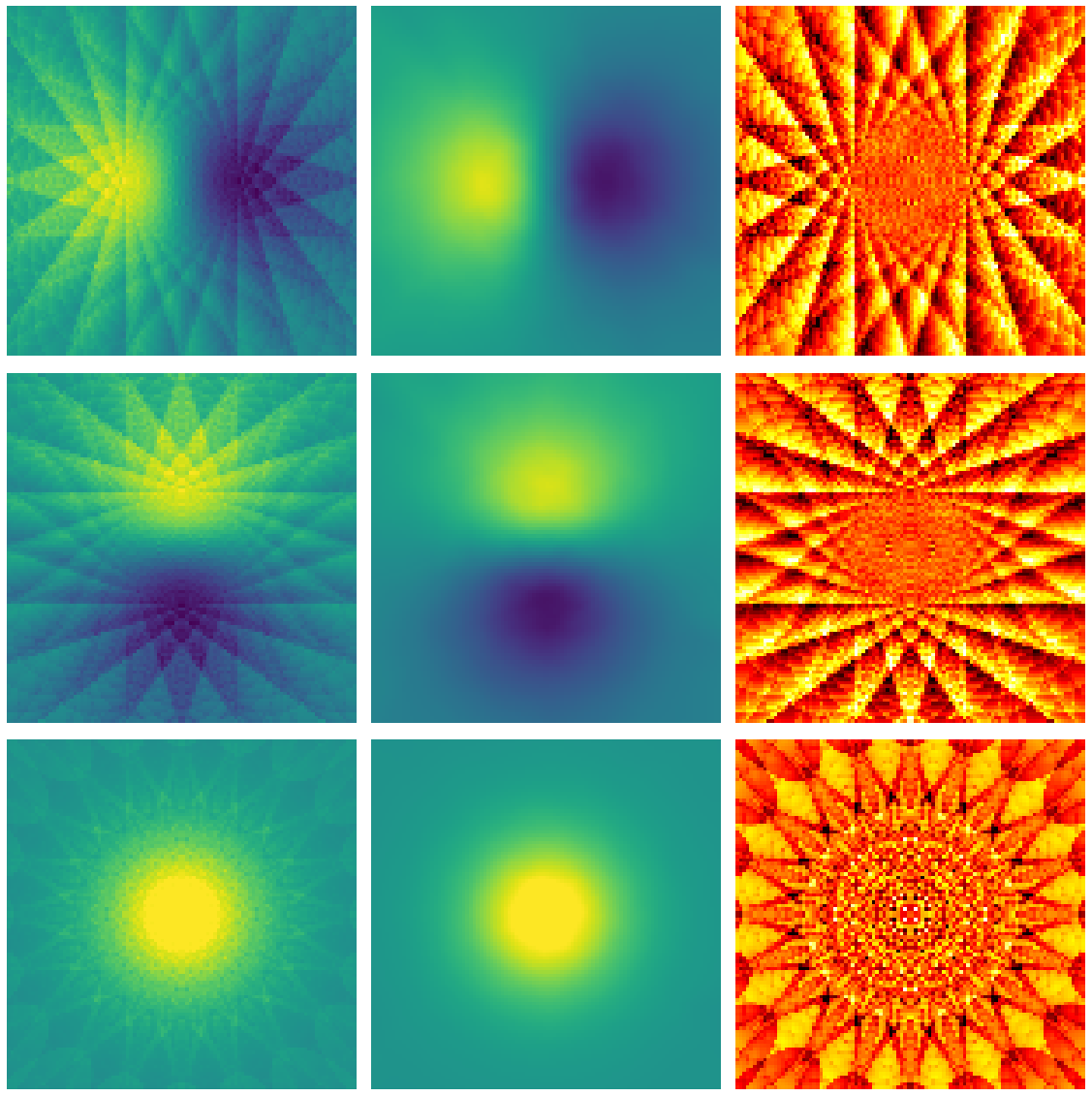
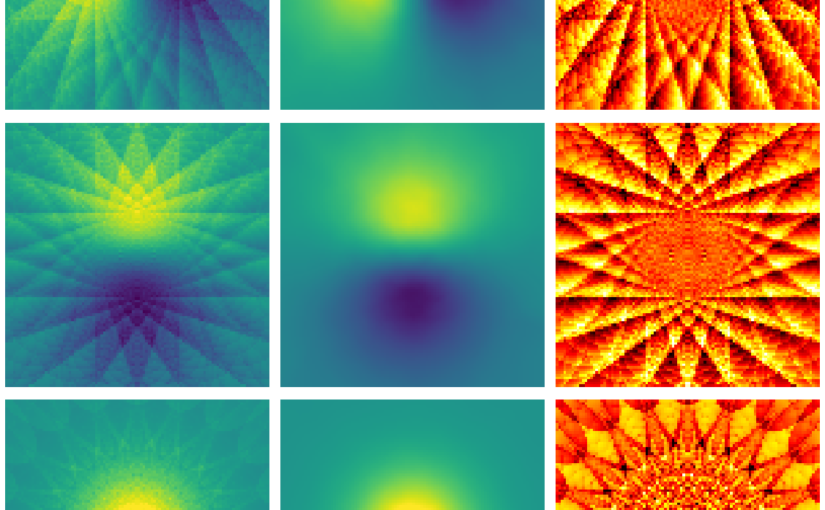
Optical forces calculated on a sphere with the geometrical optics (left column) and the machine learning (center column) approaches. The difference between both approaches is shown in the column on the right, illustrating the removal of artefacts with the machine learning method.
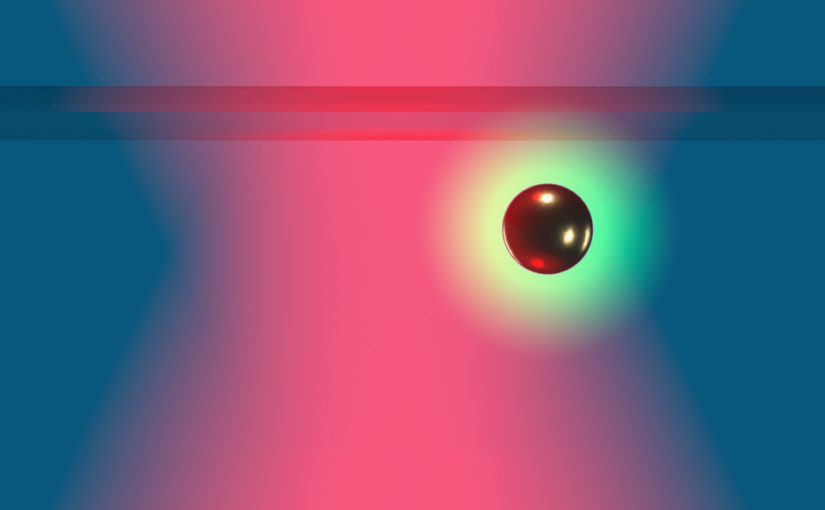
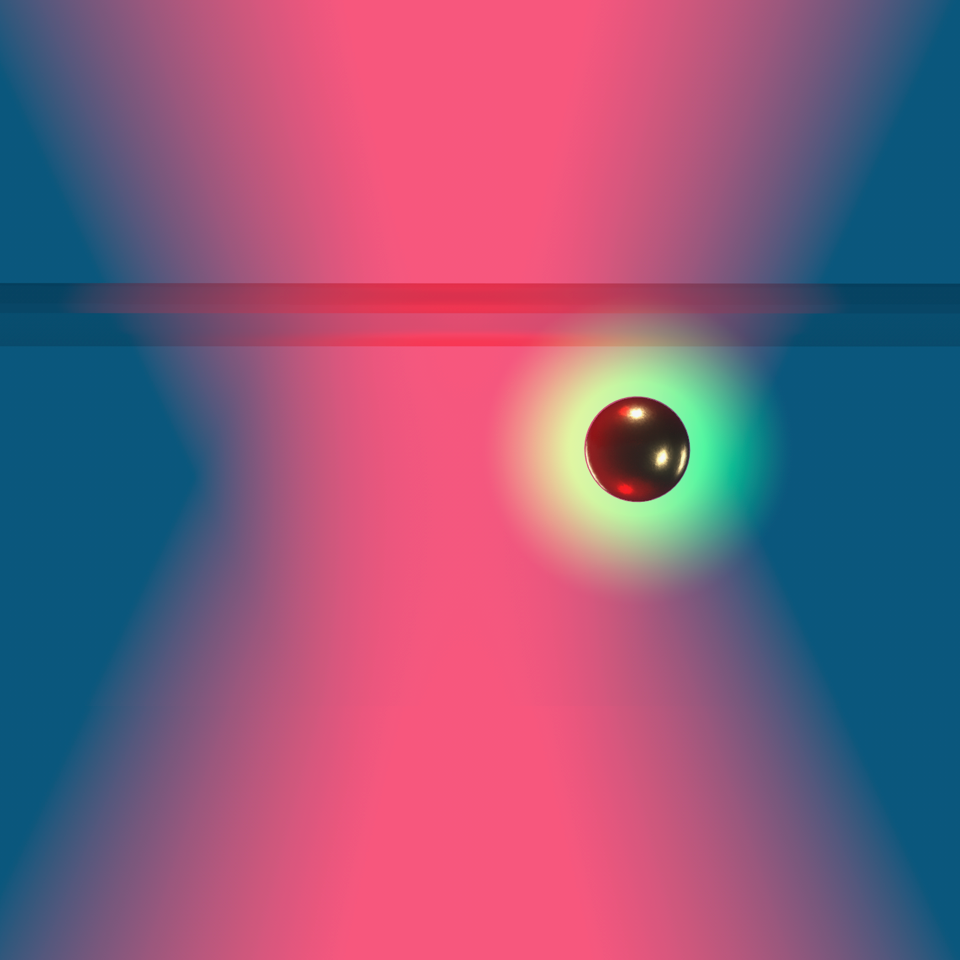
Non-spherical nanoparticle held by optical tweezers. The particle is trapped against the cover slide.Dynamics of an Active Nanoparticle in an Optical Trap Falko Schmidt, Hana Sipova-Jungova, Mikael Käll, Alois Würger, Giovanni Volpe
Submitted as OSA-OMA-2021, AF1D.2 Contribution Date: 16 April Time: 12:30 CEST
Short Abstract
We investigate a nanoparticle inside an optical trap and driven away from equilibrium by self-induced concentration gradients. We find that a nanoparticle performs fast orbital rotations and its probability density shifting away from equilibrium.
Optical forces calculated on a sphere with the geometrical optics (left column) and the machine learning (center column) approaches. The difference between both approaches is shown in the column on the right, illustrating the removal of artefacts with the machine learning method.
Machine learning to enhance the calculation of optical forces in the geometrical optics approximation David Bronte Ciriza, Alessandro Magazzù, Agnese Callegari, Maria A. Iatì, Giovanni Volpe, Onofrio M. Maragò Submitted toOSA-OMA-2021, AF2D.2 Contribution Date: 16 April Time: 17 CEST
Short Abstract: We show how machine learning can improve the speed and accuracy of the optical force calculations in the geometrical optics approximation.
Extended Abstract:
Light can exert forces by exchanging momentum with particles. Since the pioneering work by Ashkin in the 1970’s, optical forces have played a fundamental role in fields like biology, nanotechnology, or atomic physics. Optical tweezers, which are instruments that, by tightly focusing a laser beam, are capable of confining particles in three dimensions, have become a common tool for manipulation of micro- and nano- particles, as well as a force and torque transducer with sensing capabilities at the femtonewton level. Optical tweezers have also been successfully employed to explore novel phenomena, including protein folding and molecular motors, or the optical forces and Brownian motion of 1D and 2D materials.
Numerical simulations play a fundamental role in the planning of experiments and in the interpretation of the results. In some basic cases for optical tweezers, the optical trap can be approximated by a harmonic potential. However, there are many situations where this approximation is insufficient, for example in the case of a particle escaping an optical trap, or for particles that are moving on an optical landscape but are not trapped. In these cases, a more complex treatment of the light-matter interaction is required for a more accurate calculation of the forces. This calculation is computationally expensive and prohibitively slow for numerical simulations when the forces need to be calculated many times in a sequential way. Recently, machine learning has been demonstrated to be a promising approach to improve the speed of these calculations and therefore, to expand the applicability of numerical simulations for experimental design and analysis.
In this work, we explore the geometrical optics regime, valid when the particles are significantly bigger than the wavelength of the incident light. This is typically the case in experiments with micrometer-size particles. The optical field is described by a collection of N light rays and the momentum exchange between the rays and the particle is calculated employing the tools of geometrical optics. The limitation of considering a discrete N number of light rays introduces artifacts in the force calculation. We show that machine learning can be used to improve not only the speed but also the accuracy of the force calculation. This is first demonstrated by training a neural network for the case of a spherical particle with 3 degrees of freedom accounting for the position of the particle. We show how the neural network improves the prediction of the force with respect to the initial training data that has been generated through the geometrical optics approach.
Starting from these results for 3 degrees of freedom, the work has been expanded to 9 degrees of freedom by including all the relevant parameters for the optical forces calculation considering also different refractive indexes, shapes, sizes, positions and orientations of the particle besides different numerical apertures of the objective that focuses the light.
This work proves machine learning as a compact, accurate, and fast approach for optical forces calculation and presents a tool that can be used to study systems that, due to computation limitations, were out of the scope of the traditional ray optics approach.
Gain-Assisted Plasmonic/Dielectric Nanoshells in Optical Tweezers: Non-Linear Optomechanics and Thermal Effects. Paolo Polimeno, Francesco Patti, Melissa Infusino, Jonathan Sànchez, Maria Iati, Rosalba Saija, Giovanni Volpe, Onofrio Maragò, Alessandro Veltri Submitted asOSA-OMA-2021, AF1D.D Contribution Date: 16 April Time: 13:15 CEST
Short Abstract
We study theoretically the optomechanics of a dyed dielectric/metallic nanoshell in stationary Optical Tweezers. We consider the thermophoretic effects due to the interaction between the incident radiation and the nanoparticle metallic component.
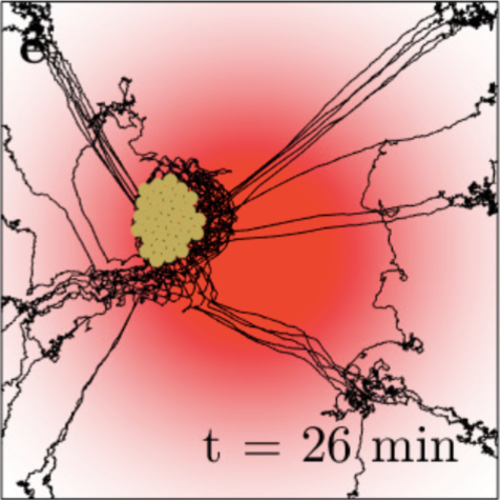
Simulation of clustering of Janus partices in an optical potential due to hydrodynamic fluxes.Clustering of Janus Particles Under the Effect of Optical Forces Driven by Hydrodynamic Fluxes Agnese Callegari, S. Masoumeh Mousavi, Iryna Kasianiuk, Denis Kasyanyuk, Sabareesh K P Velu, Luca Biancofiore, Giovanni Volpe
Submitted as: OSA-OMA-2021, AM1D.3 Contribution Date: 12 April Time: 15 CEST
Short Abstract
Hydrodynamic fluxes generated by Janus particles in an optical potential drive reversible clustering of colloids.
Extended Abstract
Self-organization entails the emergence of complex patterns and structures from relatively simple constituting building blocks. Phenomena such as flocking of birds and growth of bacterial colonies are examples of self-organization in nature. Also artificial microscopic systems feature similar forms of organization with the emergence of clusters, sometimes referred to as “living crystals”. In the past two decades, studies on self-organization focused on systems made of complex colloids with anisotropic surface, such as Janus particles. Depending on their surface material properties, Janus particles have been used in different fields for various applications such as self-assembly, microrheology and emulsion stabilization. Under certain conditions, Janus particles have the ability of self-propelling and behave as active Brownian particles; these active Janus particles might be used in future biomedical nano-devices for diagnostics, drug delivery and microsurgery. Studies on clustering of Janus particles have been performed by Palacci et al., who have shown the formation of living crystals in systems of light-activated Janus particles (Fe2O3-TPM) in hydrogen peroxide solution. Similarly, Buttinoni et al. demonstrated the clustering of light-activated Janus particles (carbon-SiO2) in a water-lutidine binary mixture. Other research groups have shown self-assembly and controlled crystal formations in a mixed system of light-activated Janus particles and passive colloids. In all these studies, a necessary ingredient for the clustering is the active nature of the particles. In systems of passive colloidal particles, crystallization was observed at the bottom of an attractive optical potential, close to the hard boundary during electrophoretic deposition, and in the presence of an external temperature gradient.
Here, we investigate the behavior of a system composed of Janus particles (silica microspheres half-coated with gold) close to a planar surface in the presence of an optical potential, and we experimentally demonstrate reversible clustering triggered by the presence of the optical field. Experimental results are compared and validated by numerical simulations, where the key ingredient for clustering is the presence of an attractive potential of hydrodynamic nature. In fact, the temperature gradient generated by the light absorption at the metallic patches on the Janus particles induces a local force field tangential to the surface of the Janus particle, which causes the fluid to slip at the surface of the particle. Because of the proximity of a planar surface, the flow pattern around the Janus particle is squeezed and results in a flow with a horizontal incoming radial component (parallel to the planar boundary) and outgoing vertical components (directed upwards from the wall). This thermophoretically-induced flow field affects the motion of other neighboring particles, so that a second nearby particle experiences an attractive hydrodynamic drag force toward the particle originating the flux. Clustering is confirmed also in mixtures of Janus particles and passive colloids (silica microspheres), where the hydrodynamic flux due to the Janus particles causes the clustering of the particles in the hybrid system and the formation of living crystals. As a further confirmation that the presence of Janus particles in the optical potential is crucial for the clustering, we show that a system with only non-Janus particles does not give rise to any clustering. We show experimentally that the clustering process is reversible, since the cluster starts to disassemble as soon as the optical potential is switched off.
Beyond their fundamental interest, the reported results are potentially relevant for various applications in the fields of self-assembly, targeted drug-delivery and bioremediation. For example, the possibility of forming clusters at a controllable distance from the minimum of a potential well offers a new route towards self-assembly near a target. Future work will be devoted to understanding how the clustering behavior can be controlled or altered by using more complex optical potentials.
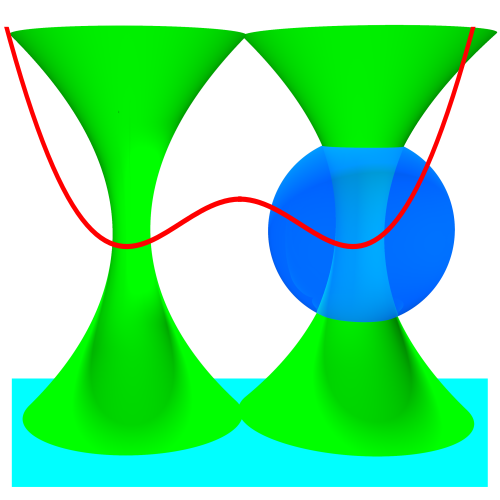
Schematic of a bistable potential generated with a double-beam optical tweezers.
Optical Tweezers: A Comprehensive Tutorial from Calibration to Applications
Jan Gieseler, Juan Ruben Gomez-Solano, Alessandro Magazzù, Isaac Pérez Castillo, Laura Pérez García, Marta Gironella-Torrent, Xavier Viader-Godoy, Felix Ritort, Giuseppe Pesce, Alejandro V. Arzola, Karen Volke-Sepulveda & Giovanni Volpe
Advances in Optics and Photonics, 13(1), 74-241 (2021)
doi: https://doi.org/10.1364/AOP.394888
arXiv: 2004.05246
Since their invention in 1986 by Arthur Ashkin and colleagues, optical tweezers have become an essential tool in several fields of physics, spectroscopy, biology, nanotechnology, and thermodynamics. In this Tutorial, we provide a primer on how to calibrate optical tweezers and how to use them for advanced applications. After a brief general introduction on optical tweezers, we focus on describing and comparing the various available calibration techniques. Then, we discuss some cutting-edge applications of optical tweezers in a liquid medium, namely to study single-molecule and single-cell mechanics, microrheology, colloidal interactions, statistical physics, and transport phenomena. Finally, we consider optical tweezers in vacuum, where the absence of a viscous medium offers vastly different dynamics and presents new challenges. We conclude with some perspectives for the field and the future application of optical tweezers. This Tutorial provides both a step-by-step guide ideal for non-specialists entering the field and a comprehensive manual of advanced techniques useful for expert practitioners. All the examples are complemented by the sample data and software necessary to reproduce them.
Particle tracking and characterization in terms of radius and refractive index.
Quantitative Digital Microscopy with Deep Learning
Benjamin Midtvedt, Saga Helgadottir, Aykut Argun, Jesús Pineda, Daniel Midtvedt, Giovanni Volpe
Applied Physics Reviews 8, 011310 (2021)
doi: 10.1063/5.0034891
arXiv: 2010.08260
Video microscopy has a long history of providing insights and breakthroughs for a broad range of disciplines, from physics to biology. Image analysis to extract quantitative information from video microscopy data has traditionally relied on algorithmic approaches, which are often difficult to implement, time consuming, and computationally expensive. Recently, alternative data-driven approaches using deep learning have greatly improved quantitative digital microscopy, potentially offering automatized, accurate, and fast image analysis. However, the combination of deep learning and video microscopy remains underutilized primarily due to the steep learning curve involved in developing custom deep-learning solutions. To overcome this issue, we introduce a software, DeepTrack 2.0, to design, train and validate deep-learning solutions for digital microscopy. We use it to exemplify how deep learning can be employed for a broad range of applications, from particle localization, tracking and characterization to cell counting and classification. Thanks to its user-friendly graphical interface, DeepTrack 2.0 can be easily customized for user-specific applications, and, thanks to its open-source object-oriented programming, it can be easily expanded to add features and functionalities, potentially introducing deep-learning-enhanced video microscopy to a far wider audience.