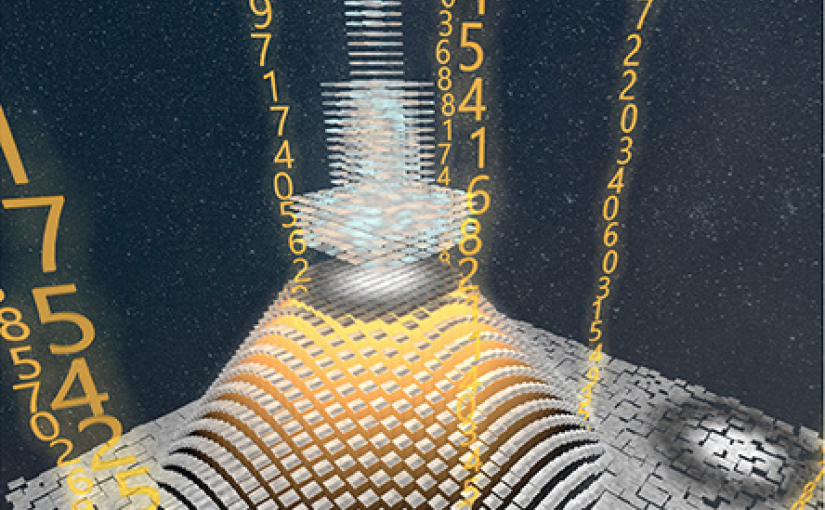
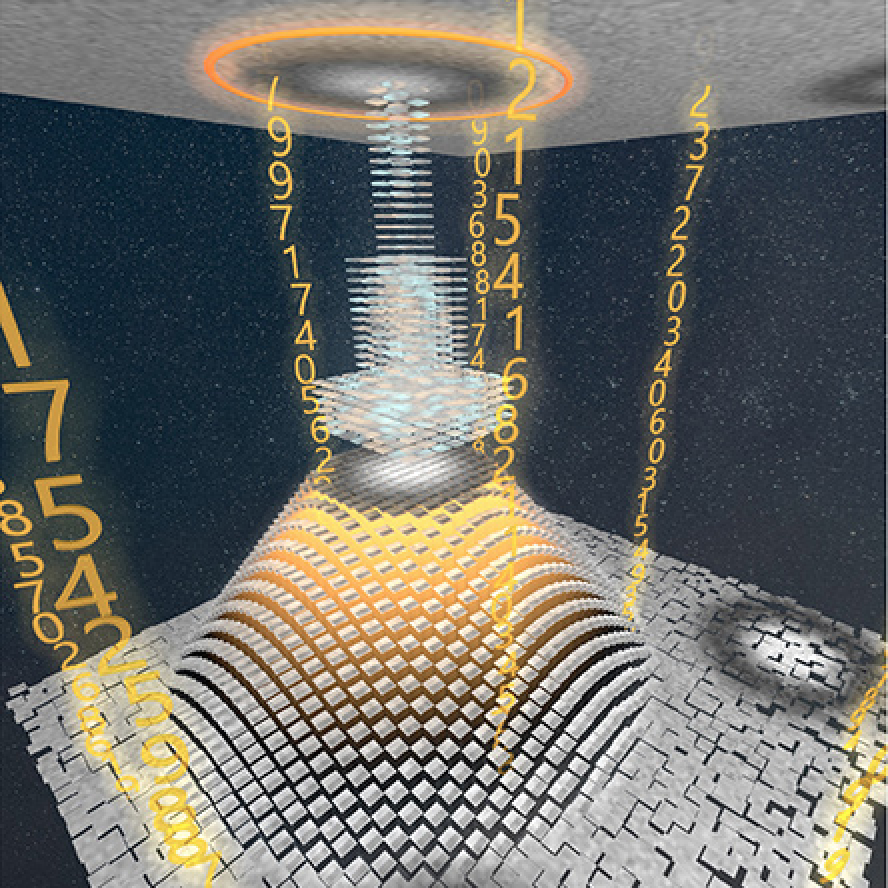
Deep learning for particle tracking. (Image by Aykut Argun)Machine Learning for Active Matter: Opportunities and Challenges
Giovanni Volpe
(online at) Nordita, Stockholm, Sweden
15 April 2021, 14:30-15.25
Machine-learning methods are starting to shape active-matter research. Which new trends will this start? Which new groundbreaking insight and applications can we expect? More fundamentally, what can this contribute to our understanding of active matter? Can this help us to identify unifying principles and systematise active matter? This presentation addresses some of these questions with some concrete examples, exploring how machine learning is steering active matter towards new directions, offering unprecedented opportunities and posing practical and fundamental challenges. I will illustrate some most successful recent applications of machine learning to active matter with a slight bias towards work done in my research group: enhancing data acquisition and analysis; providing new data-driven models; improving navigation and search strategies; offering insight into the emergent dynamics of active matter in crowded and complex environments. I will discuss the opportunities and challenges that are emerging: implementing feedback control; uncovering underlying principles to systematise active matter; understanding the behaviour, organisation and evolution of biological active matter; realising active matter with embodied intelligence. Finally, I will highlight how active matter and machine learning can work together for mutual benefit.
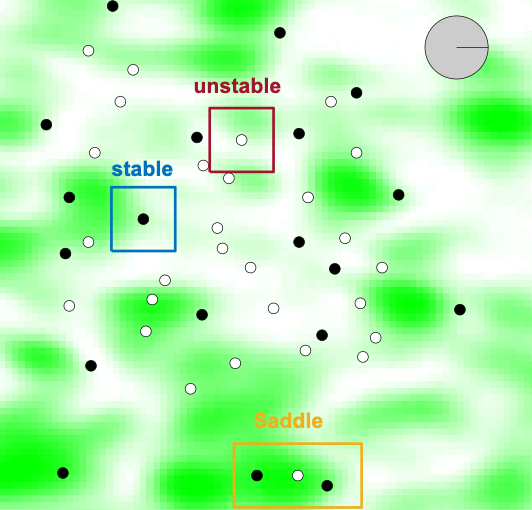
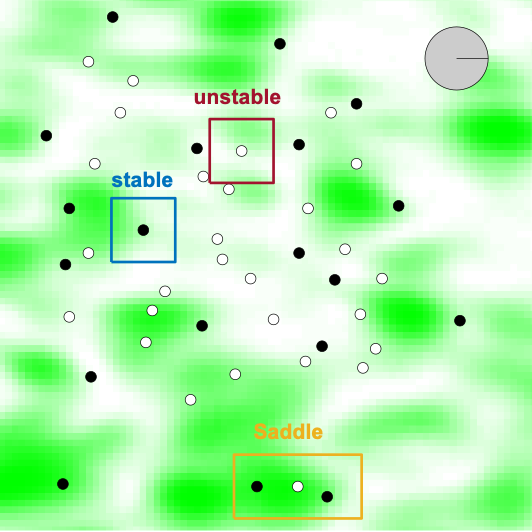
FORMA allows to identify and characterize all the equilibrium points in a force field generated by a speckle pattern.FORMA and BEFORE: Expanding Applications of Optical Tweezers. Laura Pérez Garcia, Martin Selin, Alejandro V. Arzola, Giovanni Volpe, Alessandro Magazzù, Isaac Pérez Castillo. Submitted to OSA-OMA 2021, ATh1D.5 Date: 15 April Time: 15:45 (CEST)
Abstract:
FORMA (force reconstruction via maximum-likelihood-estimator analysis) addresses the need to measure the force fields acting on microscopic particles. Compared to alternative established methods, FORMA is faster, simpler, more accurate, and more precise. Furthermore, FORMA can also measure non-conservative and out-of-equilibrium force fields. Here, after a brief introduction to FORMA, I will present its use, advantages, and limitations. I will conclude with the most recent work where we exploit Bayesian inference to expand FORMA’s scope of application.
On Wednesday, 7 April 2021, Rajesh Ganapathy will give a seminar at the Soft Matter Lab and the Department of Physics, University of Gothenburg. He will speak on how energy can be harvested in microscopic environments making use of active baths.
Tuning the performance of a micron-sized Stirling engine by ‘active’ noise
Rajesh Ganapathy Time: 07 April, 2021, 11:00 Place: Online via Zoom (link to be shared)
Abstract: Mesoscale heat engines, wherein a single atom or a micron-sized colloidal particle is the working substance, are paradigmatic models to elucidate the conversion of heat into work in a noisy environment. While stochastic thermodynamics provides a precise framework for quantifying the performance of these engines when operating between thermal baths, how energy transduction occurs when the reservoirs themselves are out-of-equilibrium, life for instance for a biological motor carrying cargo inside a cell, remains largely unclear. In the first part of my talk, I will describe the design, construction, and quantification of a colloidal Stirling geat engine operating, in the quasistatic limit, between bacterial baths characterized by different levels of activity. We will show that due to ‘active noise’ the performance of the Stirling engine even surpasses a thermal Stirling engine operating between reservoirs with an infinite temperature difference. In the second part of my talk, we will outline a reservoir engineering approach that allowed us to operate the ‘active’ Stirling engine not only in the quasi-static-limit but also at finite cycle durations. Armed with this capability, we will show that the performance of a micron-sized Stirling engine can be tuned by altering only the nature of the reservoir noise statistics.
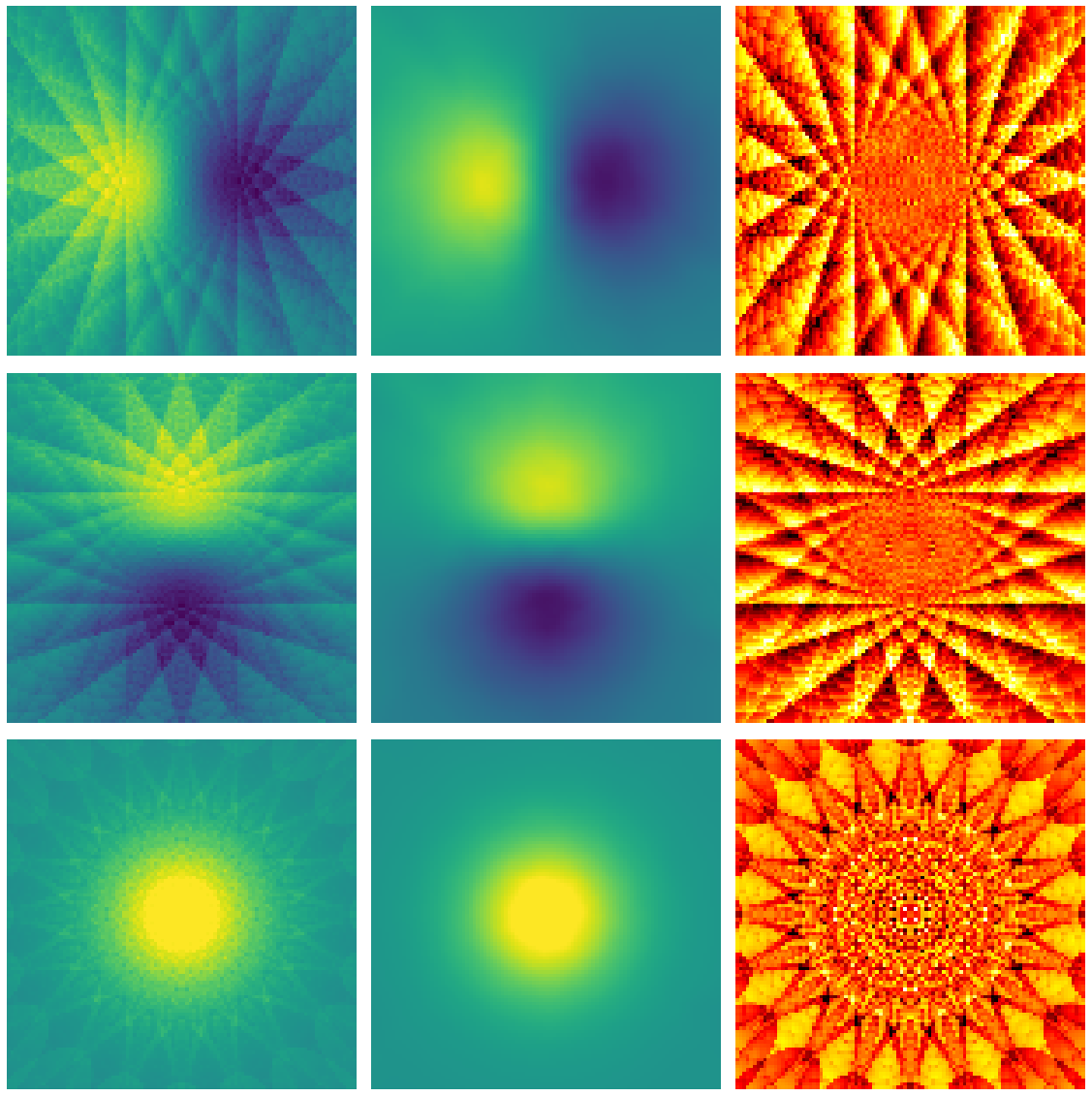
Optical forces calculated on a sphere with the geometrical optics (left column) and the machine learning (center column) approaches. The difference between both approaches is shown in the column on the right, illustrating the removal of artefacts with the machine learning method.
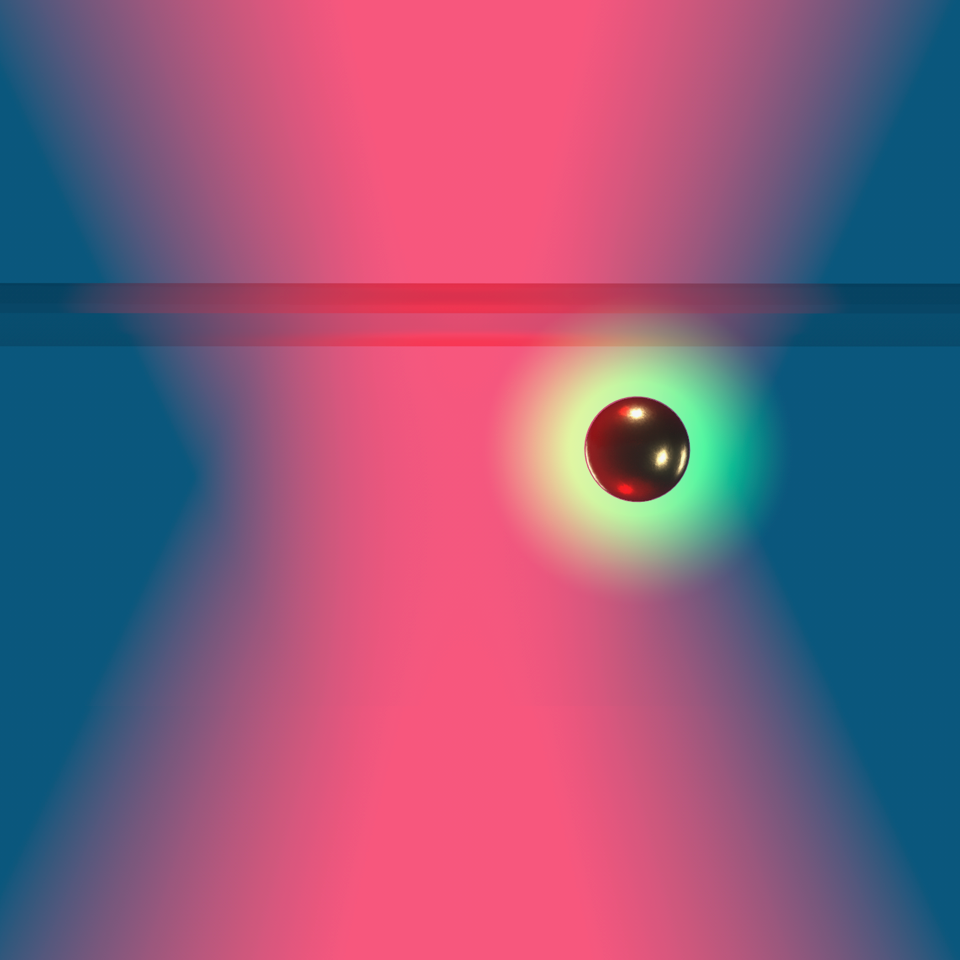
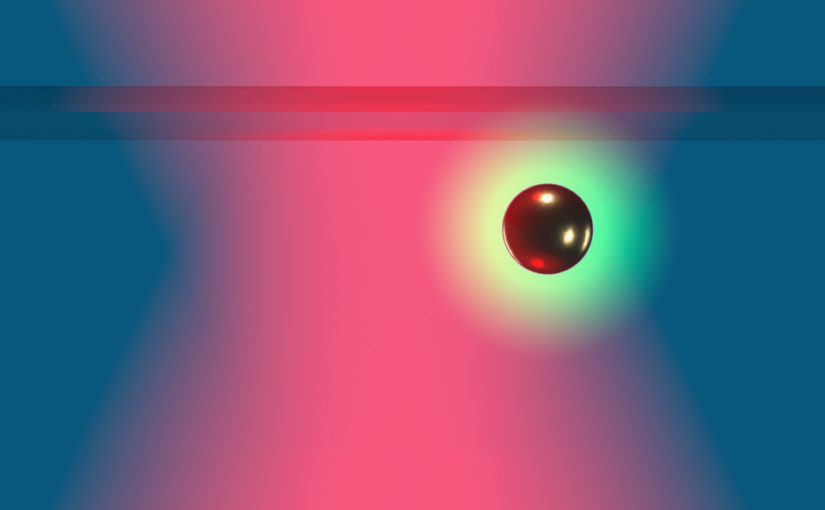
Non-spherical nanoparticle held by optical tweezers. The particle is trapped against the cover slide.Dynamics of an Active Nanoparticle in an Optical Trap Falko Schmidt, Hana Sipova-Jungova, Mikael Käll, Alois Würger, Giovanni Volpe
Submitted as OSA-OMA-2021, AF1D.2 Contribution Date: 16 April Time: 12:30 CEST
Short Abstract
We investigate a nanoparticle inside an optical trap and driven away from equilibrium by self-induced concentration gradients. We find that a nanoparticle performs fast orbital rotations and its probability density shifting away from equilibrium.
Optical forces calculated on a sphere with the geometrical optics (left column) and the machine learning (center column) approaches. The difference between both approaches is shown in the column on the right, illustrating the removal of artefacts with the machine learning method.
Machine learning to enhance the calculation of optical forces in the geometrical optics approximation David Bronte Ciriza, Alessandro Magazzù, Agnese Callegari, Maria A. Iatì, Giovanni Volpe, Onofrio M. Maragò Submitted toOSA-OMA-2021, AF2D.2 Contribution Date: 16 April Time: 17 CEST
Short Abstract: We show how machine learning can improve the speed and accuracy of the optical force calculations in the geometrical optics approximation.
Extended Abstract:
Light can exert forces by exchanging momentum with particles. Since the pioneering work by Ashkin in the 1970’s, optical forces have played a fundamental role in fields like biology, nanotechnology, or atomic physics. Optical tweezers, which are instruments that, by tightly focusing a laser beam, are capable of confining particles in three dimensions, have become a common tool for manipulation of micro- and nano- particles, as well as a force and torque transducer with sensing capabilities at the femtonewton level. Optical tweezers have also been successfully employed to explore novel phenomena, including protein folding and molecular motors, or the optical forces and Brownian motion of 1D and 2D materials.
Numerical simulations play a fundamental role in the planning of experiments and in the interpretation of the results. In some basic cases for optical tweezers, the optical trap can be approximated by a harmonic potential. However, there are many situations where this approximation is insufficient, for example in the case of a particle escaping an optical trap, or for particles that are moving on an optical landscape but are not trapped. In these cases, a more complex treatment of the light-matter interaction is required for a more accurate calculation of the forces. This calculation is computationally expensive and prohibitively slow for numerical simulations when the forces need to be calculated many times in a sequential way. Recently, machine learning has been demonstrated to be a promising approach to improve the speed of these calculations and therefore, to expand the applicability of numerical simulations for experimental design and analysis.
In this work, we explore the geometrical optics regime, valid when the particles are significantly bigger than the wavelength of the incident light. This is typically the case in experiments with micrometer-size particles. The optical field is described by a collection of N light rays and the momentum exchange between the rays and the particle is calculated employing the tools of geometrical optics. The limitation of considering a discrete N number of light rays introduces artifacts in the force calculation. We show that machine learning can be used to improve not only the speed but also the accuracy of the force calculation. This is first demonstrated by training a neural network for the case of a spherical particle with 3 degrees of freedom accounting for the position of the particle. We show how the neural network improves the prediction of the force with respect to the initial training data that has been generated through the geometrical optics approach.
Starting from these results for 3 degrees of freedom, the work has been expanded to 9 degrees of freedom by including all the relevant parameters for the optical forces calculation considering also different refractive indexes, shapes, sizes, positions and orientations of the particle besides different numerical apertures of the objective that focuses the light.
This work proves machine learning as a compact, accurate, and fast approach for optical forces calculation and presents a tool that can be used to study systems that, due to computation limitations, were out of the scope of the traditional ray optics approach.
Gain-Assisted Plasmonic/Dielectric Nanoshells in Optical Tweezers: Non-Linear Optomechanics and Thermal Effects. Paolo Polimeno, Francesco Patti, Melissa Infusino, Jonathan Sànchez, Maria Iati, Rosalba Saija, Giovanni Volpe, Onofrio Maragò, Alessandro Veltri Submitted asOSA-OMA-2021, AF1D.D Contribution Date: 16 April Time: 13:15 CEST
Short Abstract
We study theoretically the optomechanics of a dyed dielectric/metallic nanoshell in stationary Optical Tweezers. We consider the thermophoretic effects due to the interaction between the incident radiation and the nanoparticle metallic component.