Flavia is a masters student at the department of physics, TU Dresden, Germany.
In her internship, she will focus on the simulation of intracavity optical trapping.
Her internship will last until 18 October 2024.
Flavia is a masters student at the department of physics, TU Dresden, Germany.
In her internship, she will focus on the simulation of intracavity optical trapping.
Her internship will last until 18 October 2024.

In this poster, Mirja presented her recent work on the development of a graph autoencoder. This graph autoencoder effectively summarizes graph structures while preserving important topological details through multiple hierarchical pooling steps. This enables the extraction of physical parameters describing the graphs. She demonstrated the performance of the graph autoencoder across diverse graph data originating from complicated systems, including the classification of protein assembly structures from single-molecule localization microscopy data, as well as the analysis of collective behavior and correlations between brain connections and age.


Angelo Barona Balda, Aykut Argun, Agnese Callegari, Giovanni Volpe
SPIE-OTOM, San Diego, CA, USA, 18 – 22 August 2024
Date: 22 August 2024
Time: 3:00 PM – 3:15 PM
Place: Conv. Ctr. Room 6D
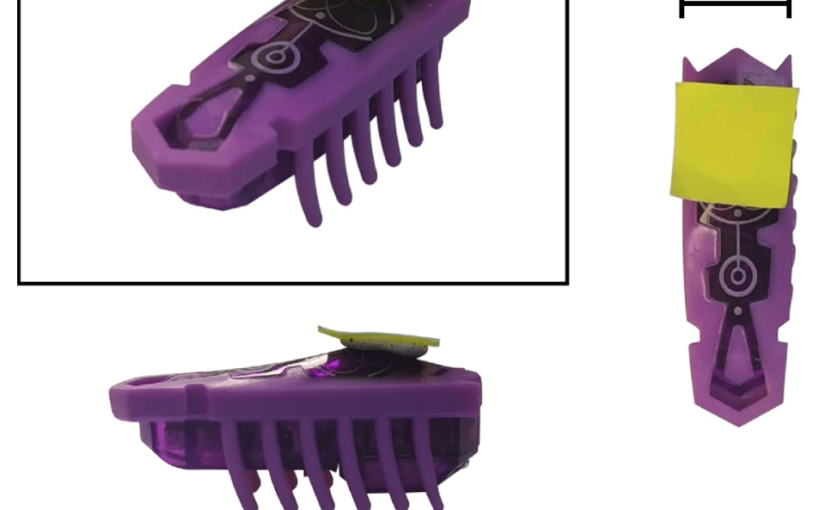
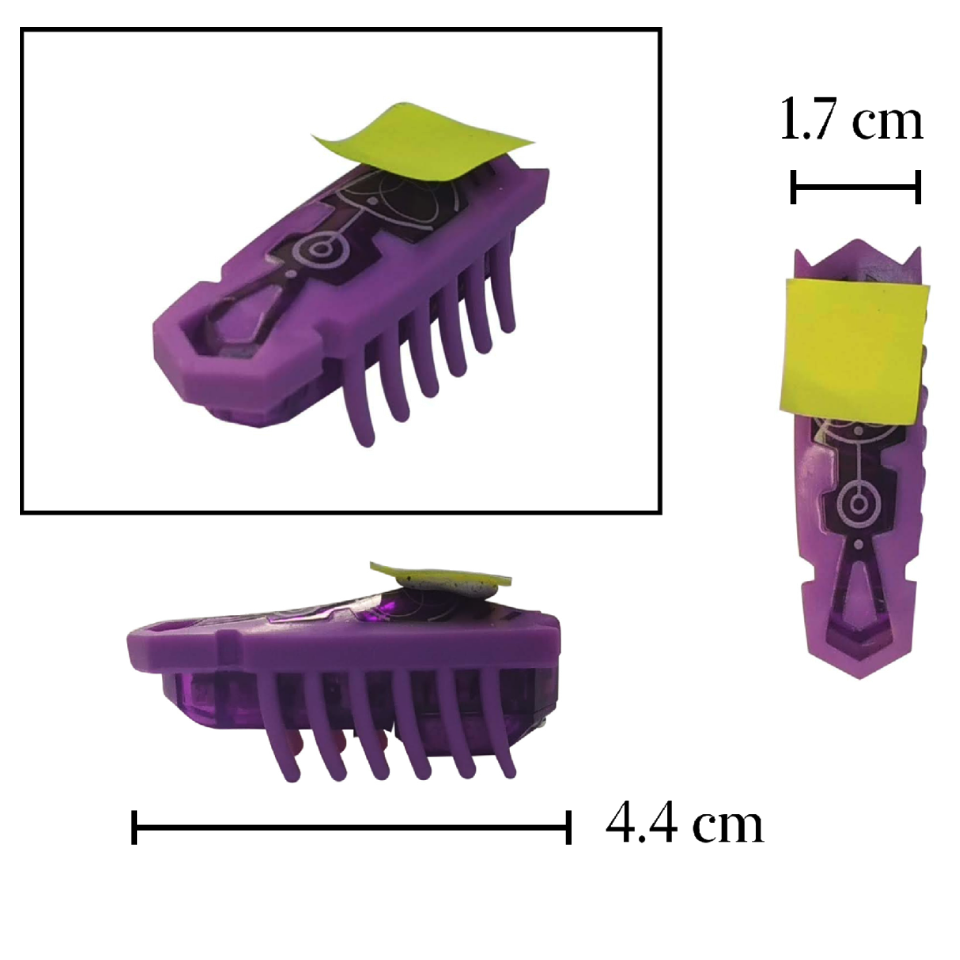
Active matter is based on concepts of nonequilibrium thermodynamics applied to the most diverse disciplines. Active Brownian particles, unlike their passive counterparts, self-propel and give rise to complex behaviors distinctive of active matter. As the field is relatively recent, active matter still lacks curricular inclusion. Here, we propose macroscopic experiments using Hexbugs, a commercial toy robot, demonstrating effects peculiar of active systems, such as the setting into motion of passive objects via active particles, the sorting of active particles based on their mobility and chirality. Additionally, we provide a demonstration of Casimir-like attraction between planar objects mediated by active particles.
Reference
Angelo Barona Balda, Aykut Argun, Agnese Callegari, Giovanni Volpe, Playing with Active Matter, arXiv: 2209.04168
Agnese Callegari, Niphredil Klint, John Klint, Alfred Bergsten, Alex Lech, and Giovanni Volpe
SPIE-OTOM, San Diego, CA, USA, 18 – 22 August 2024
Date: 19 August 2024
Time: 5:30 PM – 7:00 PM
Place: Conv. Ctr. Exhibit Hall A
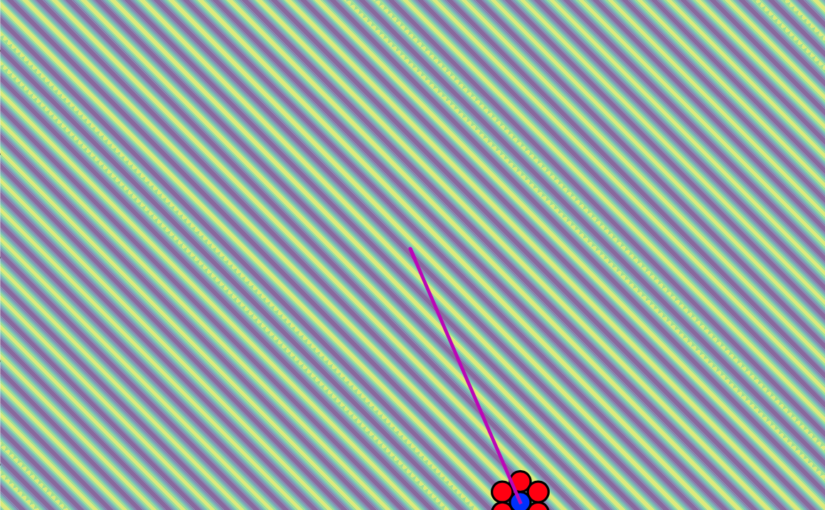
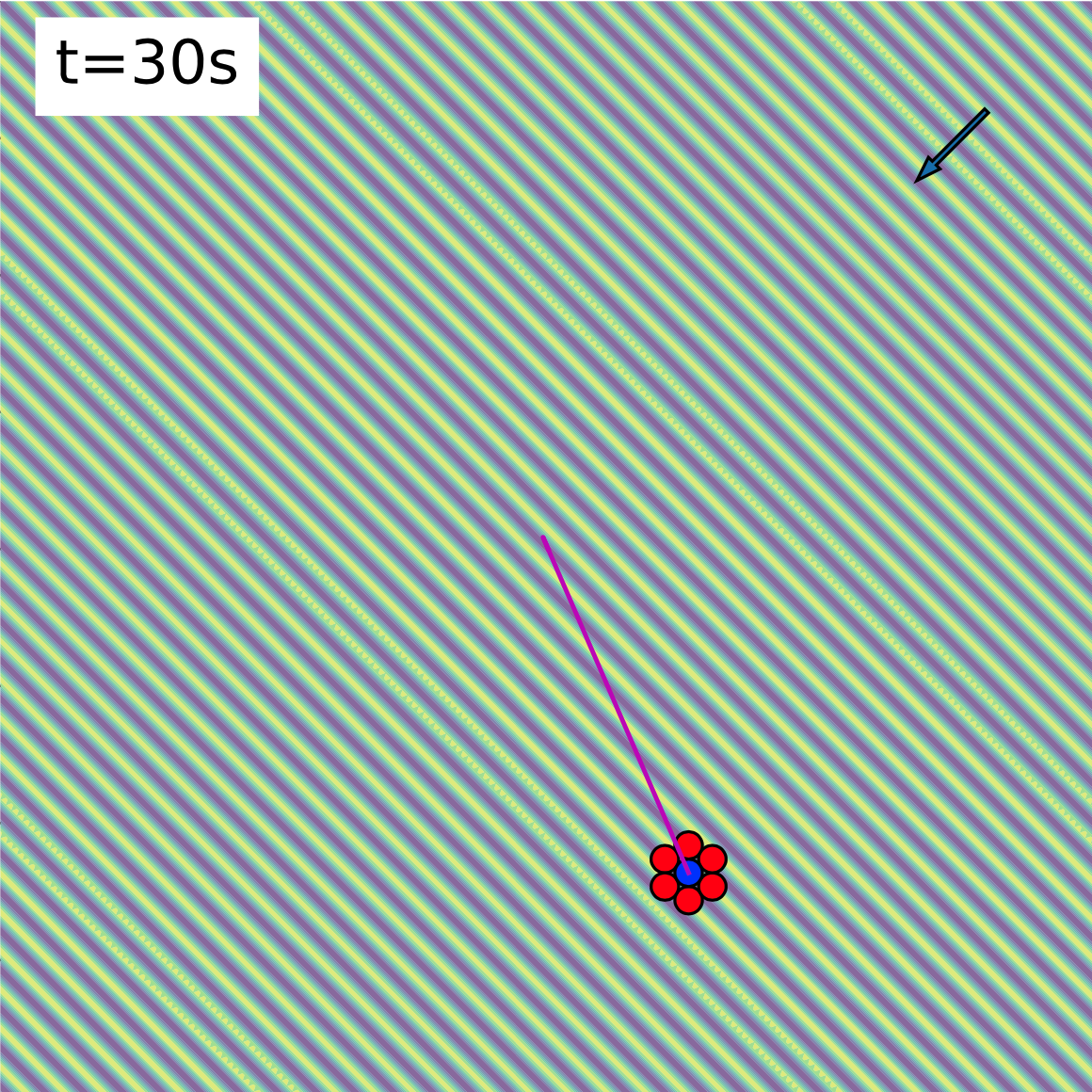
In 2019, Schmidt et al. demonstrated light-induced assembly of active colloidal molecules. They used two types of colloidal particles in a water-lutidine mixture: one transparent and one slightly absorbing light. In their experiment, this determined a non-reciprocal interaction between light-absorbing and transparent particles and promoted active molecule formation controlled by light. Beyond experimental details, we here explore the effects of this non-reciprocal interaction solely, showing its role in active molecule formation and self-propulsion. Simulation allows for the study of complex light profiles, enabling precise control over assembly and propulsion properties, relevant for targeted microscopic delivery.
Agnese Callegari, Mathias Samuelsson, Antonio Ciarlo, Giuseppe Pesce, David Bronte Ciriza, Alessandro Magazzù, Onofrio M. Maragò, Antonio Sasso, and Giovanni Volpe
SPIE-OTOM, San Diego, CA, USA, 18 – 22 August 2024
Date: 19 August 2024
Time: 5:30 PM – 7:00 PM
Place: Conv. Ctr. Exhibit Hall A
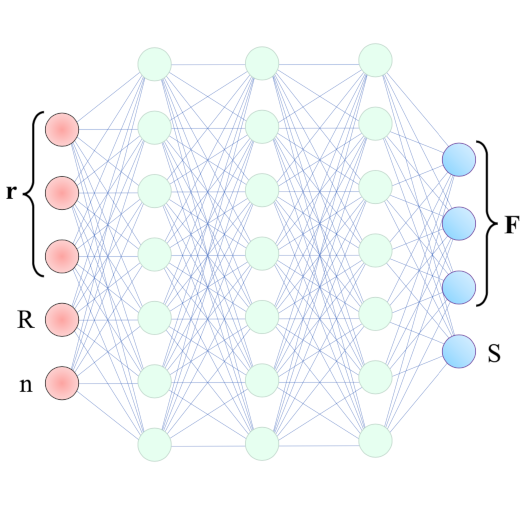
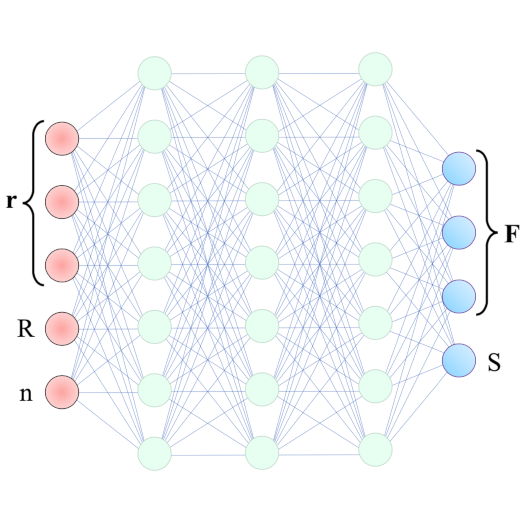
Intracavity optical tweezers have been proven successful for trapping microscopic particles at very low average power intensity – much lower than the one in standard optical tweezers. This feature makes them particularly promising for the study of biological samples. The modelling of such systems, though, requires time-consuming numerical simulations that affect its usability and predictive power. With the help of machine learning, we can overcome the numerical bottleneck – the calculation of optical forces, torques, and losses – and reproduce, in simulation, the results in the literature and generalize to the case of counterpropagating-beams intracavity optical trapping.
Agnese Callegari, Giovanni Volpe
SPIE-OTOM, San Diego, CA, USA, 18 – 22 August 2024
Date: 19 August 2024
Time: 5:30 PM – 7:00 PM
Place: Conv. Ctr. Exhibit Hall A
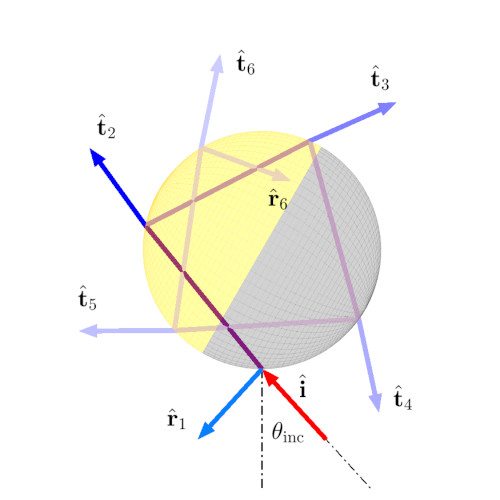
Janus particles possess dual properties that makes them very versatile for soft and active matter applications. Modeling their interaction with light, including optical force and torque, presents challenges. We present here a model of spherical, metal-coated Janus particles in the geometric optics approximation. Via an extension of the Optical Tweezers Geometrical Optics (OTGO) toolbox, we calculate optical forces, torques, and absorption. Through numerical simulation, we demonstrate control over Janus particle dynamics in traveling-wave optical landscapes by adjusting speed and periodicity.

Mirja Granfors, Jesús Pineda, Blanca Zufiria Gerbolés, Jiawei Sun, Joana B. Pereira, Carlo Manzo, and Giovanni Volpe
Date: 19 August 2024
Time: 17:30-19:00 (PDT)
Graphs are used to model complex relationships in various domains, such as interacting particles or neural connections within a brain. Efficient analysis and classification of graphs pose significant challenges due to their inherent structural complexity and variability. Here, an approach is presented to address these challenges through the development of the graph autoencoder GAUDI. GAUDI effectively summarizes graph structures while preserving important topological details through multiple hierarchical pooling steps. This enables the extraction of physical parameters describing the graphs. We demonstrate the performance of GAUDI across diverse graph data originating from complicated systems, including the classification of protein assembly structures from single-molecule localization microscopy data, as well as the analysis of collective behavior and correlations between brain connections and age. This approach holds great promise for examining diverse systems, enhancing our comprehension of various forms of graph data.

Gan Wang, Marcel Rey, Antonio Ciarlo, Mohanmmad Mahdi Shanei, Kunli Xiong, Giuseppe Pesce, Mikael Käll and Giovanni Volpe
Date: 19 August 2024
Time: 16:25-16:40 (PDT)
The incorporation of Moore’s law into integrated circuits has spurred opportunities for downsizing traditional mechanical components. Despite advancements in single on-chip motors using electrical, optical, and magnetic drives under ~100 μm, creating complex machines with multiple units remains challenging. Here, we developed a ~10 μm on-chip micromotor using a method compatible with complementary metal oxide semiconductors (CMOS) process. The meta-surface is embedded with the motor to control the incident laser beam direction, enabling momentum exchange with light for movement. The rotation direction and speed are adjustable through the meta-surface, along with the intensity and polarization of applied light. By combining these motors and controlling the configuration, we create complex machines with a size similar to traditional machines below 50um, such as the rotary motion mode of multiple gear coupled gear trains, and the linear motion mode combined with rack and pinion, and combine the micro metal The mirror is introduced into the machine to realize the self-controlled scanning function of the laser in a fixed area.
Martin Selin
SPIE-ETAI, San Diego, CA, USA, 18 – 22 August 2024
Date: 19 August 2024
Time: 4:10 PM – 4:25 PM
Place: Conv. Ctr. Room 6D
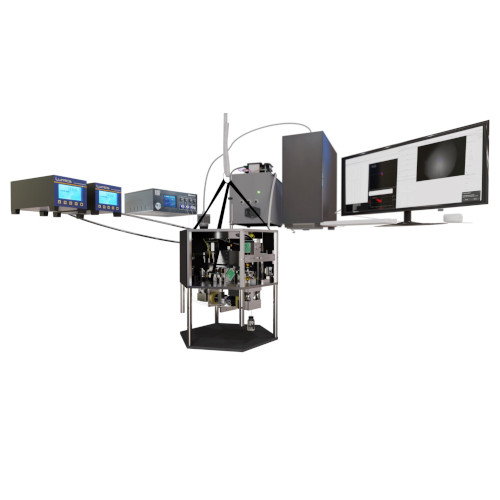
The perhaps most widely used tool for measuring forces and manipulating particles at the micro and nano-scale are optical tweezers which have given them widespread adoption in physics, chemistry and biology. Despite advancements in computer interaction driven by large-scale generative AI models, experimental sciences—and optical tweezers in particular—remain predominantly manual and knowledge-intensive, owing to the specificity of methods and instruments. Here, we demonstrate how integrating the components of optical tweezers—laser, motor, microfluidics, and camera—into a single software simplifies otherwise challenging experiments by enabling automation through the integration of real-time analysis with deep learning. We highlight this through a DNA pulling experiment, showcasing automated single molecule force spectroscopy and intelligent bond detection, and an investigation into core-shell particle behavior under varying pH and salinity, where deep learning compensates for experimental drift. We conclude that automating experimental procedures increases reliability and throughput, while also opening up the possibility for new types of experiments.
David Bronte Ciriza, Alessandro Magazzù, Agnese Callegari, Gunther Barbosa, Antonio A. R. Neves, Maria Antonia Iatì, Giovanni Volpe, and Onofrio M. Maragò
SPIE-ETAI, San Diego, CA, USA, 18 – 22 August 2024
Date: 19 August 2024
Time: 1:55 PM – 2:10 PM
Place: Conv. Ctr. Room 6D
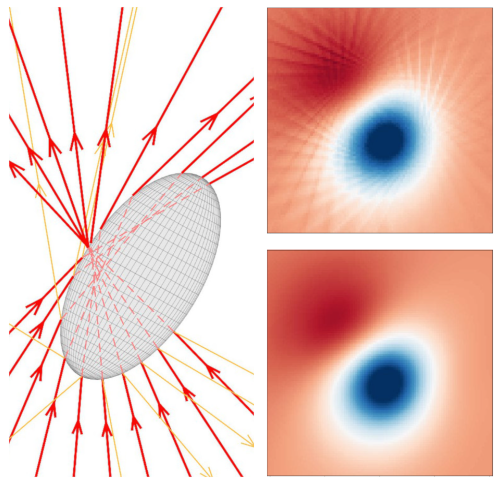
Optical tweezers manipulate microscopic objects with light by exchanging momentum and angular momentum between particle and light, generating optical forces and torques. Understanding and predicting them is essential for designing and interpreting experiments. Here, we focus on geometrical optics and optical forces and torques in this regime, and we employ neural networks to calculate them. Using an optically trapped spherical particle as a benchmark, we show that neural networks are faster and more accurate than the calculation with geometrical optics. We demonstrate the effectiveness of our approach in studying the dynamics of systems that are computationally “hard” for traditional computation.
Reference
David Bronte Ciriza, Alessandro Magazzù, Agnese Callegari, Gunther Barbosa, Antonio A. R. Neves, Maria A. Iatì, Giovanni Volpe, Onofrio M. Maragò, Faster and more accurate geometrical-optics optical force calculation using neural networks, ACS Photonics 10, 234–241 (2023)