News

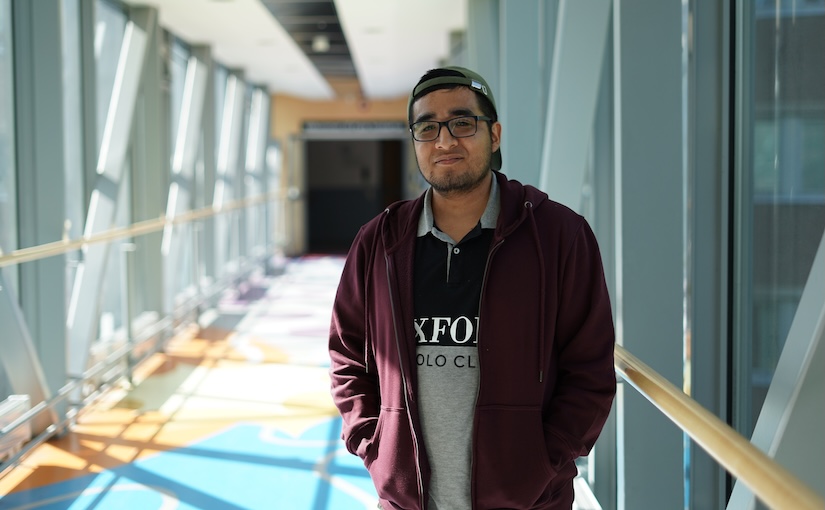
Presentation by A. Lech at EUROMECH Colloquium 656 in Gothenburg, 22 May 2025

Alex Lech Granfors presenting at the EUROMECH Colloquium. (Photo by M. Granfors.)
Deeplay: Enhancing PyTorch with Customizable and Reusable Neural Networks
Alex Lech

Date: 22 May 2025
Time: 15:00
Place: Veras Gräsmatta, Gothenburg
Part of the EUROMECH Colloquium 656 Data-Driven Mechanics and Physics of Materials

Deeplay is a Python-based deep learning library that extends PyTorch, addressing limitations in modularity and reusability commonly encountered in neural network development. Built with a core philosophy of modularity and adaptability, Deeplay introduces a system for defining, training, and dynamically modifying neural networks. Unlike traditional PyTorch modules, Deeplay allows users to adjust the properties of submodules post-creation, enabling seamless integration of changes without compromising the compatibility of other components. This flexibility promotes reusability, reduces redundant implementations, and simplifies experimentation with neural architectures. Deeplay’s architecture is organized around a hierarchy of abstractions, spanning from high-level models to individual layers. Each abstraction operates independently of the specifics of lower levels, allowing neural network components to be reconfigured or replaced without requiring foresight during initial design. Key features include a registry-based system for component customization, support for dynamic property modifications, and reusable modules that can be integrated across multiple projects. As a fully compatible superset of PyTorch, Deeplay enhances its functionality with advanced modularity and flexibility while maintaining seamless integration with existing PyTorch workflows. It extends the capabilities of PyTorch Lightning by addressing not only training loop optimization, but also the flexible and dynamic design of model architectures. By combining the familiarity and robustness of PyTorch with enhanced design flexibility, Deeplay empowers developers to efficiently prototype, refine, and deploy neural networks tailored to diverse machine learning challenges. Deeplay is accompanied by a dedicated GitHub page, featuring extensive documentation, examples, and an active community for support and collaboration.
Invited Seminar by G. Volpe at Cognitive and Behavior Changes in Parkinson’s Disease and Parkinsonism: Advances and Challenges, Santa Maria di Leuca, Italy, 21 May 2025

Braph 2 Logo. (Image from the Braph 2 Project)
The Role of Artificial Intelligence in Advanced Neuroimaging Analysis
Giovanni Volpe
Cognitive and Behavior Changes in Parkinson’s Disease and Parkinsonism: Advances and Challenges
Date: 21 May 2025
Time: 11:50
Place: Tricase, Santa Maria di Leuca, Italy

Aitor González Marfil joins the Soft Matter Lab

(Photo by A. Ciarlo.)
Aitor González Marfil starts his visiting period at the Physics Department of the University of Gothenburg on 19 May 2025.

Aitor is a PhD student at the University of the Basque Country.

During his visit, that will last until the 19 of August, he will focus on machine learning for image analysis.

Robert Sosa Principe joins the Soft Matter Lab

(Photo by A. Ciarlo.)
Robert Sosa Principe started his visit at the Physics Department at the University of Gothenburg on 17 May 2025.

Robert is a PostDoc in the group of Prof. Carlos Bustamante at the University of California, Berkeley.

During his visit, he will focus on experiments of single-molecule biophysics.

Invited talk by Sreekanth K. Manikandan at the online Workshop on Stochastic Thermodynamics (WOST), 14th May 2025

Recent advances in nonequilibrium physics allow extracting thermodynamic quantities, such as entropy production, directly from dynamical information in microscopic movies. (Image by S. Manikandan.)
Localizing entropy production in cellular processes
Sreekanth Manikandan
Date: 14 Mar 2025
Time: 17:30 CEST
Place: Online
Part of the Workshop on Stochastic Thermodynamics

Quantifying the spatiotemporal forces, affinities, and dissipative costs of cellular-scale non-equilibrium processes from experimental data and localizing it in space and time remain a significant open challenge. Here, I explore how principles from stochastic thermodynamics, combined with machine learning techniques, offer a promising approach to addressing this issue. I will present preliminary results from experiments on fluctuating cell membranes and simulations of non-equilibrium systems in stationary and time-dependently driven states. These studies reveal potential strategies for localizing entropy production in experimental biophysical contexts while also highlighting key challenges and limitations that must be addressed.

Series of lectures by C. Bustamante, Waernska Professorship lectures, 29 April – 7 May 2025

Carlos Bustamante. (Photo by H. P. Thanabalan.)
Fundamentals and Applications of Single Molecule Force Spectroscopy – Waernska Professorship lectures
Professor Carlos Bustamante, who is visiting the Soft Matter Lab between 28 April and 27 May and is a winner of the Waernska Professorship, will be giving a series of lectures on Fundamentals and Applications of Single Molecule Force Spectroscopy.

Professor Carlos Bustamante from UC Berkeley is a pioneer in the use of optical tweezers for the biomechanical study of single molecules. He will explain the basics of how and why you can perform single-molecule experiments with them.

Here is the schedule and location of the lectures:
– 29 April 2025 from 13:00 to 17:00 in Gustaf Dalén-salen;
– 05 May 2025 from 13:00 to 17:00 in FL71;
– 06 May 2025 from 13:00 to 17:00 in Lecture Hall FL71;
– 07 May 2025 from 13:00 to 17:00 in Lecture Hall KB.

Professor Carlos Bustamante, winner of the Waernska Professorship, visits the Soft Matter Lab

Carlos Bustamante. (Photo by H. P. Thanabalan.)
We are delighted to welcome Professor Carlos Bustamante to the Soft Matter Lab as the winner of the prestigious Waernska Professorship.

Professor Bustamante is a world-renowned expert in single-molecule biophysics and a Full Professor of Molecular and Cell Biology, Chemistry and Physics at the University of California, Berkeley, USA.

His pioneering work has significantly advanced our understanding of the physical behaviour of biological molecules. Using techniques such as optical tweezers, atomic force microscopy and fluorescence microscopy, Professor Bustamante has provided key insights into molecular motors, protein and RNA folding, and the mechanisms of gene expression and regulation.

We are honoured to host Professor Bustamante at the Soft Matter Lab and look forward to exciting scientific exchanges and collaborations during his visit.

His visit is currently planned between 28 April and 27 May 2025.
An additional visit, yet to be confirmed, might take place during the fall of 2025.

Invited talk by L. Viaene at the first PhD Conference at the University of Gothenburg, 25 April 2025

Linde Viaene presenting at the PhD conference. (Image by S. Kilde Westberg.)
Studying heat adaptation in yeast one-molecule at a time: The use of single-molecule microscopy for aggregate identification and tracking.

Linde Viaene
Date: 25th of April
Time: 13:00
Place: Veras Gräsmatta, Gothenburg

The importance of protein folding and misfolding is indicated by the broad range of clinical manifestations that have protein aggregation at the base, such as neurodegenerative diseases, cancer and type II diabetes. A key factor in (energy) homeostasis is the DNA configuration of chromatin which allows for essential gene expression and adaptation to environmental factors. The Rpd3 deacetylase histone complex (DHAC) plays a crucial role in gene regulation and its disruption impairs stress-induced gene activation, highlighting its importance in cellular adaptation.
Using Saccharomyces cerevisiae as a model system, we aim to investigate the role of chromatin remodelling components in protein aggregation and cellular rejuvenation, which may influence aggregate retention and recovery speed. We will expose yeast cells to stressors such as heat shock, metabolic shifts, and oxidative stress to assess their effects on protein homeostasis and chromatin regulation. Growth assays will evaluate survival rates, while Western blotting will measure Hsp104 expression, a key heat shock protein involved in aggregate clearance. By employing our bespoke single-molecule fluorescence microscope, we will track aggregate formation, clearance, and spatial localization in live cells at molecular precision.
Our preliminary results indicate that some components of the Rpd3L complex, respectively alter the recovery rate after heat stress exposure. Hence, the goal is to explore further candidate genes and to determine their role in the stress-induced response. By elucidating the role of chromatin remodelers in stress adaptation, our findings may inform novel therapeutic strategies for age-related diseases.

Invited Talk by G. Volpe at OPIC/OMC 2025, Yokohama, Japan, 21 April 2025 (Online, Pre-recorded)

DeepTrack 2 Logo. (Image from DeepTrack 2 Project)
How can deep learning enhance microscopy?
Giovanni Volpe
Optics & Photonics International Congress 2025 (OPIC 2025), The 11th Optical Manipulation and Structured Materials Conference (OMC2025)
Date: 21 April 2025
Time: 13:45 JST
Place: Yokohama, Japan (Online, Pre-recorded)