Extracting quantitative biological information from bright-field cell images using deep learning published in Biophysics Reviews

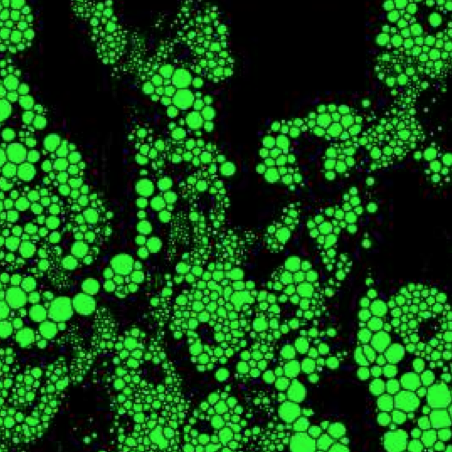
Virtually-stained generated image for lipid-droplet.
Extracting quantitative biological information from bright-field cell images using deep learning
Saga Helgadottir, Benjamin Midtvedt, Jesús Pineda, Alan Sabirsh, Caroline B. Adiels, Stefano Romeo, Daniel Midtvedt, Giovanni Volpe
Biophysics Rev. 2, 031401 (2021)
arXiv: 2012.12986
doi: 10.1063/5.0044782

Quantitative analysis of cell structures is essential for biomedical and pharmaceutical research. The standard imaging approach relies on fluorescence microscopy, where cell structures of interest are labeled by chemical staining techniques. However, these techniques are often invasive and sometimes even toxic to the cells, in addition to being time-consuming, labor-intensive, and expensive. Here, we introduce an alternative deep-learning-powered approach based on the analysis of bright-field images by a conditional generative adversarial neural network (cGAN). We show that this approach can extract information from the bright-field images to generate virtually-stained images, which can be used in subsequent downstream quantitative analyses of cell structures. Specifically, we train a cGAN to virtually stain lipid droplets, cytoplasm, and nuclei using bright-field images of human stem-cell-derived fat cells (adipocytes), which are of particular interest for nanomedicine and vaccine development. Subsequently, we use these virtually-stained images to extract quantitative measures about these cell structures. Generating virtually-stained fluorescence images is less invasive, less expensive, and more reproducible than standard chemical staining; furthermore, it frees up the fluorescence microscopy channels for other analytical probes, thus increasing the amount of information that can be extracted from each cell.

Classification, inference and segmentation of anomalous diffusion with recurrent neural networks published in Journal of Physics A: Mathematical and Theoretical

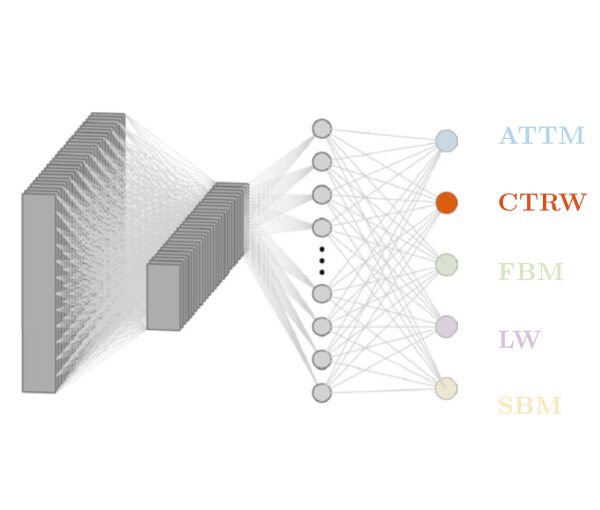
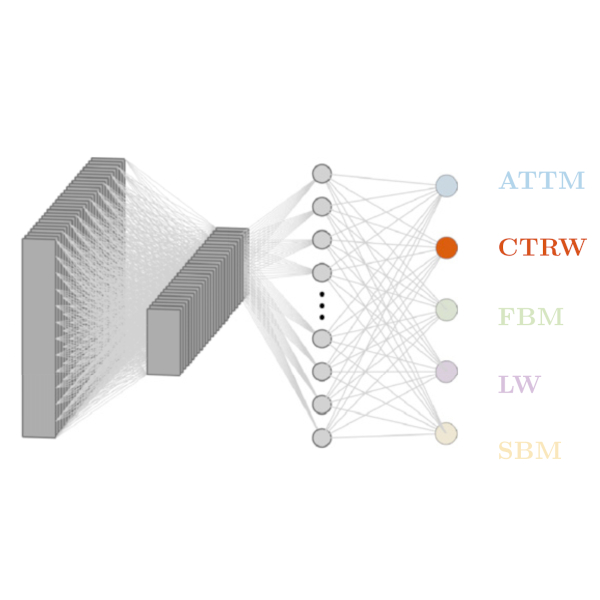
RANDI architecture to classify the model underlying anomalous diffusion.
Classification, inference and segmentation of anomalous diffusion with recurrent neural networks
Aykut Argun, Giovanni Volpe, Stefano Bo
J. Phys. A: Math. Theor. 54 294003 (2021)
doi: 10.1088/1751-8121/ac070a
arXiv: 2104.00553

Countless systems in biology, physics, and finance undergo diffusive dynamics. Many of these systems, including biomolecules inside cells, active matter systems and foraging animals, exhibit anomalous dynamics where the growth of the mean squared displacement with time follows a power law with an exponent that deviates from 1. When studying time series recording the evolution of these systems, it is crucial to precisely measure the anomalous exponent and confidently identify the mechanisms responsible for anomalous diffusion. These tasks can be overwhelmingly difficult when only few short trajectories are available, a situation that is common in the study of non-equilibrium and living systems. Here, we present a data-driven method to analyze single anomalous diffusion trajectories employing recurrent neural networks, which we name RANDI. We show that our method can successfully infer the anomalous exponent, identify the type of anomalous diffusion process, and segment the trajectories of systems switching between different behaviors. We benchmark our performance against the state-of-the art techniques for the study of single short trajectories that participated in the Anomalous Diffusion (AnDi) challenge. Our method proved to be the most versatile method, being the only one to consistently rank in the top 3 for all tasks proposed in the AnDi challenge.

Colloquium by G. Volpe at TU-Darmstadt, 18 June 2021, Online

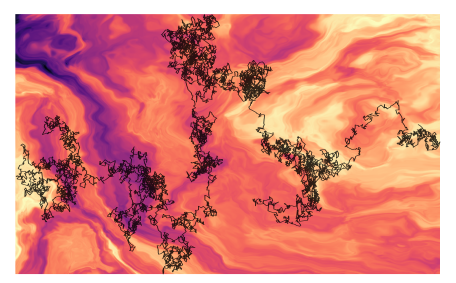
Deep learning for particle tracking. (Image by Aykut Argun)
Deep learning for microscopy, optical trapping, and active matter

Giovanni Volpe
Colloquium
(online at) TU-Darmstadt, Germany
18 June 2021, 14:00 CEST

After a brief overview of artificial intelligence, machine learning and deep learning, I will present a series of recent works in which we have employed deep learning for applications in photonics and active matter.
In particular, I will explain how we employed deep learning to enhance digital video microscopy, to estimate the properties of anomalous diffusion, to characterize microscopic force fields, to improve the calculation of optical forces, and to characterize nanoparticles.
Finally, I will provide an outlook for the application of deep learning in photonics and active matter.

Olle Fager defended his Master thesis on 15 June 2021. Congrats!

Olle Fager defended his Master thesis in MPCAS at the Chalmers University of Technology on 15 June 2021. Congrats!

Title: Real-Time Multi-Object Tracking and Segmentation with Generated Data using 3D-modelling

Multi-Object Tracking and Segmentation (MOTS) is an important branch of computer vision that has applications in many different areas. In recent developments these methods have been able to reach favorable speed-accuracy trade-offs, making them interesting for real-time applications. In this work different deep learning based MOTS methods have been investigated with the purpose of extending the DeepTrack framework with real-time MOTS capabilities. Deep learning methods rely heavily on the data on which they are trained. The collection and annotation of the data can however be very time-consuming. Therefor, a pipeline is developed and investigated that automatically produces synthetic data by utilizing 3D-modelling. The most accurate tracker achieves a MOTSA score of 94 and the tracker with the best speed-accuracy trade-off achieves a MOTSA score of 88. It is also observed that satisfactory results can be achieved in most situations with a quite general data generation pipeline, indicating that the developed pipeline could be used in different scenarios.

​Name of the master programme: MPCAS – Complex Adaptive Systems
Supervisor: Giovanni Volpe
Examiner: Giovanni Volpe, Department of Physics, University of Gothenburg
Opponent: Arianit Zeqiri and Morad Mahmoudyan

Place: Online via Zoom
Time: 15 June, 2021, 16:00

Santhosh Shivan Gurumurthy joins the Soft Matter Lab

(Photo by A. Argun.)
Santhosh Shivan Gurumurthy joined the Soft Matter Lab on 15 June 2021.

Santhosh is a master student in Complex Adaptive Systems at Chalmers University of Technology.

During his time at the Soft Matter Lab, he will focus on using Deeptrack tools to simulate microscopic particles, track them using various object detection algorithms, and predict their trajectory with time using graph neural networks (GNN).

Dendritic spines are lost in clusters in patients with Alzheimer’s disease published in Scientific Report

Combined confocal microscopy picture showing a neuron with a soma free of PHF-tau.
Dendritic spines are lost in clusters in patients with Alzheimer’s disease
Mite Mijalkov, Giovanni Volpe, Isabel Fernaud-Espinosa, Javier DeFelipe, Joana B. Pereira, Paula Merino-Serrais
Sci. Rep. 11, 12350 (2021)
doi: 10.1038/s41598-021-91726-x
biorXiv: 10.1101/2020.10.20.346718

Alzheimer’s disease (AD) is a progressive neurodegenerative disorder characterized by a deterioration of neuronal connectivity. The pathological accumulation of tau protein in neurons is one of the hallmarks of AD and has been connected to the loss of dendritic spines of pyramidal cells, which are the major targets of cortical excitatory synapses and key elements in memory storage. However, the detailed mechanisms underlying the loss of dendritic spines in patients with AD are still unclear. Here, comparing dendrites with and without tau pathology of AD patients, we show that the presence of tau pathology determines the loss of dendritic spines in blocks, ruling out alternative models where spine loss occurs randomly. Since memory storage has been associated with synaptic clusters, the present results provide a new insight into the mechanisms by which tau drives synaptic damage in AD, paving the way to memory deficits by altering spine organization.

New PhD position in Physics at Soft Matter Lab: last application day 29 June 2021

Soft Matter Lab is looking for motivated candidates for a new PhD position announced on Tuesday, 8 June 2021.

Last application day: Tuesday, 29 June 2021.
Expected employment starting date: 1 September 2021.

Apply here!    [In English]   [In Swedish]

Excerpt from the announcement

Job assignments:
    Possibility 1: Work at the development of DeepTrack 2.0 (https://aip.scitation.org/doi/10.1063/5.0034891 and https://github.com/softmatterlab/DeepTrack-2.0) in close cooperation with the existing developers’ team at Soft Matter Lab. DeepTrack 2.0 is a software framework we are developing to perform quantitative digital video microscopy using deep learning. The PhD student will actively contribute to the technical design and implementation of the components of DeepTrack. Precisely, the task involves the development, testing and application of optical simulation pipelines for training deep learning networks, as well as the development of collaborative projects with other groups interested in using DeepTrack.
    Possibility 2: Build and operate small robots to study swarm robotics with embedded intelligence. The task involves all stages of design, fabrication, testing and programming the robots for different experiments. The robot models (inspired by the Kilobots https://ssr.seas.harvard.edu/kilobots) are small programmable units capable of motion, short-range communications, neighbor detection and more.

Appointment procedure
Please apply online
The application shall include:
– Cover letter with an explanation of why you apply for the position
– CV including scientific publications
– Copy of exam certificate
– Two referees (name, telephone number, relation)

For the required Qualifications, Eligibility, Assessment criteria, Employment, see the link to the announcement below.

Links:
English: PhD Student in Physics (with focus on machine learning and robotics, Soft Matter Lab)
Swedish: Doktorandplats i Fysik (med fokus på maskininlärning och robotik, Soft Matter Lab)

For further information regarding the position
Giovanni Volpe, Professor, 031-786 9137, giovanni.volpe@physics.gu.se

Agaton Fransson defended his Master thesis on 4 June 2021. Congrats!

Agaton Fransson defended his Master thesis in MPCAS at the Chalmers University of Technology on 4 June 2021. Congrats!

Big plankton tracked by network-based software in a sample of big (Strombidium arenicola) and small plankton (Rhodomonas baltica). (Image by Agaton Fransson)
Title: Tracking plankton using neural networks trained on simulated images

Softwares to track particles often use algorithmic approaches to detect particles and to create tracks using the found positions, requiring human fine-tuning of parameters to achieve sought-for results. This can be time consuming and difficult, while also creating opportunities for human error and bias. With the developments of computational power and machine learning techniques such as deep learning, data driven approaches have made their way into many fields of science. Barriers preventing advances of such methods are the lack of available training data within a field and the level of proficiency required to create custom machine learning solutions. DeepTrack 2.0 is a software providing us with means to simulate digital microscopy images, build and train neural networks such as U-nets. In this paper DeepTrack 2.0 is utilized and built on to fit the needs of marine biologists when tracking plankton. Here I show that DeepTrack 2.0 provides us with the tools necessary to detect and track different types of plankton filmed in a variety of conditions with performance on par with and with the potential to outperform conventional tracking softwares. I also show that for plankton in a messy environment moving uniformly a network trained to detect motion rather than a shape proves more successful. These results demonstrate the versatility of deep learning methods and the potential of training networks on simulations for applications on real data, as is the case for marine biologists studying plankton. They also show the impact the structure of the training data has on the nature of the network.

​Name of the master programme: MPCAS – Complex Adaptive Systems
Supervisor: Giovanni Volpe, Daniel Midtvedt
Examiner: Giovanni Volpe, Department of Physics, University of Gothenburg
Opponent: Kevin Rylander

Place: Online via Zoom
Time: 4 June, 2021, 15:00

Kevin Andersson and Eric Lindgren defended their Master thesis on 2 June 2021. Congrats!

Kevin Andersson and Eric Lindgren defended their Master thesis on 2 June 2021. Congrats!

Title: Saliency mapping of RS-fMRI data in GCNs for sex and brain age prediction
Subtitle: Identifying important functional brain networks using explainability in Graph Convolutional Networks

Insights into how biological sex and healthy ageing affects the human brain are important for an increased understanding of the brain. Healthy ageing insights are also useful for clinical applications, for instance in identifying unhealthy ageing due to neurodegenerative disease. To this end, several studies in the last few years have used machine learning methods on neuroscientific data to predict subject sex and brain age. One particularly interesting approach has been to represent functionally connected networks in the brain as graphs, and apply Graph Convolutional Networks (GCNs). To investigate which functional brain networks are connected with sex and age, we develop and analyse GCN-based models that predicts sex and age from resting-state fMRI data. The analysis of the models is done using saliency mapping techniques which gives insight into what functional brain networks in the data are relevant for the predictions. With this approach, we obtain a sex prediction accuracy of up to 79% and an age prediction MAE of 5.9 years. Furthermore, we find indications that the Sensory Motor Network and the cerebellum are among the more important functional brain networks for predicting sex and brain age.

​Master programme: Physics
Supervisor: Alice Neimante Diemante (Syntronic AB)
Examiner: Giovanni Volpe, Department of Physics, University of Gothenburg
Opponent: Rasmus Svensson

Place: Online via Zoom
Time: 2 June, 2021, 16:00

Pernilla Huynh, Hannes Johansson, Olof Lind Stefansson, Oskar More Arvidsson, William Olsson, Filip Sterner defended their Bachelor Thesis at Chalmers University of Technology on 27 May 2021. Congrats!

Pernilla Huynh, Hannes Johansson, Olof Lind Stefansson, Oskar More Arvidsson, William Olsson, Filip Sterner defended their Bachelor Thesis at Chalmers University of Technology on 27 May 2021. Congrats!

Title: Kollektiva beteenden hos aktiva agenter i komplexa system
Topologiska interaktioner och skillnader med tidsfördröjning

Sammandrag:
Studierna av aktiva agenters beteende i komplexa system har rönt stort intresse den senaste tiden. Dels då det är en passande modell för att beskriva många biologiska system, men också för deras för potentiella tillämpningar. Syftet med studien är att undersöka skillnader mellan beteendet för agenter som interagerar genom metriska interaktioner (det vill säga beroende av det metriska avståndet mellan agenter) och agenter som interagerar genom topologiska interaktioner (beroende på ett bestämt antal närliggande agenter). Framförallt studeras hur de båda modellerna förändras då en tidsfördröjning mellan agenternas uppfattning och reaktion introduceras. Undersökningen utförs genom analys av tre olika komplexa system: (1) agenter som rör sig bland periodiska hinder; (2) agenter som följer en ledare genom en labyrint; och (3) aktiva agenters interaktioner med passiva agenter. Utifrån de resultat som erhålls kan det framgångsrikt observeras skillnader i interaktionerna hos den topologiska modellen gentemot den metriska modellen: de aktiva agenterna kan i den topologiska modellen interagera mer med varandra trots periodiska hinder, en större andel agenter tar sig genom labyrinten och klusterbildningen är oftast lägre i systemet med ett lågt antal passiva agenter. Resultaten tyder också på att den topologiska interaktionen i många fall är mindre känslig för tidsfördröjning.

Abstract:
Studies of the behavior of active agents in complex systems have received a lot of interest recently. This interest derives from the fact that active agents provide an ideal model to describe many biological systems and also because of their potential applications. The purpose of this study is to explore which differences there are between the behaviour of agents that interact through metric interactions (i.e. depending on the metric distance between agents) and those of agents that interact through topological interactions (i.e. depending on a certain number of surrounding agents). This report also discusses how the interaction models for active agents change when a time delay between sensing and acting is introduced. These investigations were made by analyzing three different complex environments: (1) agents moving in the presence of periodic obstacles; (2) agents following a leader in a maze; and (3) active agents interacting with passive agents. Based on the results obtained from this study, we could successfully observe differences in the topological interaction compared to the metric model: the active agents interacted more frequently with each other when using the topological model despite periodic obstacles, a larger proportion of agents managed to pass through the maze and the cluster formation was usually smaller in the system with a low number of passive agents. The result also shows that the topological interaction is less sensitive to time delay.

Supervisor: Giovanni Volpe, Department of Physics, University of Gothenburg
Examiner: Lena Falk, Department of Physics, Chalmers University of Technology
Time: 27 May, 2021