Blanca Zufiria-Gerbolés, Daniel Vereb, Mite Mijalkov, Massimiliano Passaretti, Giovanni Volpe, Zhilei Xu, Thomas Hinault, Sara Garcia-Ptacek, Joana B. Pereira, for the Alzheimer’s Disease Neuroimaging Initiative
Alzheimer’s & Dementia 22, e71737 (2026)
doi: 10.1002/alz.71737
INTRODUCTION
The locus coeruleus (LC) is important in coordinating communication between brain regions through its widespread connections. However, the organization of its connections, and its changes with aging and Alzheimer’s disease (AD), remains unclear.
METHODS
We mapped whole-brain white matter connections from the LC in two independent cohorts: one spanning the adult lifespan and another covering the AD continuum.
RESULTS
We identified a novel dorsal–ventral organization of LC connectivity that showed changes common to aging and AD or specific to AD, was linked to gene expression patterns, and was associated with cognitive performance and tau pathology in the entorhinal cortex. We also developed an imaging marker, LC gap, capturing LC connectivity deviations associated with slower tau accumulation in cognitively normal individuals at high risk for AD.
DISCUSSION
These findings provide new insights into LC connectivity in aging and AD, highlighting its potential role as a resilience marker against AD neurodegeneration.
Highlights
- For the first time, we mapped the whole-brain white matter connections from the Locus Coeruleus (LC) to the rest of the brain across aging and Alzheimer’s disease (AD) continuum.
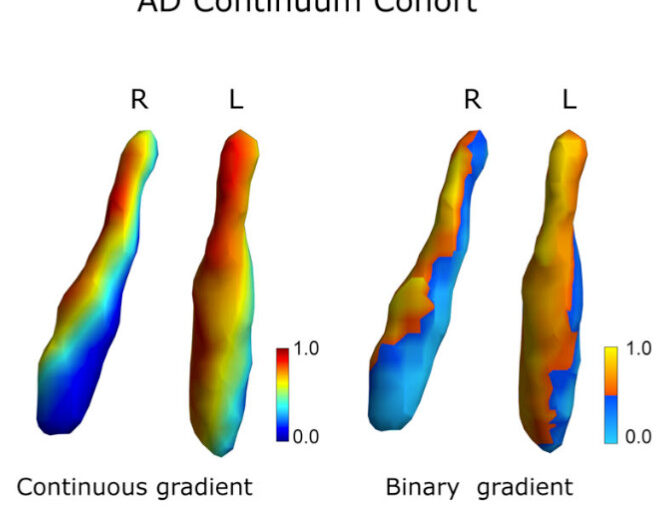
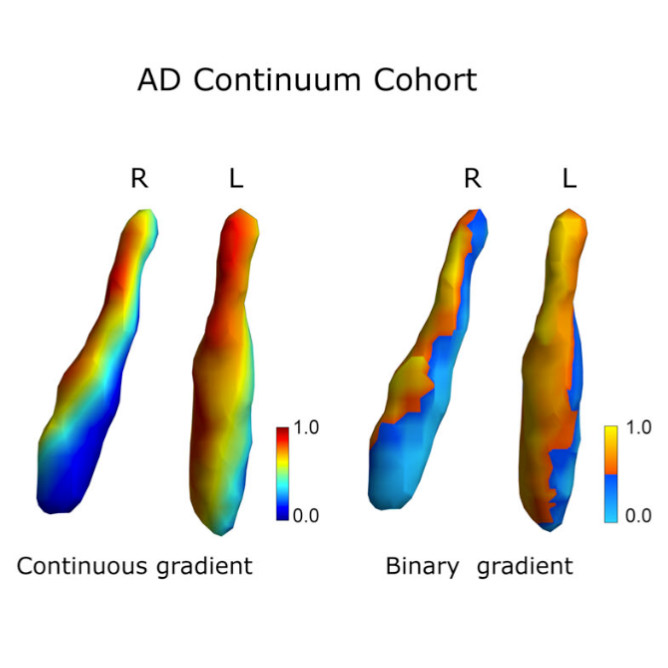
- Revealed a novel dorsal–ventral organization LC connectivity that presents changes common to aging and AD or specific to AD.
- LC connectivity patterns are associated with cognitive performance and tau pathology in the entorhinal cortex.
- We introduced a novel marker capturing LC connectivity deviations and that is associated with tau accumulation in cognitively normal individuals at high risk for AD.