Colloquium by G. Volpe at ICF, Cuernavaca, 13 Feb 2019

Emergent Complex Behaviour in Active Matter
Giovanni Volpe
Colloquium at Instituto de Ciencias Físicas
Cuernavaca, Morelos, Mexico
13 February 2019

After a brief introduction of active particles, I’ll present some recent advances on the study of active particles in complex and crowded environments.
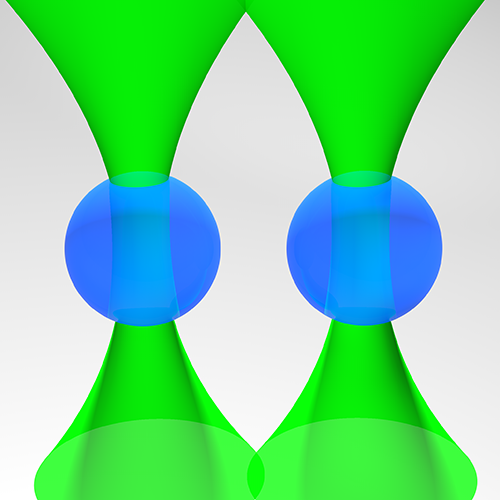
First, I’ll show that active particles can work as microswimmers and microengines powered by critical fluctuations and controlled by light.
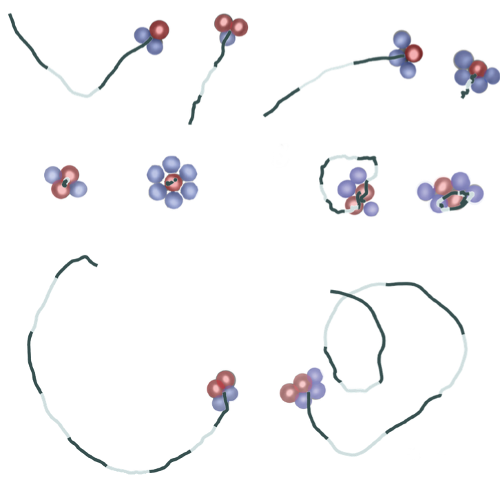
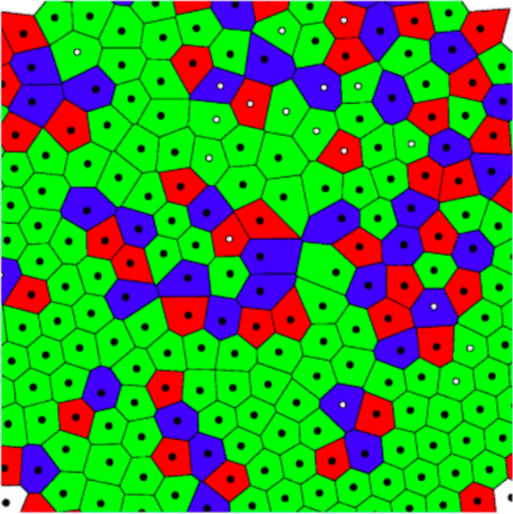
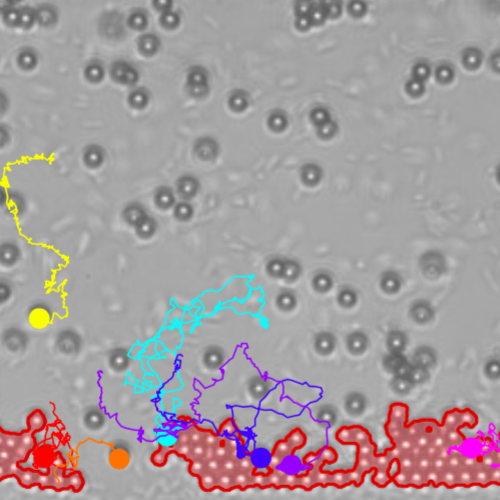
Then, I’ll discuss some examples of behavior of active particles in crowded environments: a few active particles alter the overall dynamics of a system; active particles create metastable clusters and channels; active matter leads to non-Boltzmann distributions and alternative non-equilibrium relations; and active colloidal molecules can be created and controlled by light.
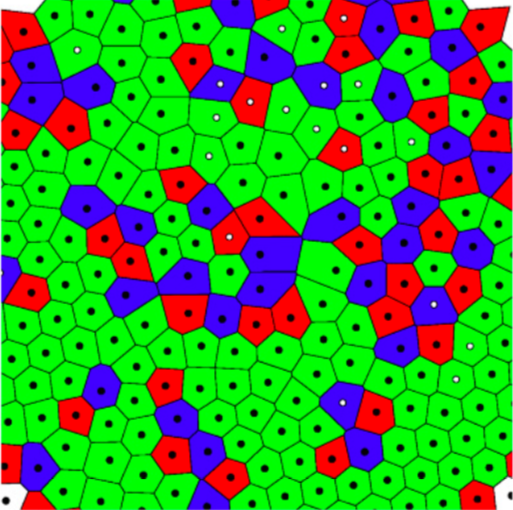
Finally, I’ll present some examples of the behavior of active particles in complex environments: active particles often perform 2D active Brownian motion; active particles at liquid-liquid interfaces behave as active interstitials or as active atoms; and the environment alters the optimal search strategy for active particles in complex topologies.

https://www.fis.unam.mx/coloquios/473/qemergent-complex-behaviour-in-active-matterq

Giovanni Volpe on the Panel on the 2018 Nobel Prize in Physics, Stockholm, 7 Dec 2018

Panel on the 2018 Nobel Prize in Physics
Friday, December 7, 15:00 – 18:00
Oscar Klein hall, Albanova, Roslagstullsbacken 21, Stockholm

Albanova, Stockholm’s center for Physics, Astronomy and Biotechnology cordially organizes a panel discussion about this year’s Nobel Prize in Physics, followed by a social gathering with drinks and snacks.

Panel Members:
Felix Ritort, University of Barcelona
Cord Arnold, Lunds University
Giovanni Volpe, Göteborg University
Valdas Pasiskevicius, KTH Royal Institute of Technology

Moderator:
Eva Lindroth, Stockholms University

https://www.fysik.su.se/om-oss/evenemang/the-2018-nobel-prize-in-physics-1.415146

Here is the direct videolink:
http://video.albanova.se/ALBANOVA20181207/video.mp4  (817MB)

The event web-page is at:
http://video.albanova.se/arc2018_32.html

FORMA – Enhanced Optical Tweezers Calibration published in Nature Commun.

High-Performance Reconstruction of Microscopic Force Fields from Brownian Trajectories

High-Performance Reconstruction of Microscopic Force Fields from Brownian Trajectories
Laura Pérez García, Jaime Donlucas Pérez, Giorgio Volpe, Alejandro V. Arzola & Giovanni Volpe
Nature Communications 9, 5166 (2018)
doi: 10.1038/s41467-018-07437-x
arXiv: 1808.05468

The accurate measurement of microscopic force fields is crucial in many branches of science and technology, from biophotonics and mechanobiology to microscopy and optomechanics. These forces are often probed by analysing their influence on the motion of Brownian particles. Here we introduce a powerful algorithm for microscopic force reconstruction via maximum-likelihood-estimator analysis (FORMA) to retrieve the force field acting on a Brownian particle from the analysis of its displacements. FORMA estimates accurately the conservative and non-conservative components of the force field with important advantages over established techniques, being parameter-free, requiring ten-fold less data and executing orders-of-magnitude faster. We demonstrate FORMA performance using optical tweezers, showing how, outperforming other available techniques, it can identify and characterise stable and unstable equilibrium points in generic force fields. Thanks to its high performance, FORMA can accelerate the development of microscopic and nanoscopic force transducers for physics, biology and engineering.

See also freeware software at 10.6084/m9.figshare.7181888

Featured in:
Optimerad optisk pincett, Forskning.se

Short course by G. Volpe at Imaging in Neurosciences, Karolinska Institute, Stockholm, 29 Nov 2018

Lectures Graph theory concepts and Hands-on practice (Graph theory) by Giovanni Volpe within the graduate course Imaging in Neuroscience: With a focus on structural MRI methods organised by Karolinska Institute.

Venue: Alfred Nobels allé 23, room 317, campus Huddinge (Flemingsberg), Stockholm

Phototactic Robot Tunable by Sensorial Delays published in Phys. Rev. E

Phototactic Robot Tunable by Sensorial Delays

Tuning phototactic robots with sensorial delays (Editors’ suggestion)
Maximilian Leyman, Freddie Ogemark, Jan Wehr & Giovanni Volpe
Physical Review E 98(26), 052606 (2018)
DOI: 10.1103/PhysRevE.98.052606
arXiv: 1807.11765

The presence of a delay between sensing and reacting to a signal can determine the long-term behavior of autonomous agents whose motion is intrinsically noisy.
In a previous work [M. Mijalkov, A. McDaniel, J. Wehr, and G. Volpe, Phys. Rev. X 6, 011008 (2016)], we have shown that sensorial delay can alter the drift and the position probability distribution of an autonomous agent whose speed depends on the illumination intensity it measures. Here, using theory, simulations, and experiments with a phototactic robot, we generalize this effect to an agent for which both speed and rotational diffusion depend on the illumination intensity and are subject to two independent sensorial delays. We show that both the drift and the probability distribution are influenced by the presence of these sensorial delays. In particular, the radial drift may have positive as well as negative sign, and the position probability distribution peaks in different regions depending on the delay.
Furthermore, the presence of multiple sensorial delays permits us to explore the role of the interaction between them.

Talk by G. Volpe at LAOP, Lima, 13 Nov 2018

Microscopic Engine Powered by Critical Demixing
Falko Schmidt, Alessandro Magazzù, Agnese Callegari, Luca Biancofiore, Frank Cichos & Giovanni Volpe
LAOP – Latin America Optics & Photonics Congress, Lima, Peru
12-15 November 2018

Abstract: An optically trapped absorbing microsphere in a sub-critical mixture rotates around the optical trap thanks to diffusiophoretic propulsion, which can be controlled by adjusting the optical power, the temperature, and the criticality of the mixture.

Giovanni Volpe New Docent in Physics

From the article New Docent in Physics (English) and Ny docent i fysik (Swedish)

Three questions for Giovanni Volpe, appointed Docent in Physics at the Faculty of Science, University of Gothenburg.

Interview by: Linnéa Magnusson
Photo by: Malin Arnesson

What is your research about?

“I am conducting research in several different areas. Part of my work concerns artificial micro swimmers. In simple terms, this is about biological and artificial objects of microscopic size that can get around by themselves and counteract microorganisms. Research on micro swimmers involves many possibilities within basic science, nanoscience and nanotechnology.

“I am collaborating with Karolinska Institutet on a project that deals with neurodegenerative diseases such as Alzheimer’s, Parkinson’s and ALS (amyotrophic lateral sclerosis). We have developed software that serves as a toolkit, helping us to detect these diseases at an early stage.

“Another project deals with optical trapping and optical manipulation. Using optical tweezers, I can measure microscopic forces, for example.

“Finally, I am also working on a project that involves managing the challenges of condensed matter physics – in other words, matter and processes at the atomic level. With the help of machine learning, we can handle complex algorithms.”

What can society learn from your research?

“I hope that our work with micro swimmers can become a foundation on which we can build, so that in the future we can use them in real life. For example, this could involve cleaning contaminated soil or developing what are known as chiral drugs – medications that are more selective and more controllable and that have fewer side effects. It is to be hoped that our work in neuroscience will lead us to quickly detect and treat neurodegenerative diseases.”

What do you think is most exciting about the future?

“What is most exciting is the possibility of using artificial intelligence to solve physical and medical problems. In the future we will go from people developing and testing ideas to have data and systems under investigation speak for themselves.

Tre frågor till Giovanni Volpe som antagits som oavlönad docent i fysik vid Naturvetenskapliga fakulteten, Göteborgs universitet.

Vad handlar din forskning om?

– Jag forskar inom flera olika områden. En del i mitt arbete handlar om konstgjorda ”micro swimmers”. Förenklat så handlar det om biologiska och artificiella föremål i mikroskopisk storlek som kan ta sig fram själva och motverka mikroorganismer. Forskning om ”Micro Swimmers” innebär en mängd möjligheter inom grundvetenskap, nanovetenskap och nanoteknik.

– Jag samarbetar med Karolinska Institutet inom ett projekt som handlar om neurodegenerativa sjukdomar, som Alzheimers sjukdom, Parkinsons sjukdom och ALS. Vi har utvecklat en programvara som fungerar som en verktygslåda, som hjälper oss att tidigt upptäckta dessa sjukdomar.

– Ett annat projekt handlar om optisk fångst och optisk manipulation. Med hjälp av optiska pincetten kan jag exempelvis mäta mikroskopiska krafter.

– Till sist arbetar jag även med ett projekt som handlar om att hantera utmaningar med den kondenserade materiens fysik, alltså materia och processer på atomär nivå. Till hjälp har vi inlärningsmaskiner som kan hantera komplexa algoritmer.

Vad kan samhället lära av din forskning?

– Jag hoppas att arbetet med ”Micro swimmers ” kan bli en grund att bygga vidare på. Så att vi i framtiden kan använda ”Micro swimmers ” i verkliga livet. Det kan exempelvis handla om att kunna rengöra förorenad jord eller utveckla så kallade kirala läkemedel, det vill säga mediciner som är både mer selektiva, mer styrbara och har mindre biverkningar. Arbetet inom neurovetenskap kommer förhoppningsvis leda till att vi snabbt kan upptäcka och behandla neurodegenerativa sjukdomar.

Vad tycker du är mest spännande i framtiden?

– Det som är mest spännande är möjligheten att använda artificiell intelligens för att lösa fysiska och medicinska problem. I framtiden kommer vi att gå från att det är människor som utvecklar och testar idéer till att det är datorer och system som kommer att undersöka och analysera varandra.

Tutorial by G. Volpe and A. Callegari on Optical Tweezers at LAOP, Lima, 12 Nov 2018

Optical Trapping and Optical Manipulation
Giovanni Volpe & Agnese Callegari
Tutorial at LAOP – Latin America Optics & Photonics Congress, Lima, Peru
12-15 November 2018

Description: This course will review the theoretical underpinnings of optical trapping and optical manipulation; a review of recent applications; and provide a hands-on tutorial on the use of computational methods to simulate optical trapping and the motion of optically trapped particles.

Time: 09:00 – 13:00
Location: INICTEL-UNI, Lima, Peru

Linkhttps://www.osa.org/en-us/meetings/topical_meetings/osa_latin_america_optics_photonics_conference/program/short_courses_and_tutorials_on_monday_12_november/

Talk by G. Volpe at SPIE OTOM XV, San Diego, 23 Aug 2018

Microscopic Engine Powered by Critical Demixing
Falko Schmidt, Alessandro Magazzù, Agnese Callegari, Luca Biancofiore, Frank Cichos & Giovanni Volpe
SPIE Nanoscience + Engineering, Optical trapping and Optical Manipulation XV, San Diego (CA), USA
19-23 August 2018

During the last few decades much effort has gone into the miniaturization of machines down to the microscopic scale with robotic solutions indispensable in modern industrial processes and play a central role in many biological systems. There has been a quest in understanding the mechanism behind molecular motors and several approaches have been proposed to realize artificial engines capable of converting energy into mechanical work. These current micronsized engines depend on the transfer of angular momentum of light, are driven by external magnetic fields, due to chemical reactions or by the energy flow between two thermal reservoirs. Here we propose a new type of engine that is powered by the local, reversible demixing of a critical binary liquid. In particular, we show that an absorbing, optically trapped particle performs revolutions around the optical beam because of the emergence of diffusiophoresis and thereby produces work. This engines is adjustable by the optical power supplied, the temperature of the environment and the criticality of the system.

Reference: Schmidt et al., Phys. Rev. Lett. 120(6), 068004 (2018) DOI: 10.1103/PhysRevLett.120.068004

Stability of Brain Graph Measures published in Sci. Rep.

Stability of graph theoretical
measures in structural brain
networks in Alzheimer’s disease

Stability of graph theoretical measures in structural brain networks in Alzheimer’s disease
Gustav Mårtensson, Joana B. Pereira, Patrizia Mecocci, Bruno Vellas, Magda Tsolaki, Iwona Kłoszewska, Hilkka Soininen, Simon Lovestone, Andrew Simmons, Giovanni Volpe & Eric Westman
Scientific Reports 8, 11592 (2018)
DOI: 10.1038/s41598-018-29927-0

Graph analysis has become a popular approach to study structural brain networks in neurodegenerative disorders such as Alzheimer’s disease (AD). However, reported results across similar studies are often not consistent. In this paper we investigated the stability of the graph analysis measures clustering, path length, global efficiency and transitivity in a cohort of AD (N = 293) and control subjects (N = 293). More specifically, we studied the effect that group size and composition, choice of neuroanatomical atlas, and choice of cortical measure (thickness or volume) have on binary and weighted network properties and relate them to the magnitude of the differences between groups of AD and control subjects. Our results showed that specific group composition heavily influenced the network properties, particularly for groups with less than 150 subjects. Weighted measures generally required fewer subjects to stabilize and all assessed measures showed robust significant differences, consistent across atlases and cortical measures. However, all these measures were driven by the average correlation strength, which implies a limitation of capturing more complex features in weighted networks. In binary graphs, significant differences were only found in the global efficiency and transitivity measures when using cortical thickness measures to define edges. The findings were consistent across the two atlases, but no differences were found when using cortical volumes. Our findings merits future investigations of weighted brain networks and suggest that cortical thickness measures should be preferred in future AD studies if using binary networks. Further, studying cortical networks in small cohorts should be complemented by analyzing smaller, subsampled groups to reduce the risk that findings are spurious.