News

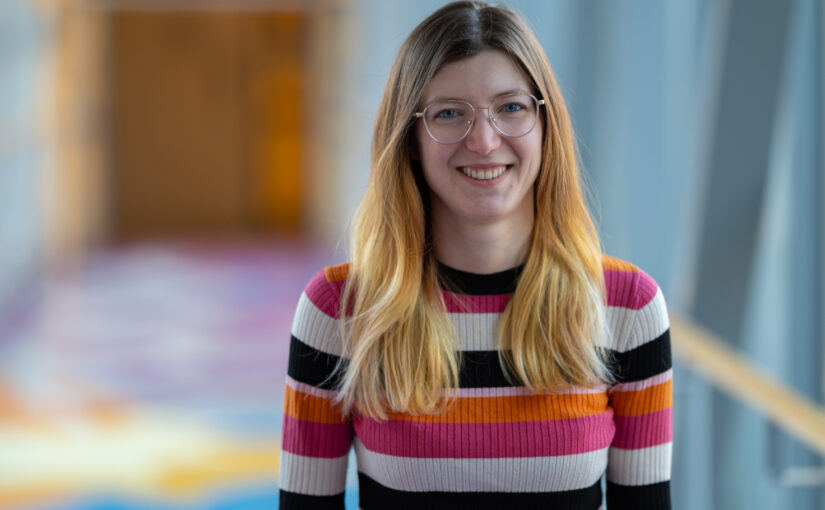
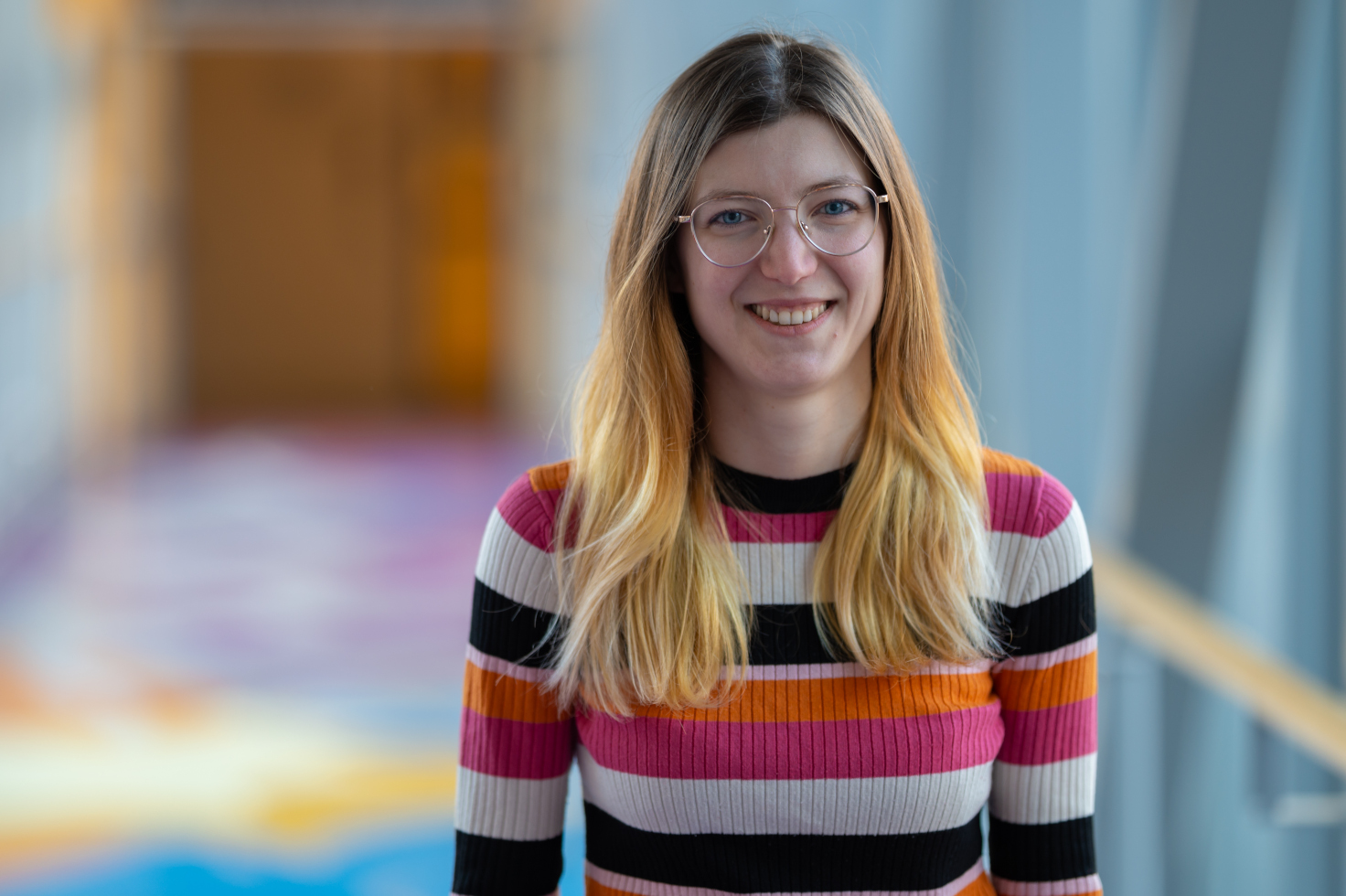
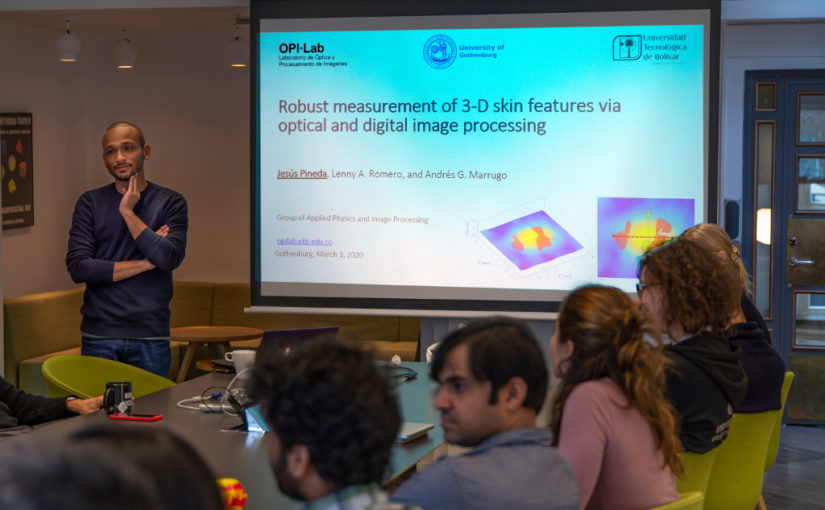
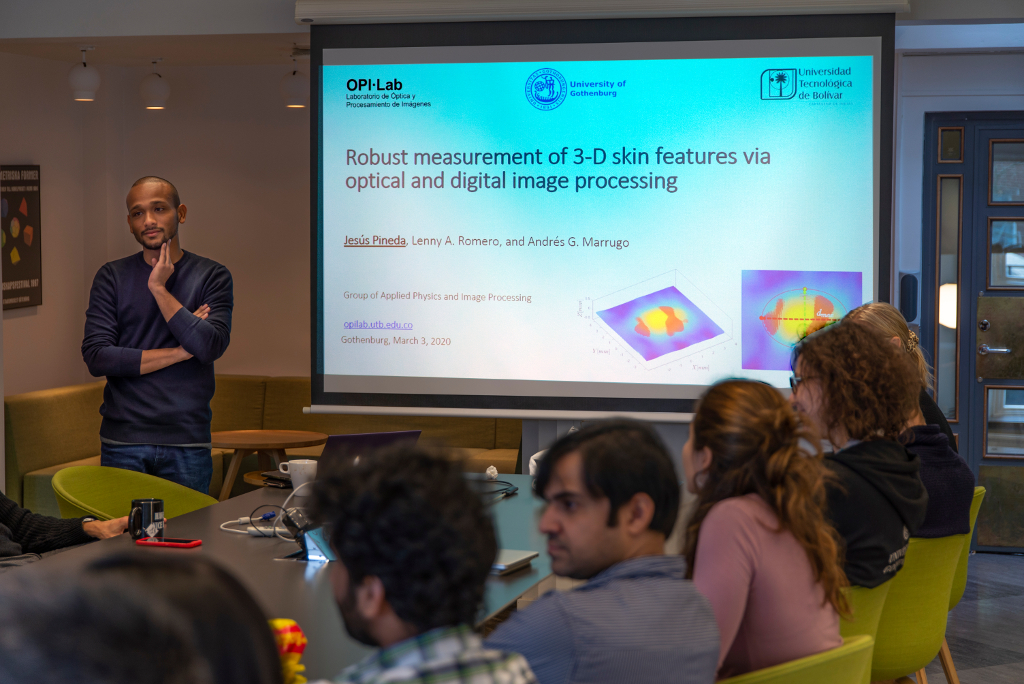
Seminar on Robust automated reading of the skin prick test via 3D imaging and parametric surface fitting by Jesús Pineda from Universidad Tecnologica de Bolivar, Nexus, 3 March 2020

Robust automated reading of the skin prick test via 3D imaging and parametric surface fitting.
Seminar by Jesús Pineda from the Universidad Tecnologica de Bolivar, Cartagena, Colombia.

The conventional reading of the skin prick test (SPT) for diagnosing allergies is prone to inter- and intra-observer variations. Drawing the contours of the skin wheals from the SPT and scanning them for computer processing is cumbersome. However, 3D scanning technology promises the best results in terms of accuracy, fast acquisition, and processing. In this work, we present a wide-field 3D imaging system for the 3D reconstruction of the SPT, and we propose an automated method for the measurement of the skin wheals. The automated measurement is based on pyramidal decomposition and parametric 3D surface fitting for estimating the sizes of the wheals directly. We proposed two parametric models for the diameter estimation. Model 1 is based on an inverted Elliptical Paraboloid function, and model 2 on a super-Gaussian function. The accuracy of the 3D imaging system was evaluated with validation objects obtaining transversal and depth accuracies within ± 0.1 mm and ± 0.01 mm, respectively. We tested the method on 80 SPTs conducted in volunteer subjects, which resulted in 61 detected wheals. We analyzed the accuracy of the models against manual reference measurements from a physician and obtained that the parametric model 2 on average yields diameters closer to the reference measurements (model 1: -0.398 mm vs. model 2: -0.339 mm) with narrower 95% limits of agreement (model 1: [-1.58, 0.78] mm vs. model 2: [-1.39, 0.71] mm) in a Bland-Altman analysis. In one subject, we tested the reproducibility of the method by registering the forearm under five different poses obtaining a maximum coefficient of variation of 5.24% in the estimated wheal diameters. The proposed method delivers accurate and reproducible measurements of the SPT [1].

References:

  1. Jesus Pineda, Raul Vargas, Lenny A. Romero, Javier Marrugo, Jaime Meneses & Andres G. Marrugo (2019) Robust automated reading of the skin prick test via 3D imaging and parametric surface fitting. PLOS ONE 14(10), e0223623.

Place: Nexus room, Fysik Origo, Fysik
Time: 03 March, 2020, 11:00

Yu-Wei Chang visits the Soft Matter Lab. Welcome!

Yu-Wei Chang is an engineer at the Digital Medicine Center at National Yang-Ming University in Taiwan, working on a machine learning approach for phenotyping psychiatric disorders.
He will visit us for 2 months from February 29, 2020, to April 30, 2020, and he will be working on deep learning for Alzheimer’s Disease as well as the development of BRAPH 2.0 (March-April 2020).

The AnDi challenge: an “anomalous” competition

Logo of the AnDi challenge.

Researchers from ICFO, UVic, Gothenborg University, Politecnica de Valencia and Potsdam University organize the AnDi challenge, a physics challenge to address Brownian motion and Anomalous diffusion.

Brownian motion was first observed in 1827 by Robert Brown: pollen grains suspended in water show a characteristic erratic motion. Almost 80 years after, Albert Einstein provided a theoretical foundation for the Brownian motion. Though the Brownian motion is observed in many different systems, significant deviations from it have also been observed, starting from biological systems to economics.

The deviation from Brownian motion is indicated with the term Anomalous diffusion. It is connected to non-equilibrium phenomena, complex environments, flows of energy and information, and transport in living systems. To understand the nature of such systems one must correctly identify the physical origin of the anomalous diffusion, and correctly characterize it, through the calculation of its properties. A simple data analysis of trajectories, though, often provides limited information, in particular when the trajectories are either short, or noisy, or irregularly sampled, or featuring mixed behaviors. Several methods going beyond the calculation of classical estimators have been proposed, in the last years, to quantify anomalous diffusion.

The AnDi challenge has been thought as a competition to test these methods as well as other alternative approaches, by bringing together the scientific community currently working on the quantification of the anomalous diffusion.

The use of the same reference datasets will allow an unbiased assessment of the performance of published and unpublished methods for characterizing anomalous diffusion from single trajectories. Participants can submit the results of their analysis on the internet until November 1st, 2020. These results will be then automatically scored and ranked among all competitors.

In addition to the main objective of the AnDi Challenge, the top-ranked participants will be invited to present their results in a workshop held at ICFO, in Barcelona, on February 17-20, 2021.

Organizers:

Website: www.andi-challenge.org

Codalab: https://competitions.codalab.org/competitions/23601

e-mail: andi.challenge@gmail.com

twitter: @AndiChallenge

Laura Natali joins the Soft Matter Lab

Laura Natali starts her PhD at the Physics Department of the University of Gothenburg on 1st March 2020.

Laura has a Master degree in Physics, curriculum in Physics of Biosystems, from the University of Rome “La Sapienza”, where he submitted a Master thesis whose results can be found here.

In her PhD, she will focus on microswimmers and active polymers employing machine learning techniques.

Anisotropic dynamics of a self-assembled colloidal chain in an active bath on ArXiv

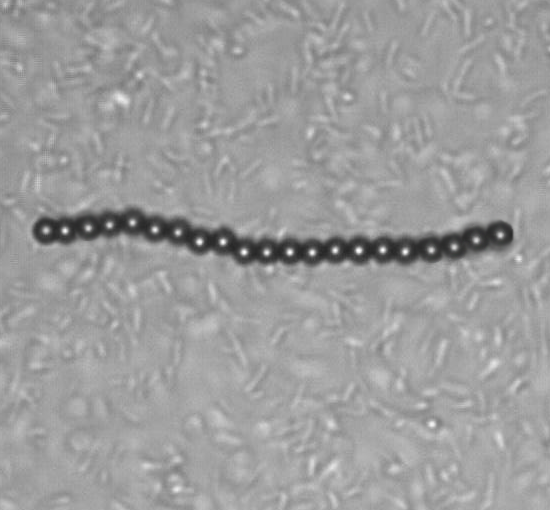
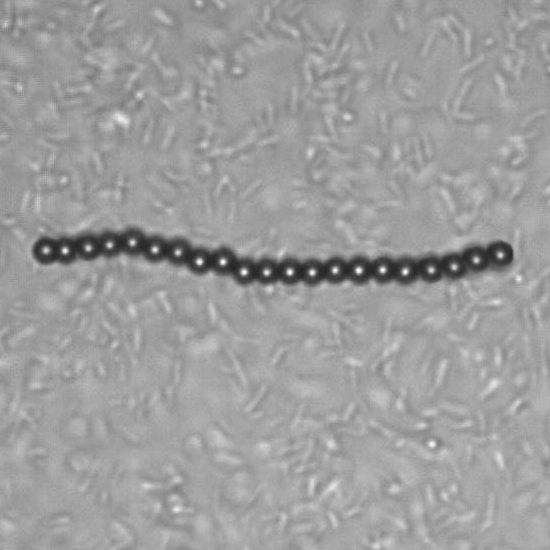
Bright-field microscopy image of a magnetic chain trapped at the liquid-air interface in a bacterial bath

Anisotropic dynamics of a self-assembled colloidal chain in an active bath
Mehdi Shafiei Aporvari, Mustafa Utkur, Emine Ulku Saritas, Giovanni Volpe & Joakim Stenhammar
arXiv: 2002.09961

Anisotropic macromolecules exposed to non-equilibrium (active) noise are very common in biological systems, and an accurate understanding of their anisotropic dynamics is therefore crucial. Here, we experimentally investigate the dynamics of isolated chains assembled from magnetic microparticles at a liquid-air interface and moving in an active bath consisting of motile E. coli bacteria. We investigate both the internal chain dynamics and the anisotropic center-of-mass dynamics through particle tracking. We find that both the internal and center-of-mass dynamics are greatly enhanced compared to the passive case, and that the center-of-mass diffusion coefficient D features a non-monotonic dependence as a function of the chain length. Furthermore, our results show that the relationship between the parallel and perpendicular components of D is preserved in the active bath compared to the passive case, with a higher diffusion parallel to the chain direction, in contrast to previous findings in the literature. We argue that this qualitative difference is due to subtle differences in the experimental geometry and conditions and the relative roles played by long-range hydrodynamic interactions and short-range collisions.

Shaping the future of machine learning for active matter

Machine learning has proven to be very useful for the study of active matter, a collective term referring to things like cells and microorganisms. The field is quite new and growing fast. In an attempt to inspire more researchers to try the methods a group of scientists have published a paper in prestigious publication Nature Machine Intelligence reviewing what has been accomplished so far – and what lies ahead. Continue reading (English)

Press release:
Shaping the future of machine learning for active matter (In English)
Formar framtiden för AI-forskning på aktiv materia (In Swedish)

Article:
Machine learning for active matter

Invited talks by G. Volpe and A. Magazzù at “SPACE Tweezers” Kick-off Meeting, Messina, Italy, 18-19 February 2020

Alessandro Magazzù and Giovanni Volpe will give invited presentations at the Kick-off meeting of SPACE Tweezers (Spectroscopy of Planetary and AtmospheriC particulatE by optical Tweezers).

SPACE Tweezers proposes research activities to trap and characterise spectroscopically extraterrestrial particles and their analogs. The opportunity to apply optical tweezers to planetary particulate matter can pave the way for space applications for in situ analyses and/or for sample return of particles in pristine conditions, i.e. preventing contamination and alteration, unlike collection methods so far used in space exploration.

The meeting, organised by Maria Grazia Donato, Pietro Guicciardi, Maria Antonia Iatì, and Onofrio M. Maragò, will take place at CNR-IPCF, Messina, on 18-19 February 2020.

The contributions of Giovanni Volpe and Alessandro Magazzù will be presented  according to the following schedule:

Giovanni Volpe
Optical Tweezers Activities in Gothenburg
Date: 19 February 2020
Time: 10:55 CET

Alessandro Magazzù
Controlling the Dynamics of Colloidal Particles by Critical Casimir Forces using Blinking Optical Tweezers
Date: 19 February 2020
Time: 11:20 CET


Delayed correlations improve the reconstruction of the brain connectome published on PLoS ONE

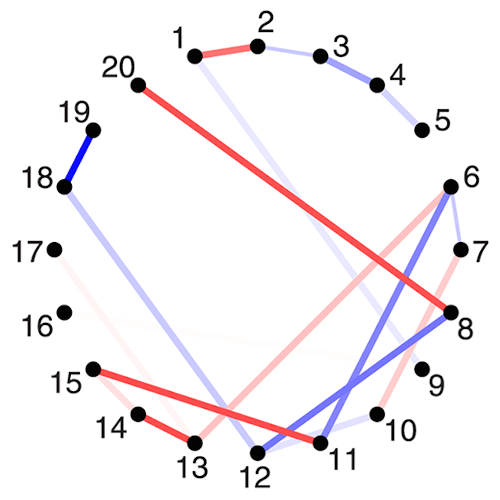
Example of a weighted small-world structural network.

Delayed correlations improve the reconstruction of the brain connectome
Mite Mijalkov, Joana B. Pereira & Giovanni Volpe
PLoS ONE 15(2), e0228334 (2020)
doi: https://doi.org/10.1371/journal.pone.0228334

The brain works as a large-scale complex network, known as the connectome. The strength of the connections between two brain regions in the connectome is commonly estimated by calculating the correlations between their patterns of activation. This approach relies on the assumption that the activation of connected regions occurs together and at the same time. However, there are delays between the activation of connected regions due to excitatory and inhibitory connections. Here, we propose a method to harvest this additional information and reconstruct the structural brain connectome using delayed correlations. This delayed-correlation method correctly identifies 70% to 80% of connections of simulated brain networks, compared to only 5% to 25% of connections detected by the standard methods; this result is robust against changes in the network parameters (small-worldness, excitatory vs. inhibitory connection ratio, weight distribution) and network activation dynamics. The delayed-correlation method predicts more accurately both the global network properties (characteristic path length, global efficiency, clustering coefficient, transitivity) and the nodal network properties (nodal degree, nodal clustering, nodal global efficiency), particularly at lower network densities. We obtain similar results in networks derived from animal and human data. These results suggest that the use of delayed correlations improves the reconstruction of the structural brain connectome and open new possibilities for the analysis of the brain connectome, as well as for other types of networks.

Machine learning for active matter published on Nature Machine Intelligence

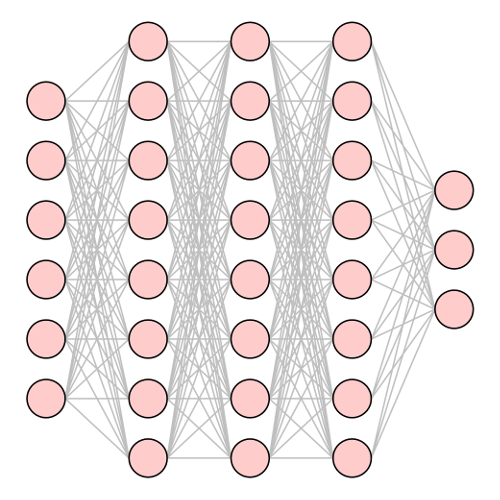
Neural net with input layer (left), dense internal layers, and output layer (right).

Machine learning for active matter
Frank Cichos, Kristian Gustavsson, Bernhard Mehlig & Giovanni Volpe
Nature Machine Intelligence 2(2), 94–103 (2020)
doi: https://doi.org/10.1038/s42256-020-0146-9

The availability of large datasets has boosted the application of machine learning in many fields and is now starting to shape active-matter research as well. Machine learning techniques have already been successfully applied to active-matter data—for example, deep neural networks to analyse images and track objects, and recurrent nets and random forests to analyse time series. Yet machine learning can also help to disentangle the complexity of biological active matter, helping, for example, to establish a relation between genetic code and emergent bacterial behaviour, to find navigation strategies in complex environments, and to map physical cues to animal behaviours. In this Review, we highlight the current state of the art in the application of machine learning to active matter and discuss opportunities and challenges that are emerging. We also emphasize how active matter and machine learning can work together for mutual benefit.