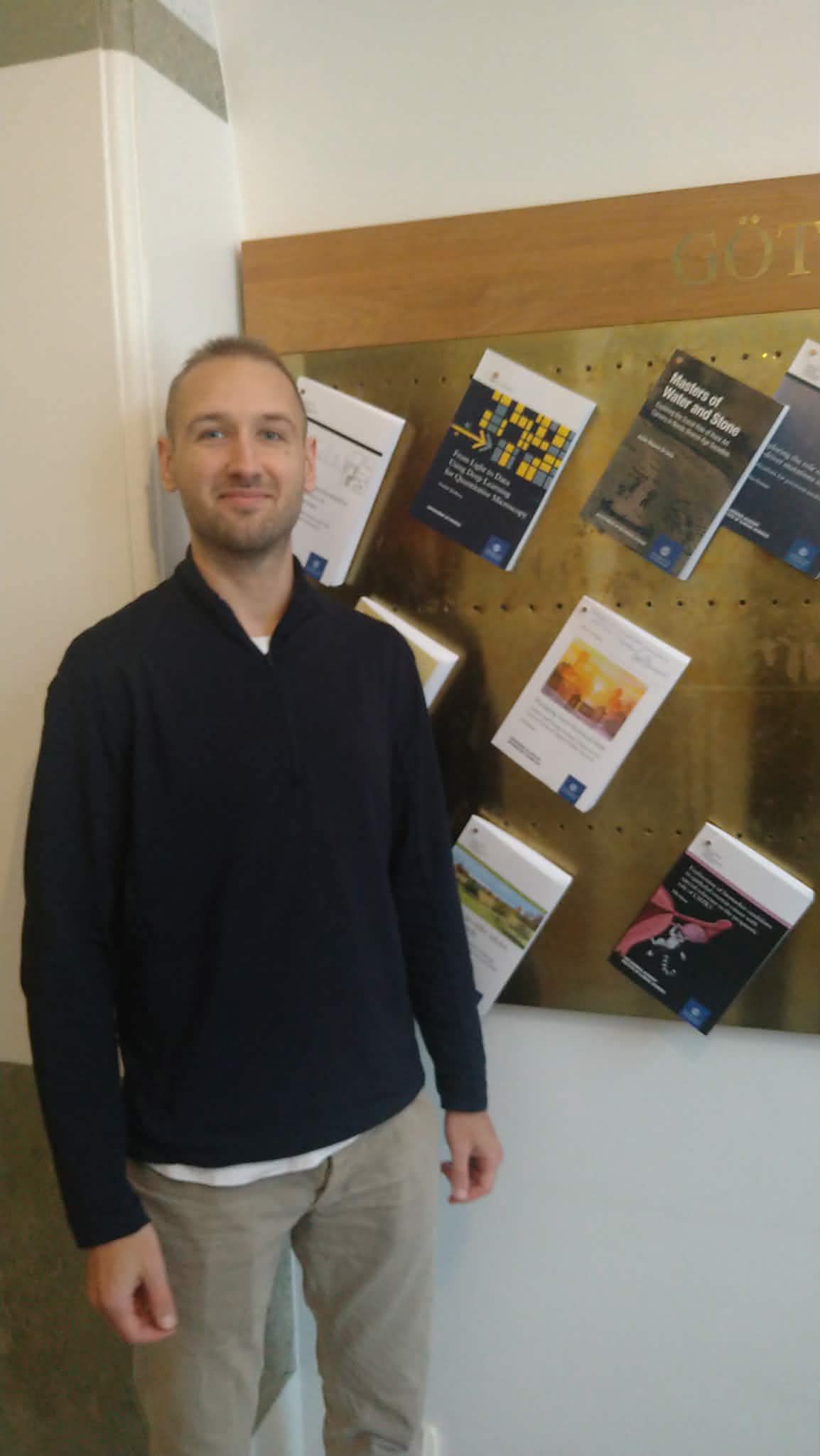
Fredrik will defend his thesis on 29 January at 09:00 in FB-salen, Institutionen för fysik, Origovägen 6, Göteborg.
Fredrik will defend his thesis on 29 January at 09:00 in FB-salen, Institutionen för fysik, Origovägen 6, Göteborg.
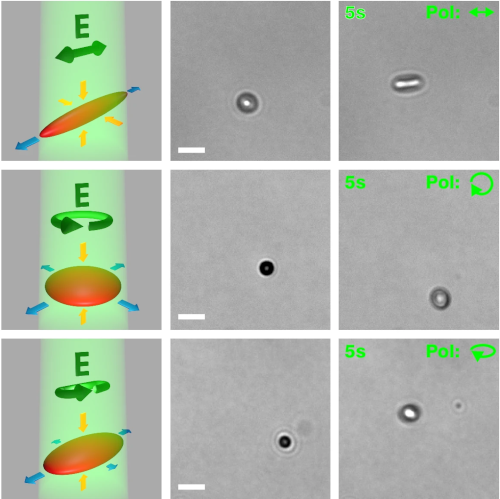
David Urban, Marcel Rey, Antonio Ciarlo, Marie Friederike Schulte, Emiliano Descrovi & Giovanni Volpe
Nature Communications 17, 1004 (2026)
doi: 10.1038/s41467-025-67739-9
Colloidal particles at liquid interfaces experience long-ranged capillary interactions, whose magnitude and directionality depend on the particle shapes. When particle shapes are determined by fabrication or synthesis, the resulting shape-mediated interactions are predefined and often lead to the formation of persistent interfacial structures. Here, we introduce polymer particles at water-air interfaces whose shape and, therefore, interactions can be altered by illumination with polarized light. Specifically, we selectively trigger capillary self-assembly by anisotropically deforming the particles at the interface. Intriguingly, further deformation of already assembled particles induces sustained interfacial flows with velocities of up to 90 μm/s. Benefitting from polarization-defined deformation directions, we create flow-patterns that do not simply follow the illumination intensity pattern, such as shear flows along a single rectangular illumination stripe. We anticipate that this interplay between photo-deformation and capillary interactions of particles will enable various forms of mixing, manipulation, and assembly of soft matter at liquid interfaces.
Jesus Pineda defended his PhD thesis on November 11th, 2025. Congrats!
The defense took place in SB-H7 lecture hall, Institutionen för fysik, Johanneberg Campus, Göteborg, at 9:00.
Title: Inductive Biases for Efficient Deep Learning in Microscopy
Abstract: Deep learning has become an indispensable tool for the analysis of microscopy data, yet its integration into routine research remains uneven. Several factors contribute to this gap, including the limited availability of well-annotated datasets and the high computational demands of modern architectures. Microscopy introduces further challenges, as it spans diverse modalities and scales, from proteins to tissues, producing heterogeneous data that defy standardization. Generating reliable annotations also requires expertise and time, while unequal access to high-performance computing further widens the divide between well-resourced institutions and smaller laboratories.
This dissertation argues that the prevailing paradigm of scaling models with ever-larger datasets and computational resources yields diminishing returns for microscopy. Instead, it explores the role of inductive biases as a foundation for building models that are more data-efficient, computationally accessible, and scientifically meaningful. Inductive biases are structural assumptions embedded in model design that guide learning toward patterns aligned with the underlying problem. The first part of this work examines their central role in the advancement of modern deep learning and the diverse ways they shape model behavior.
This potential is demonstrated through three case studies. First, MAGIK employs graph neural networks to analyze biological dynamics in time-lapse microscopy, uncovering local and global properties with high precision, even when trained on limited data. Next, MIRO leverages recurrent graph neural networks to process single-molecule localization datasets, improving the efficiency and reliability of clustering for variable biological structures and scales while retaining strong generalization with minimal supervision. Finally, GAUDI introduces a representation learning framework for characterizing biological systems, providing a physically meaningful representation space for interpretable and transferable analysis.
The findings presented here demonstrate that the integration of inductive biases provides a cohesive strategy to extend the reach of deep learning in the life sciences, enhancing accessibility and ensuring scientific utility under resource constraints.
Thesis: https://gupea.ub.gu.se/items/672c7946-51d6-4773-ad8c-35a3eed41499
Supervisor: Giovanni Volpe
Co-Supervisor: Carlo Manzo
Examiner: Raimund Feifel
Opponent: Anna Kreshuk
Committee: Juliette Griffié, Daniel sage, Daniel Persson
Alternate board member: Jonas Enger
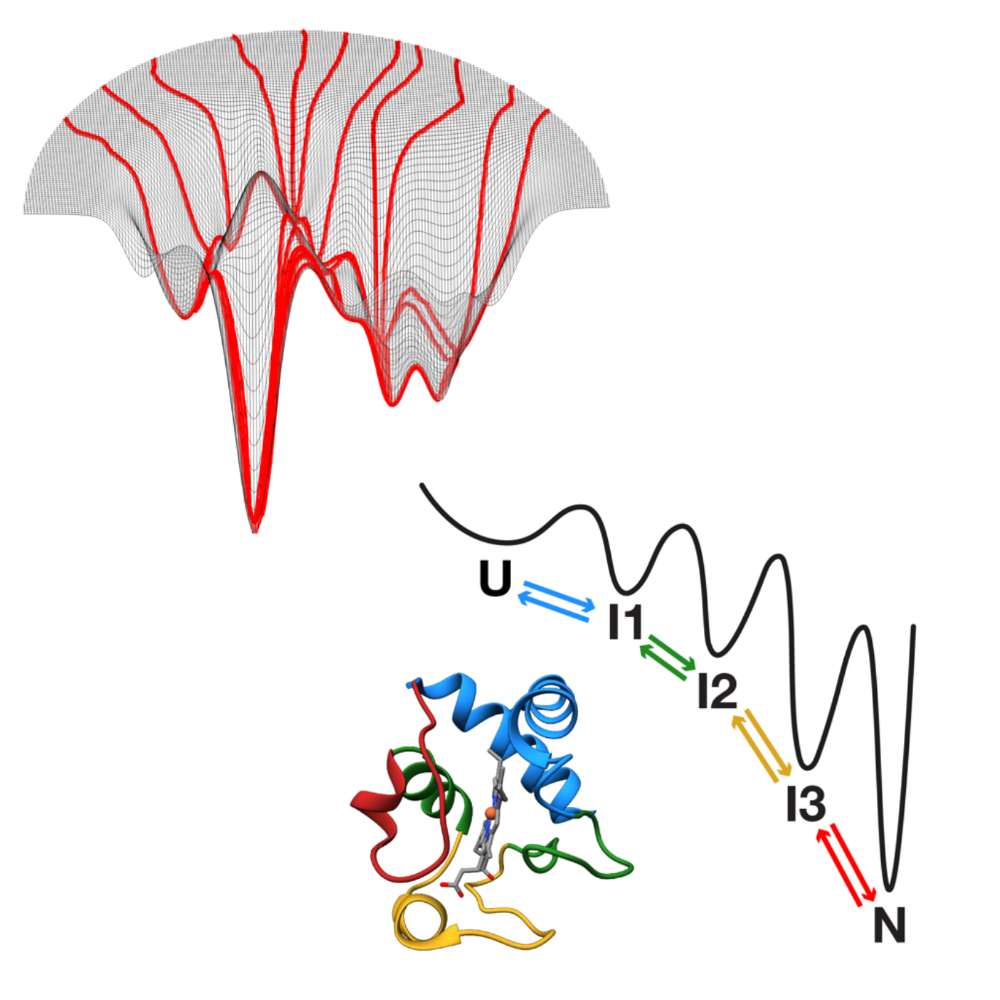
Carlos Bustamante, Christian Kaiser, Erik Lindahl, Robert Sosa, Giovanni Volpe
arXiv: 2510.27074
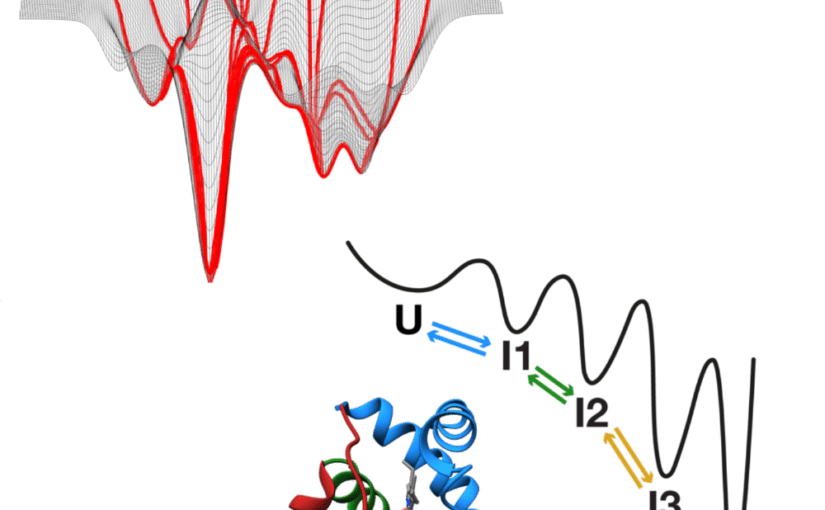
How proteins fold remains a central unsolved problem in biology. While the idea of a folding code embedded in the amino acid sequence was introduced more than 6 decades ago, this code remains undefined. While we now have powerful predictive tools to predict the final native structure of proteins, we still lack a predictive framework for how sequences dictate folding pathways. Two main conceptual models dominate as explanations of folding mechanism: the funnel model, in which folding proceeds through many alternative routes on a rugged, hyperdimensional energy landscape; and the foldon model, which proposes a hierarchical sequence of discrete intermediates. Recent advances on two fronts are now enabling folding studies in unprecedented ways. Powerful experimental approaches; in particular, single-molecule force spectroscopy and hydrogen (deuterium exchange assays) allow time-resolved tracking of the folding process at high resolution. At the same time, computational breakthroughs culminating in algorithms such as AlphaFold have revolutionized static structure prediction, opening opportunities to extend machine learning toward dynamics. Together, these developments mark a turning point: for the first time, we are positioned to resolve how proteins fold, why they misfold, and how this knowledge can be harnessed for biology and medicine.

Jesus Manuel Antúnez Domínguez, Laura Pérez García, Natsuko Rivera-Yoshida, Jasmin Di Franco, David Steiner, Alejandro V. Arzola, Mariana Benítez, Charlotte Hamngren Blomqvist, Roberto Cerbino, Caroline Beck Adiels, Giovanni Volpe
Soft Matter 21, 8602-8623 (2025)
arXiv: 2407.18714
doi: 10.1039/d5sm00284b
Myxococcus xanthus is a unicellular organism known for its capacity to move and communicate, giving rise to complex collective properties, structures and behaviors. These characteristics have contributed to position M. xanthus as a valuable model organism for exploring emergent collective phenomena at the interface of biology and physics, particularly within the growing domain of active matter research. Yet, researchers frequently encounter difficulties in establishing reproducible and reliable culturing protocols. This tutorial provides a detailed and accessible guide to the culture, growth, development, and experimental sample preparation of M. xanthus. In addition, it presents several exemplary experiments that can be conducted using these samples, including motility assays, fruiting body formation, predation, and elasticotaxis—phenomena of direct relevance for active matter studies.

Ade Satria Saloka Santosa, Yu-Wei Chang, Andreas B. Dahlin, Lars Osterlund, Giovanni Volpe, Kunli Xiong
Nature 646, 1089-1095 (2025)
arXiv: 2502.03580
doi: 10.1038/s41586-025-09642-3
As demand for immersive experiences grows, displays are moving closer to the eye with smaller sizes and higher resolutions. However, shrinking pixel emitters reduce intensity, making them harder to perceive. Electronic Papers utilize ambient light for visibility, maintaining optical contrast regardless of pixel size, but cannot achieve high resolution. We show electrically tunable meta-pixels down to ~560 nm in size (>45,000 PPI) consisting of WO3 nanodiscs, allowing one-to-one pixel-photodetector mapping on the retina when the display size matches the pupil diameter, which we call Retina Electronic Paper. Our technology also supports video display (25 Hz), high reflectance (~80%), and optical contrast (~50%), which will help create the ultimate virtual reality display.
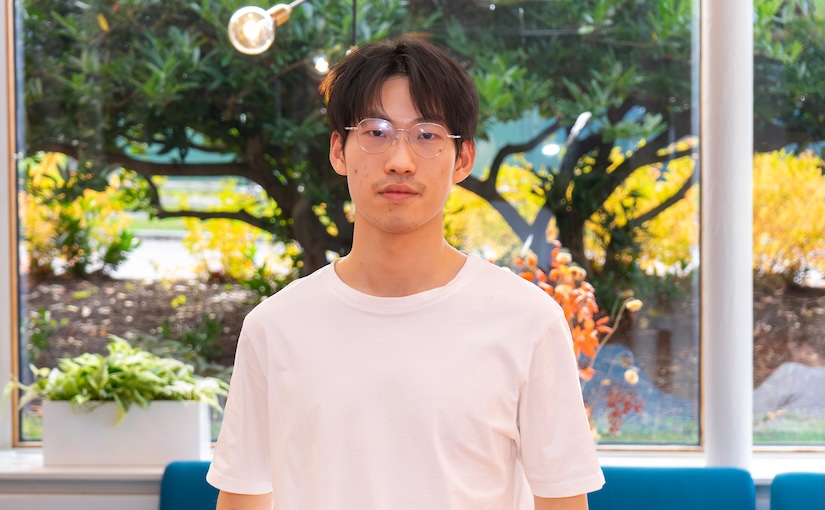
Yihuai is a master student in Data Science and AI at Chalmers University of Technology.
During his time at the Soft Matter lab, he will be working on developing reinforcement learning algorithm for robotic applications.
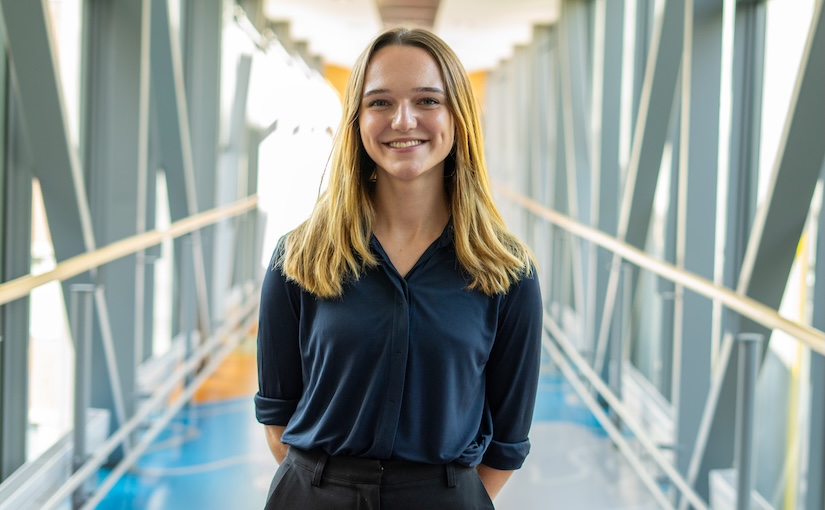
Matilda is a master student in Engineering Physics at Chalmers University of Technology.
During her time at the Soft Matter Lab, she will be working on developing self-supervised deep learning methods for analyzing microscopy data.
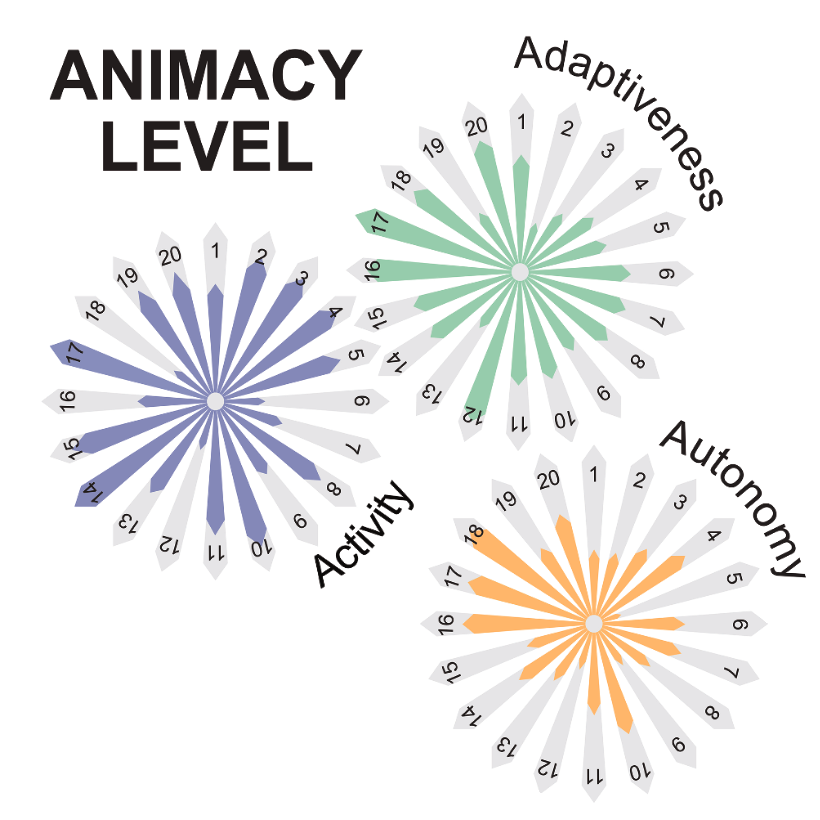
Giorgio Volpe, Nuno A M Araújo, Maria Guix, Mark Miodownik, Nicolas Martin, Laura Alvarez, Juliane Simmchen, Roberto Di Leonardo, Nicola Pellicciotta, Quentin Martinet, Jérémie Palacci, Wai Kit Ng, Dhruv Saxena, Riccardo Sapienza, Sara Nadine, João F Mano, Reza Mahdavi, Caroline Beck Adiels, Joe Forth, Christian Santangelo, Stefano Palagi, Ji Min Seok, Victoria A Webster-Wood, Shuhong Wang, Lining Yao, Amirreza Aghakhani, Thomas Barois, Hamid Kellay, Corentin Coulais, Martin van Hecke, Christopher J Pierce, Tianyu Wang, Baxi Chong, Daniel I Goldman, Andreagiovanni Reina, Vito Trianni, Giovanni Volpe, Richard Beckett, Sean P Nair, Rachel Armstrong
Journal of Physics: Condensed Matter 37, 333501 (2025)
arXiv: 2407.10623
doi: 10.1088/1361-648X/adebd3
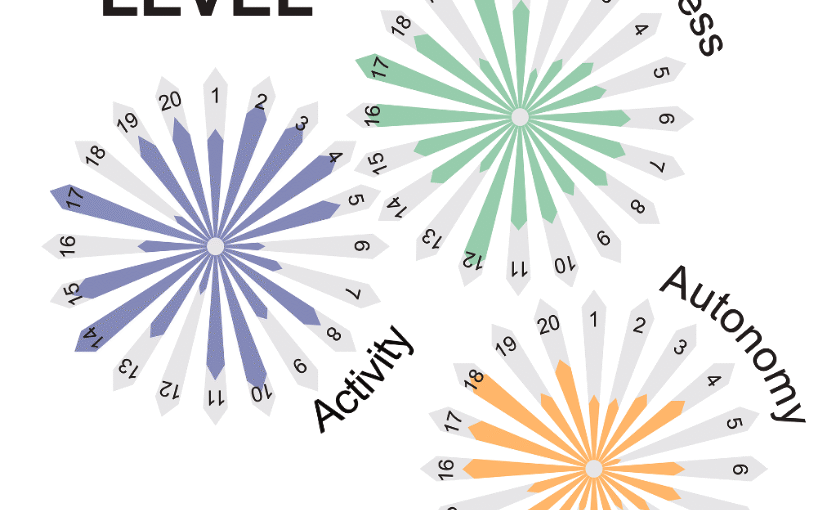
Humanity has long sought inspiration from nature to innovate materials and devices. As science advances, nature-inspired materials are becoming part of our lives. Animate materials, characterized by their activity, adaptability, and autonomy, emulate properties of living systems. While only biological materials fully embody these principles, artificial versions are advancing rapidly, promising transformative impacts in the circular economy, health and climate resilience within a generation. This roadmap presents authoritative perspectives on animate materials across different disciplines and scales, highlighting their interdisciplinary nature and potential applications in diverse fields including nanotechnology, robotics and the built environment. It underscores the need for concerted efforts to address shared challenges such as complexity management, scalability, evolvability, interdisciplinary collaboration, and ethical and environmental considerations. The framework defined by classifying materials based on their level of animacy can guide this emerging field to encourage cooperation and responsible development. By unravelling the mysteries of living matter and leveraging its principles, we can design materials and systems that will transform our world in a more sustainable manner.
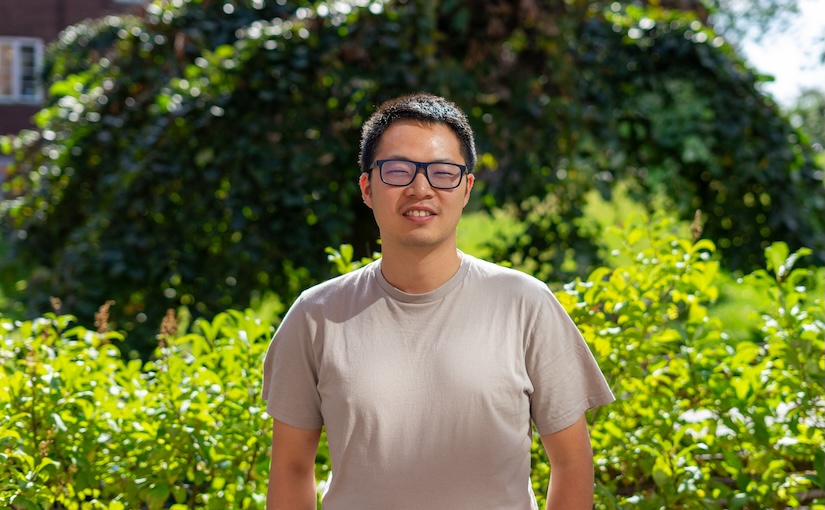
Jun Yi holds a bachelor’s degree in Chemistry from the University of Münster.
During his internship at the Soft Matter Lab, he will investigate the interactions of polymer-coated silica microparticles under various stimuli using optical tweezers.